
Potato is a versatile tuber crop originating from the Andes, serving as a major food source worldwide due to its high carbohydrate content and adaptability to various growing conditions. It is essential for diets, industries like chips and starch production, and sustainable farming as a high-yield, short-duration crop.
.jpg)
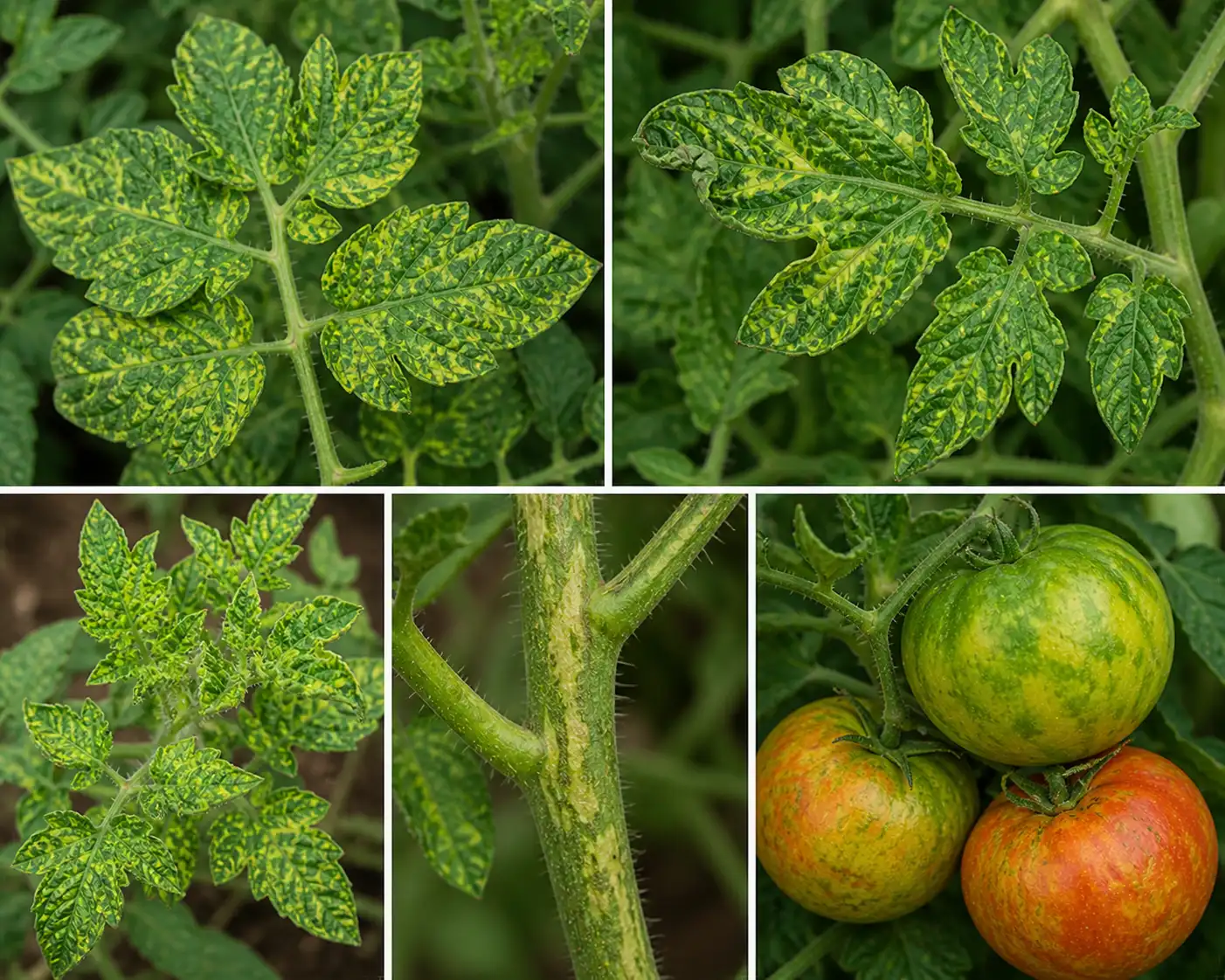
Mosaic
Mosaic Disease (Tomato) is a viral disease caused by viruses like Tomato mosaic virus infection and Tobacco mosaic virus infection.
-
Leaves show light and dark green mottling (mosaic pattern)
-
Leaves may become distorted, wrinkled, or narrow
-
Plants show stunted growth
-
Fruits may be uneven in color and poorly developed
-
Spread through infected tools, hands, and plant contact
Using resistant varieties and maintaining field hygiene helps control the disease.
Product That Matches The Disease
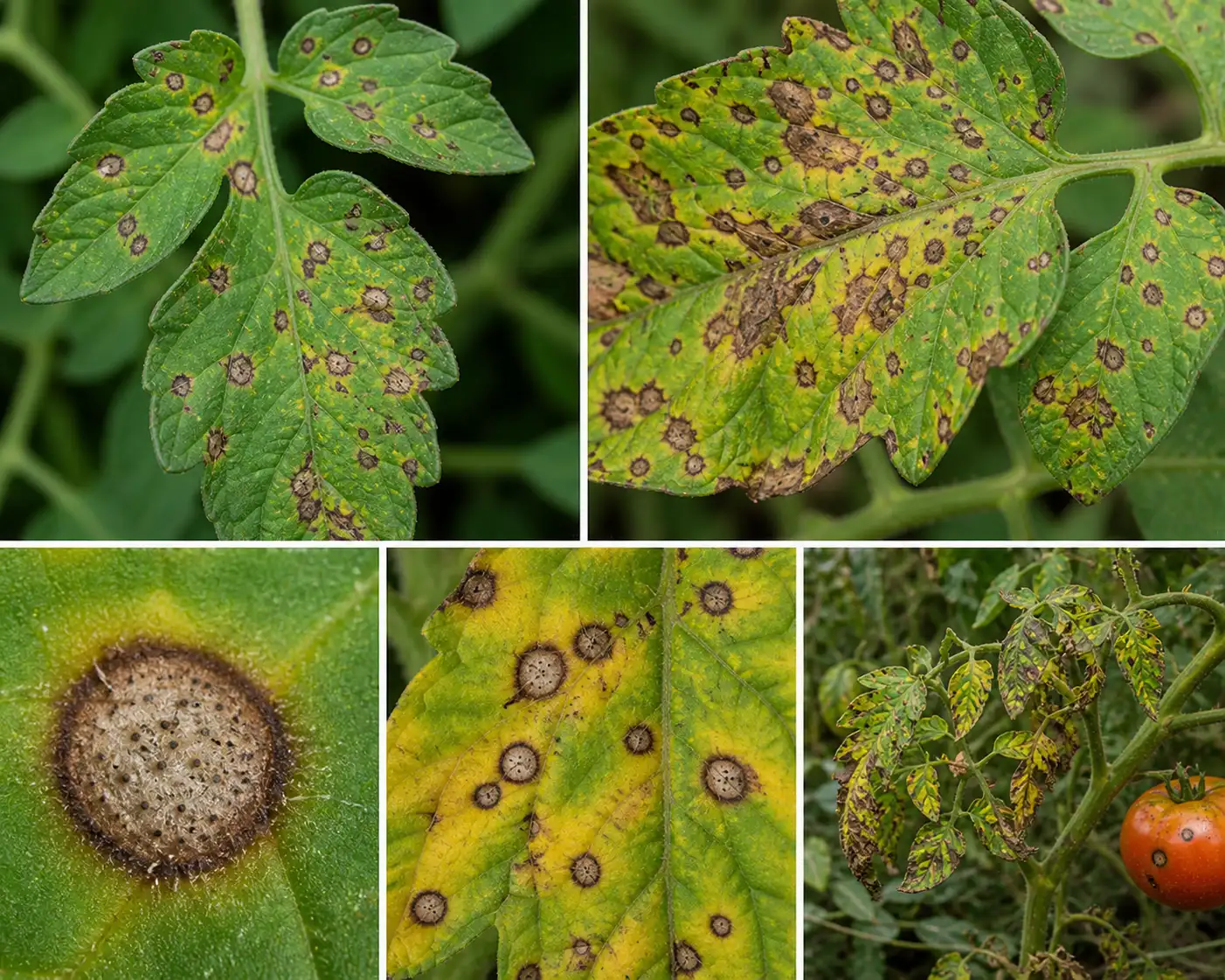
Septoria leaf spot
Septoria Leaf Spot (Tomato) (caused by the fungus Septoria lycopersici infection) mainly affects leaves.
-
Shows small, circular spots with grey centers and dark borders
-
Spots contain tiny black dots (fruiting bodies) in the center
-
Leaves turn yellow and drop early
-
Usually starts on lower leaves and spreads upward
-
Common in warm, wet, and humid conditions
Proper spacing, removing infected leaves, and timely fungicide application help control the disease.
Product That Matches The Disease
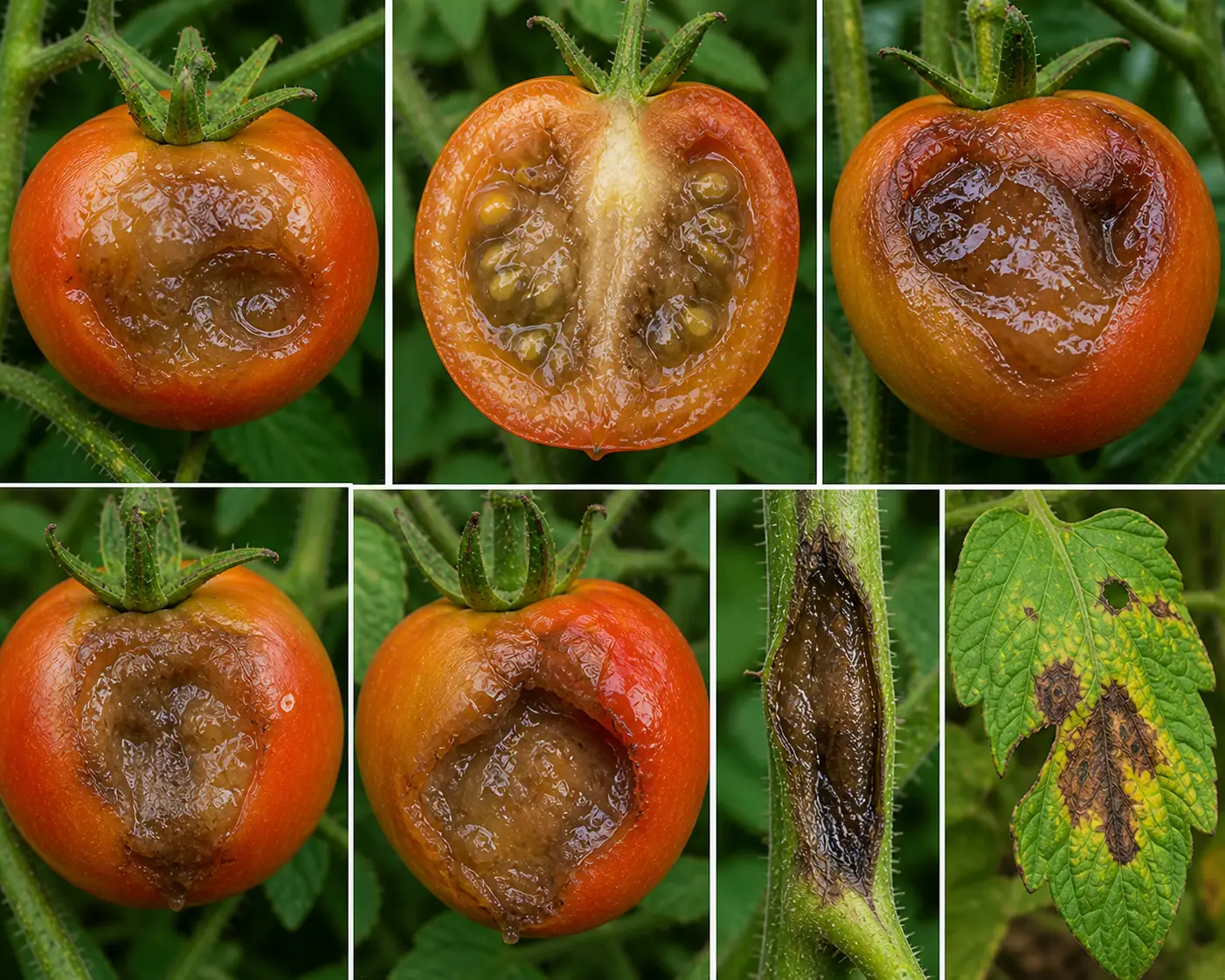
Bacterial Soft Rot
Bacterial Soft Rot (Tomato) (caused by bacteria like Erwinia carotovora infection) is a destructive disease of fruits and plant tissues.
-
Causes soft, watery decay that spreads rapidly
-
Infected tissue becomes mushy, slimy, and foul-smelling
-
Fruits may collapse and leak fluid
-
Bacteria enter through wounds, cracks, or damaged areas
-
Common in warm, humid, and poorly ventilated conditions
Careful handling, avoiding injuries, and proper sanitation help prevent the disease.
Product That Matches The Disease
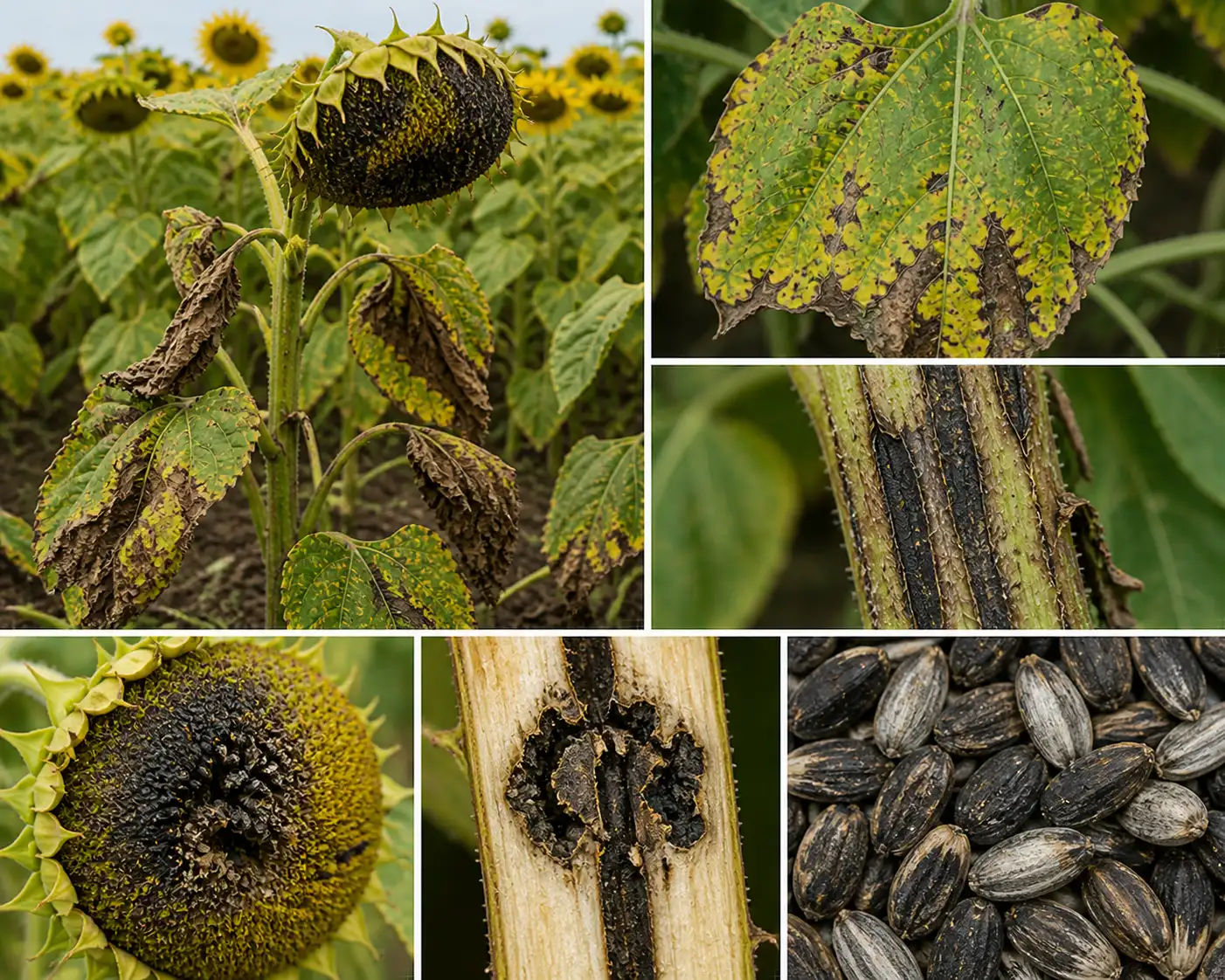
Charcoal Rot
Charcoal Rot (Sunflower) (caused by the fungus Macrophomina phaseolina infection) is a serious soil-borne disease.
-
Plants show wilting and drying, especially in hot weather
-
Stem base develops black discoloration with charcoal-like powder
-
Inner stem tissues become shredded and weak
-
Leaves turn yellow, then brown and dry
-
Severe infection leads to premature plant death
Common in hot and dry conditions with moisture stress.
Crop rotation, proper irrigation, and resistant varieties help manage the disease.
Product That Matches The Disease
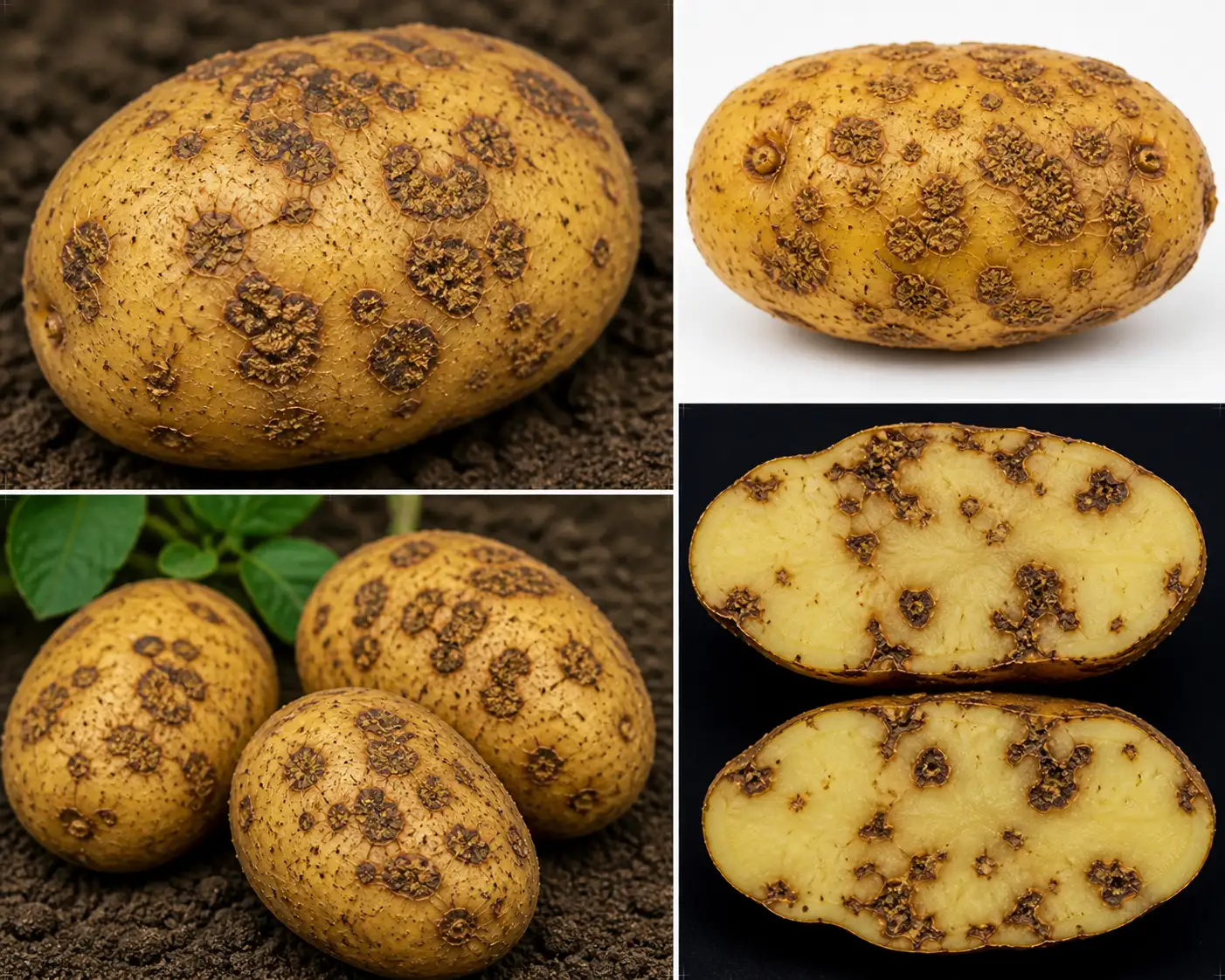
Scab
Scab (Potato) (commonly caused by the bacterium Streptomyces scabies infection) mainly affects tubers.
- Tubers develop rough, corky, raised lesions on the surface
- Lesions may be circular, cracked, or scabby patches
- Affects appearance and market quality, but usually not yield
- In severe cases, lesions become deep and pitted
Conditions:
- Common in dry, alkaline soils
- Favored by low soil moisture during tuber formation
Management:
- Maintain slightly acidic soil (pH < 5>
- Ensure proper irrigation during tuber development
- Use disease-free seed tubers
- Practice crop rotation
Product That Matches The Disease
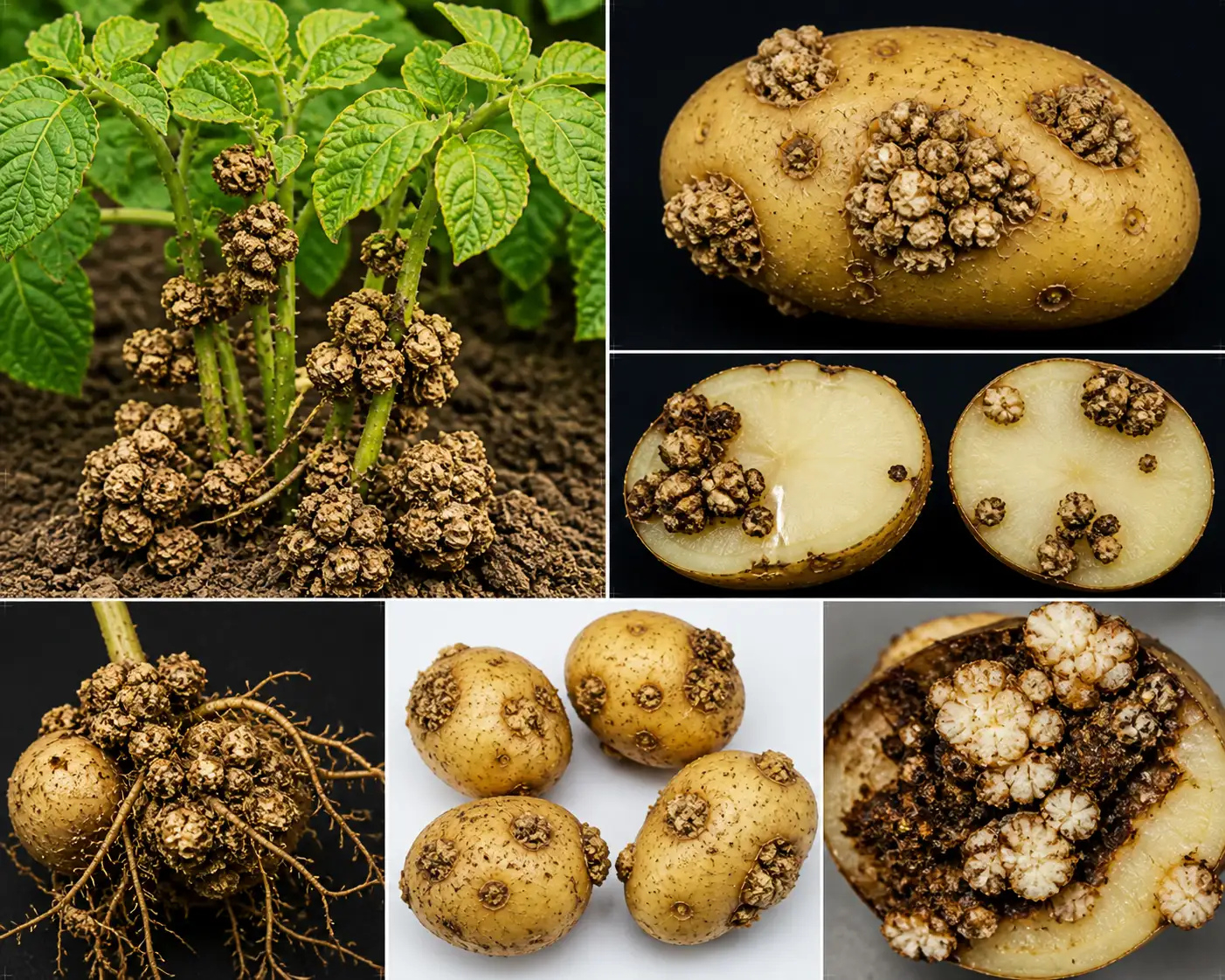
Wart
Wart (Potato) (also called potato wart disease, caused by the fungus Synchytrium endobioticum infection) is a serious soil-borne disease.
-
Tubers develop irregular, cauliflower-like warty growths
-
Growths start small and enlarge into rough, brown, and spongy masses
-
Affected areas may turn black and decay over time
-
Infection can also occur on stems, stolons, and eyes of tubers
-
Severely infected tubers become unmarketable and deformed
Conditions:
-
Common in cool, moist soils
-
Pathogen can survive in soil for many years
Management:
-
Use resistant varieties
-
Plant certified disease-free seed tubers
-
Avoid movement of infected soil or tubers
-
Follow strict quarantine measures
-
Practice long-term crop rotation
Product That Matches The Disease
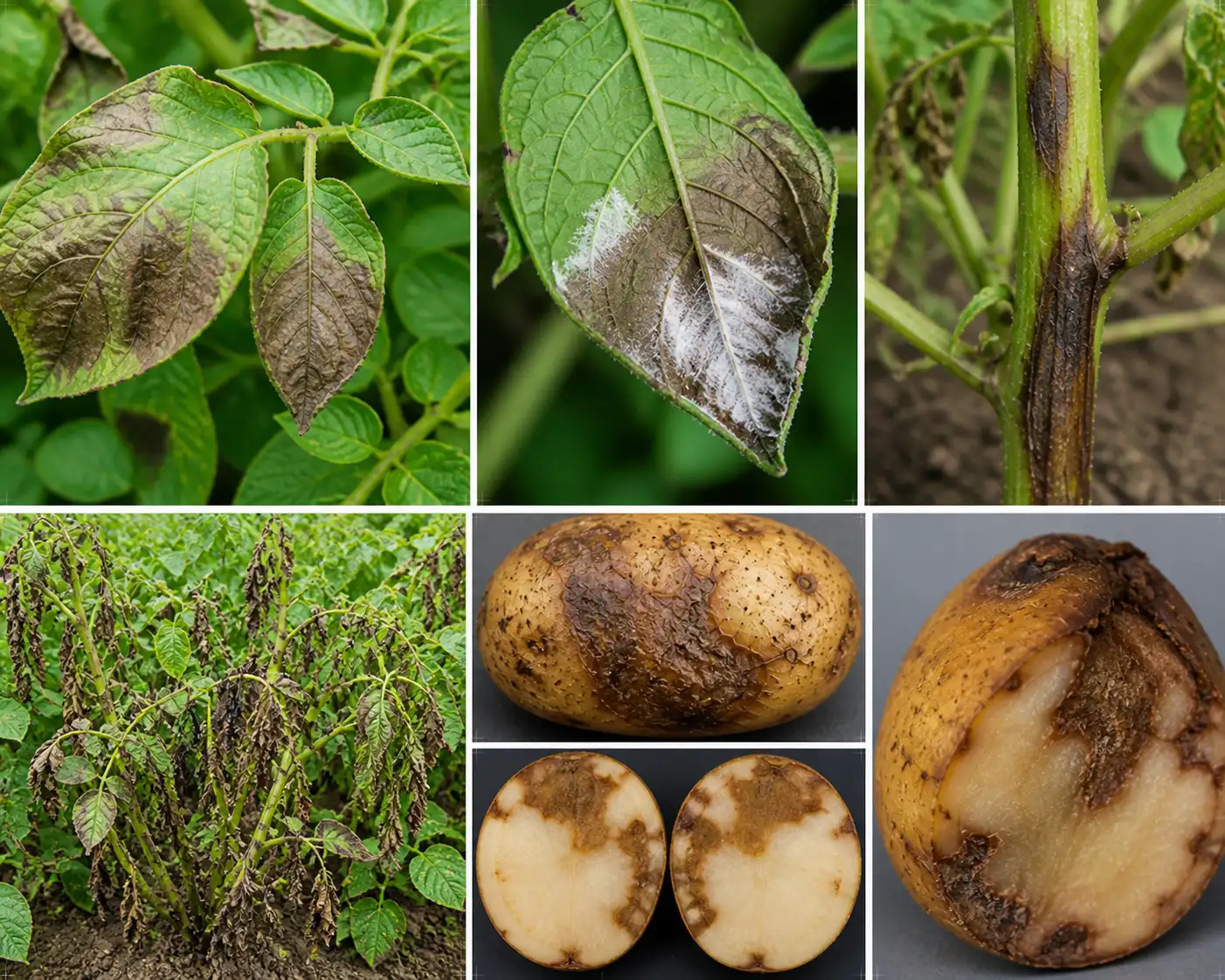
Late blight
Late Blight (Potato) (caused by the fungus-like organism Phytophthora infestans infection) is one of the most destructive potato diseases.
- Leaves show water-soaked pale green spots that turn brown to black
- White cottony growth appears on the underside of leaves in humid conditions
- Stems develop dark brown to black lesions
- Rapid spread causes entire plant collapse
- Tubers show brown, firm rot inside
Conditions:
- Favors cool, humid weather with frequent rain or dew
- Spreads quickly through wind, rain splash, and infected plant material
Management:
- Use resistant varieties
- Ensure proper field ventilation and spacing
- Avoid overhead irrigation
- Apply recommended fungicides (preventive sprays)
- Remove and destroy infected plants promptly
Product That Matches The Disease
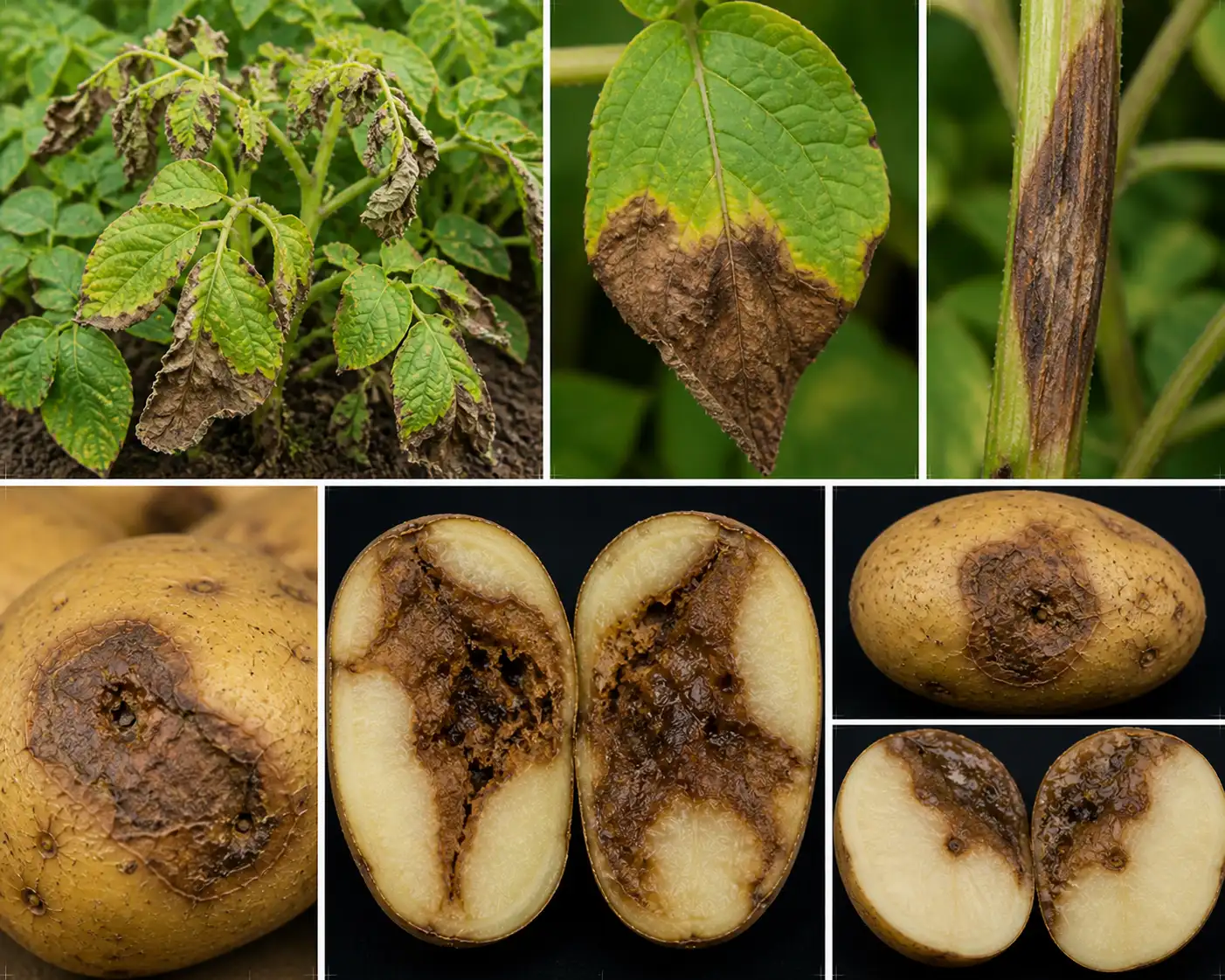
Brown rot
Brown Rot (Potato) (caused by the bacterium Ralstonia solanacearum infection) is a serious vascular disease.
-
Plants show sudden wilting without yellowing (initial stage)
-
Lower leaves may later yellow and collapse
-
Stem may ooze milky bacterial slime when cut
-
Tubers show brown discoloration in vascular ring
-
Infected tubers develop soft rot with foul smell
-
Creamy bacterial ooze may come out from eyes or cut surfaces
Conditions:
-
Common in warm, moist soils
-
Spreads through infected seed tubers, soil, and water
Management:
-
Use certified disease-free seed tubers
-
Avoid waterlogging and contaminated irrigation water
-
Practice crop rotation with non-host crops
-
Remove and destroy infected plants
-
Maintain strict field sanitation
Product That Matches The Disease
Dry rot
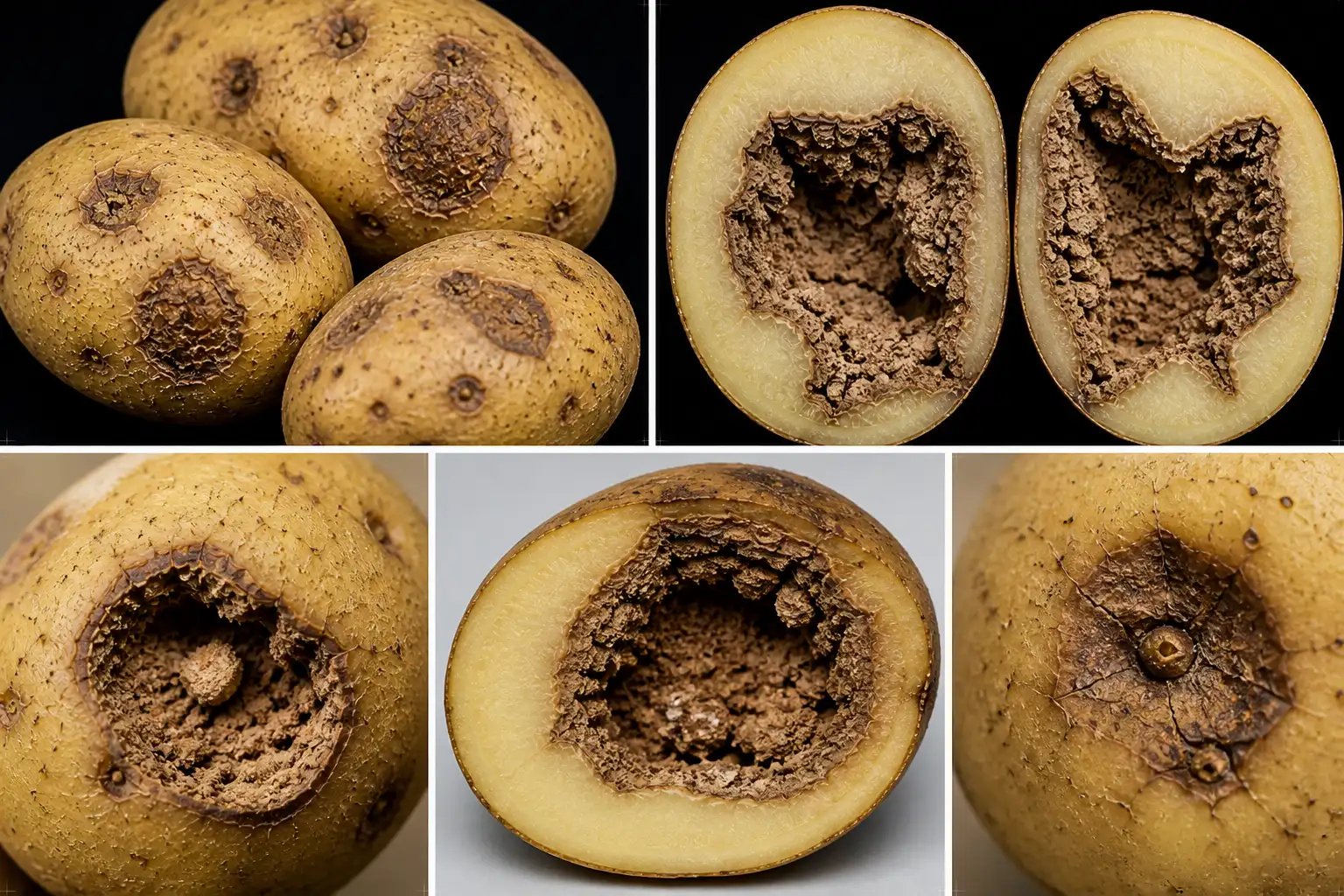
Dry Rot (Potato) (caused by fungi like Fusarium spp. infection) is a common storage and field disease.
-
Tubers develop sunken, dry, wrinkled lesions
-
Infected areas become hard, dry, and shriveled (not soft)
-
Internal tissue shows brown to dark dry rot
-
Cavities may form inside tubers with powdery fungal growth
-
Infected tubers become lightweight and mummified
Conditions:
-
Common in storage conditions with wounds on tubers
-
Spread through infected seed tubers and handling injuries
Management:
-
Use healthy, disease-free seed tubers
-
Avoid injury during harvesting and storage
-
Store in cool, dry, and well-ventilated conditions
-
Treat seed tubers with fungicides before storage
Product That Matches The Disease
Black leg
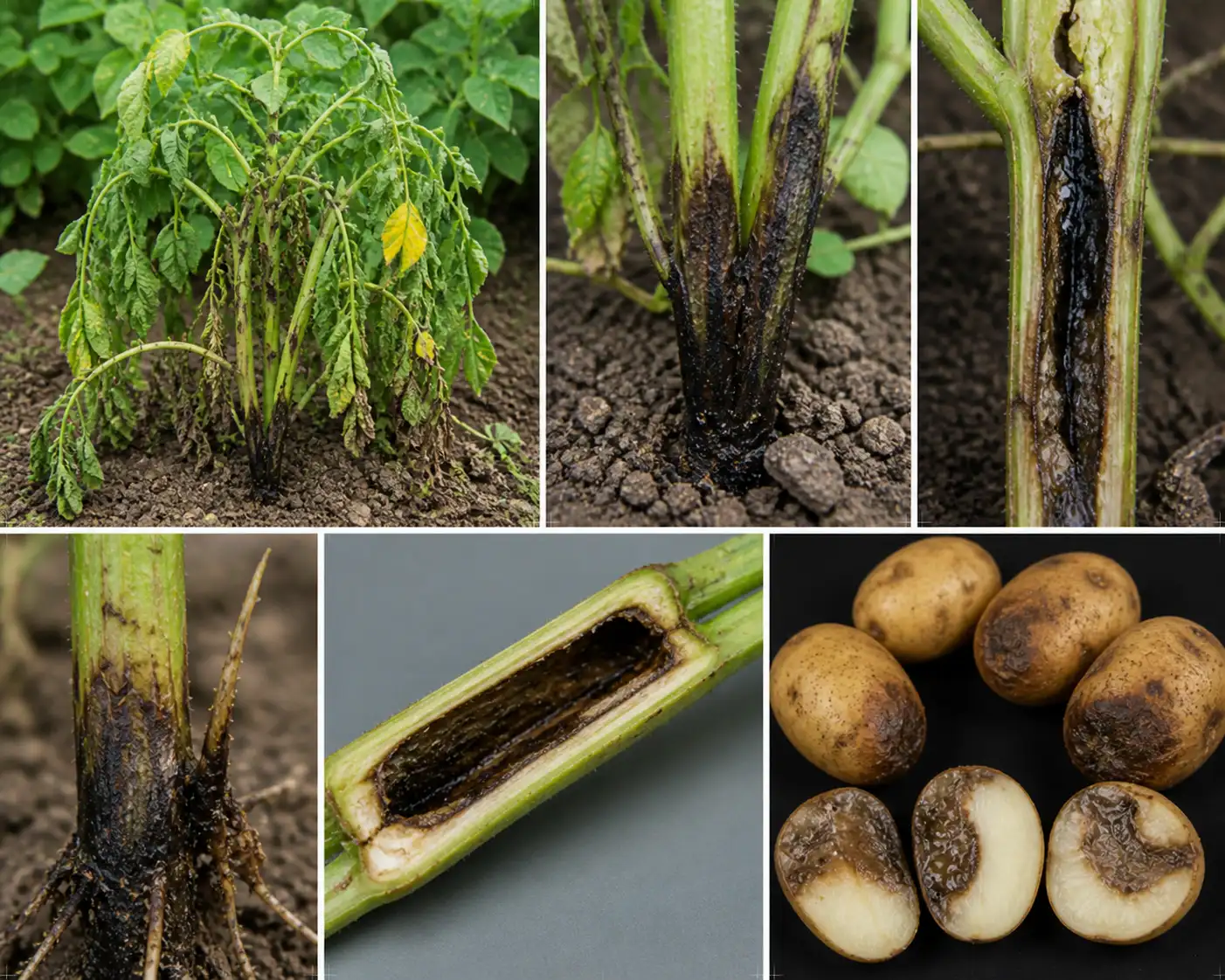
Black Leg (Potato) (caused by bacteria like Pectobacterium atrosepticum infection and related species) is a serious bacterial disease.
- Stem base turns black, soft, and rotten
- Plants show wilting, yellowing, and stunted growth
- Infected stems may become hollow and slimy
- Tubers develop soft rot with foul smell
- Plants may collapse easily when pulled
Conditions:
- Common in cool, wet soils
- Spread through infected seed tubers and water
Management:
- Use certified disease-free seed tubers
- Avoid waterlogging and improve drainage
- Practice crop rotation
- Remove infected plants promptly
- Handle tubers carefully to avoid injury
Product That Matches The Disease
FAQ
Frequently Ask Questions
What products does Ekhande Agro Fertilizers offer?
We provide high-quality fertilizers and crop protection solutions designed to enhance crop nutrition and productivity while promoting sustainable farming practices.
How can Ekhande Agro help improve crop yields?
Our products are formulated to ensure optimal crop nutrition, helping farmers achieve higher yields with lower input costs, while maintaining soil health.
Are your fertilizers eco-friendly?
Yes, our fertilizers are developed with a focus on sustainability, ensuring they are safe for the environment and promote long-term agricultural health.
Do you provide guidance or support to farmers?
Absolutely! We assist farmers with expert advice, innovative solutions, and product recommendations tailored to their specific agricultural needs.