
Soyabean is a high-protein oilseed crop essential for global food and feed industries, providing versatile products like oil, meal, and tofu. Originating from East Asia, it is a key player in modern agriculture due to its oil content, nitrogen-fixing roots, and adaptability to various soils, supporting sustainable farming and biofuel production.
.jpg)
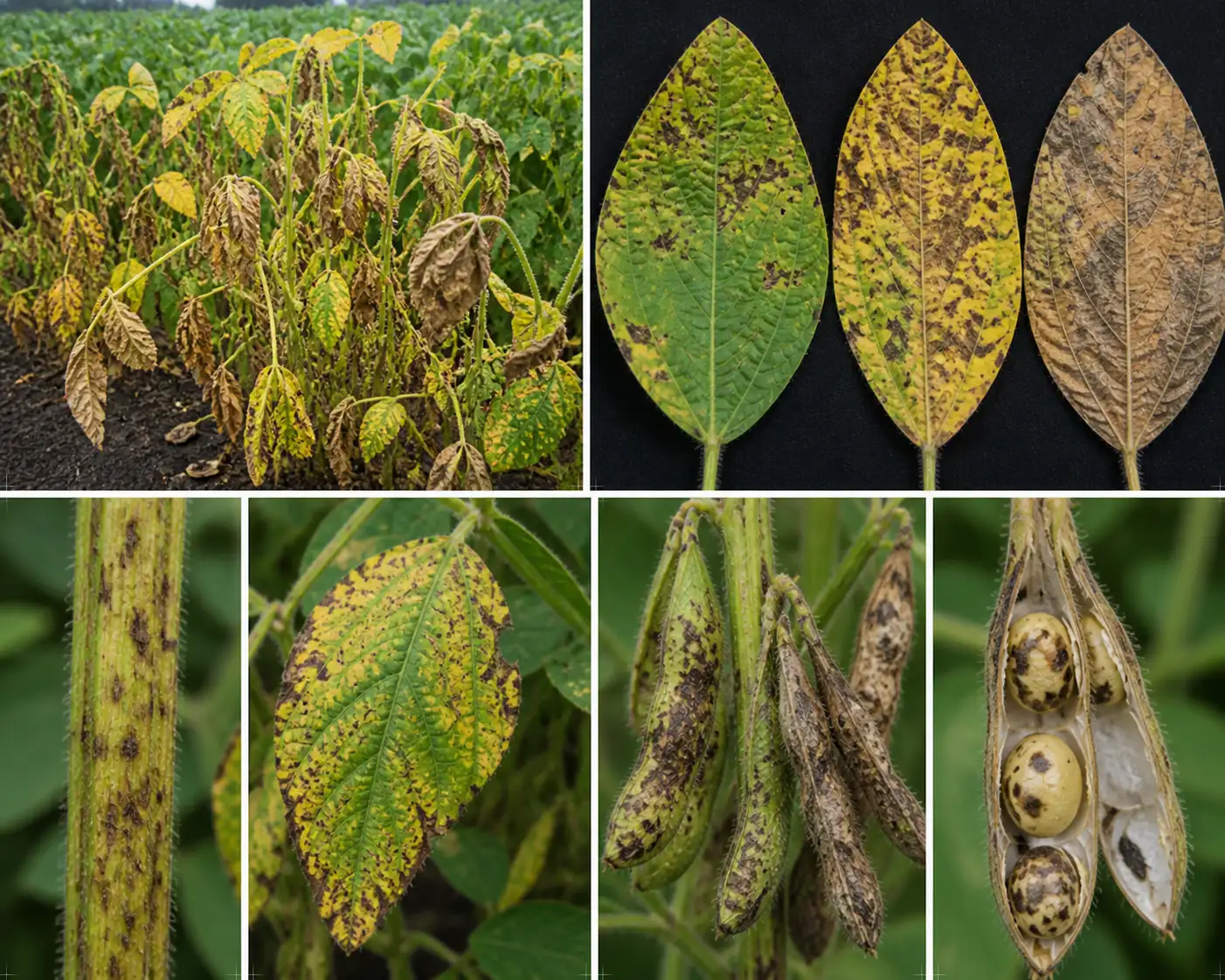
Wet weather blight
Wet Weather Blight (Soybean) (commonly caused by fungi like Phytophthora sojae infection or similar pathogens) is a disease favored by excessive moisture.
-
Leaves develop water-soaked spots that turn brown and necrotic
-
Infected leaves may rot, collapse, and stick together
-
Stems can show dark lesions and soft rot
-
Plants appear wilted even in moist soil
-
Severe cases lead to rapid plant death in patches
Conditions:
-
Common in continuous rain, waterlogged, and poorly drained soils
-
Spreads quickly in high humidity and standing water
Management:
-
Ensure proper field drainage
-
Avoid water stagnation
-
Use resistant varieties
-
Practice crop rotation
-
Treat seeds with recommended fungicides
Product That Matches The Disease
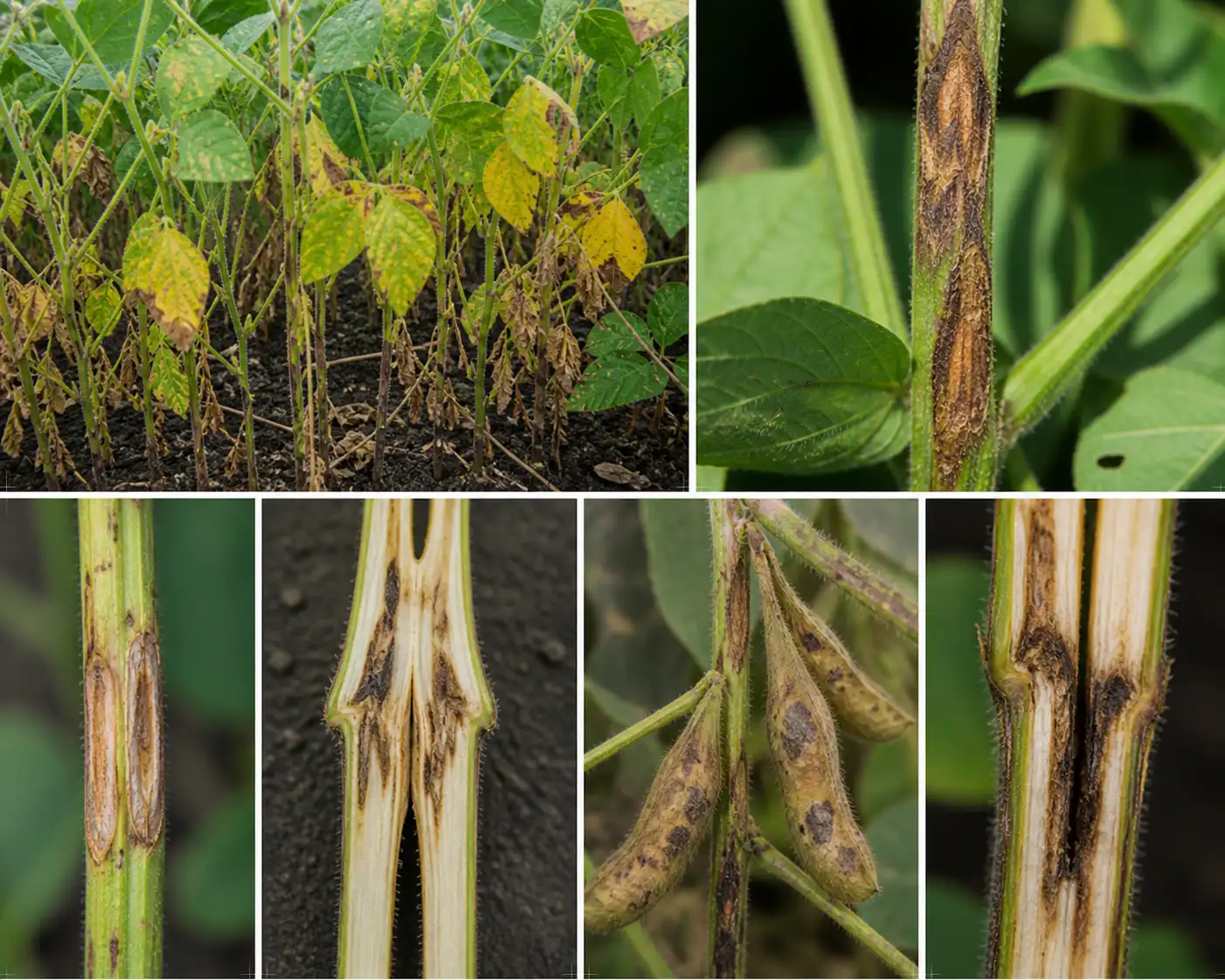
Stem Canker
Stem Canker (Soybean) (commonly caused by the fungus Diaporthe phaseolorum infection) is a serious stem disease.
-
Long sunken brown to dark lesions (cankers) develop on stems
-
Lesions often appear near nodes or lower stem
-
Infected stems may crack or girdle, restricting nutrient flow
-
Leaves show yellowing, wilting, and premature drying
-
Plants may die early, especially during reproductive stages
Conditions:
-
Common in warm, humid conditions
-
Spreads through infected crop residue and rain splash
Management:
-
Use resistant varieties
-
Practice crop rotation
-
Remove infected plant debris
-
Avoid continuous soybean cultivation
Product That Matches The Disease
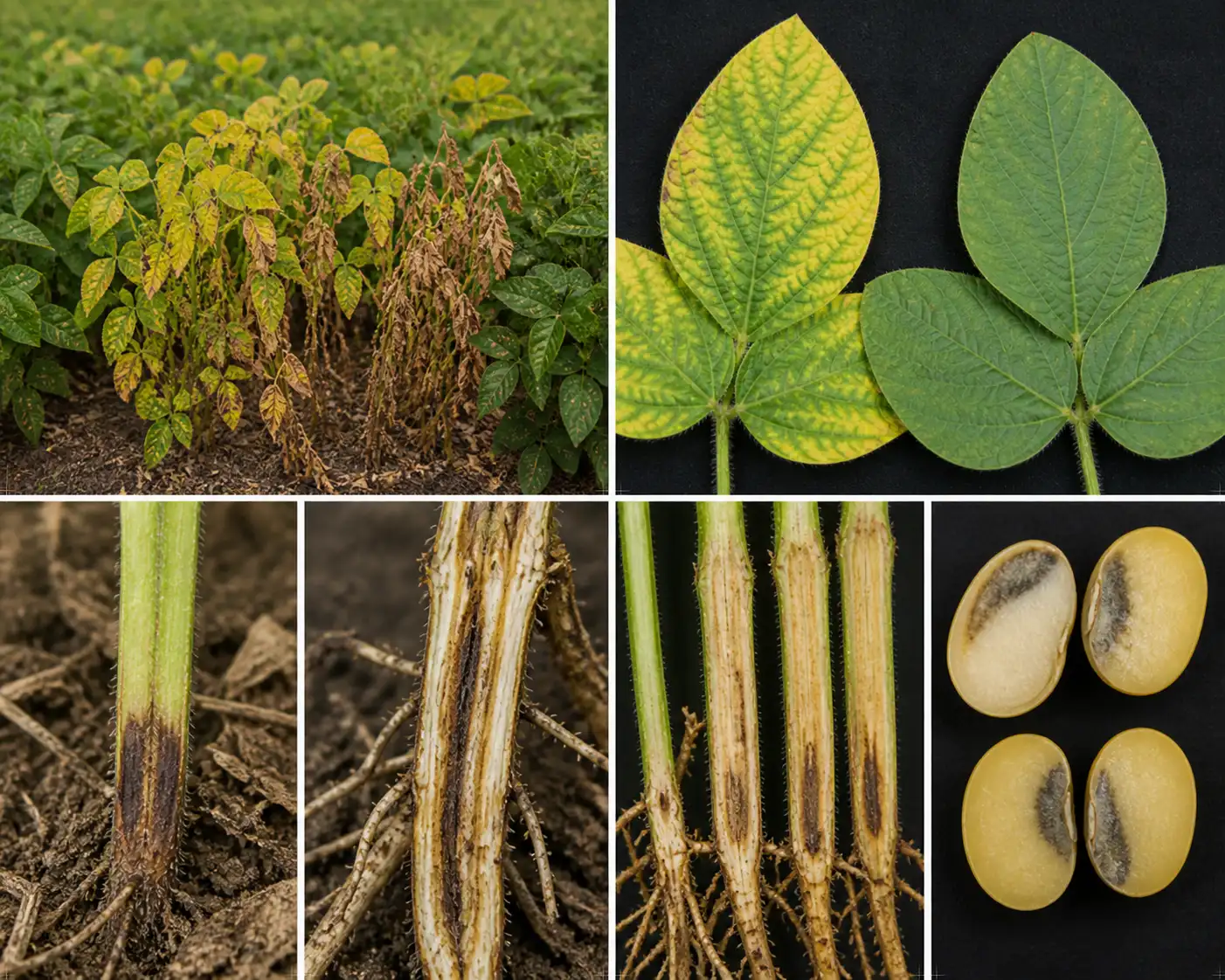
Sudden death syndrome (SDS)
Sudden Death Syndrome (SDS) – Soybean (caused by the soil-borne fungus Fusarium virguliforme infection) is a major root and foliar disease.
-
Leaves show yellowing between veins (interveinal chlorosis)
-
Affected areas turn brown and necrotic, while veins remain green
-
Leaves may dry and fall off, leaving petioles attached
-
Roots show rot and discoloration, reducing nutrient uptake
-
Stem interior remains white, but outer tissues may be affected
-
Plants may suddenly wilt and die, especially during pod filling stage
Conditions:
-
Common in cool, wet soils early in the season
-
Symptoms become severe during warm and dry conditions later
Management:
-
Use resistant varieties
-
Improve soil drainage
-
Avoid early planting in cold, wet soils
-
Practice crop rotation
-
Maintain overall soil health
Product That Matches The Disease
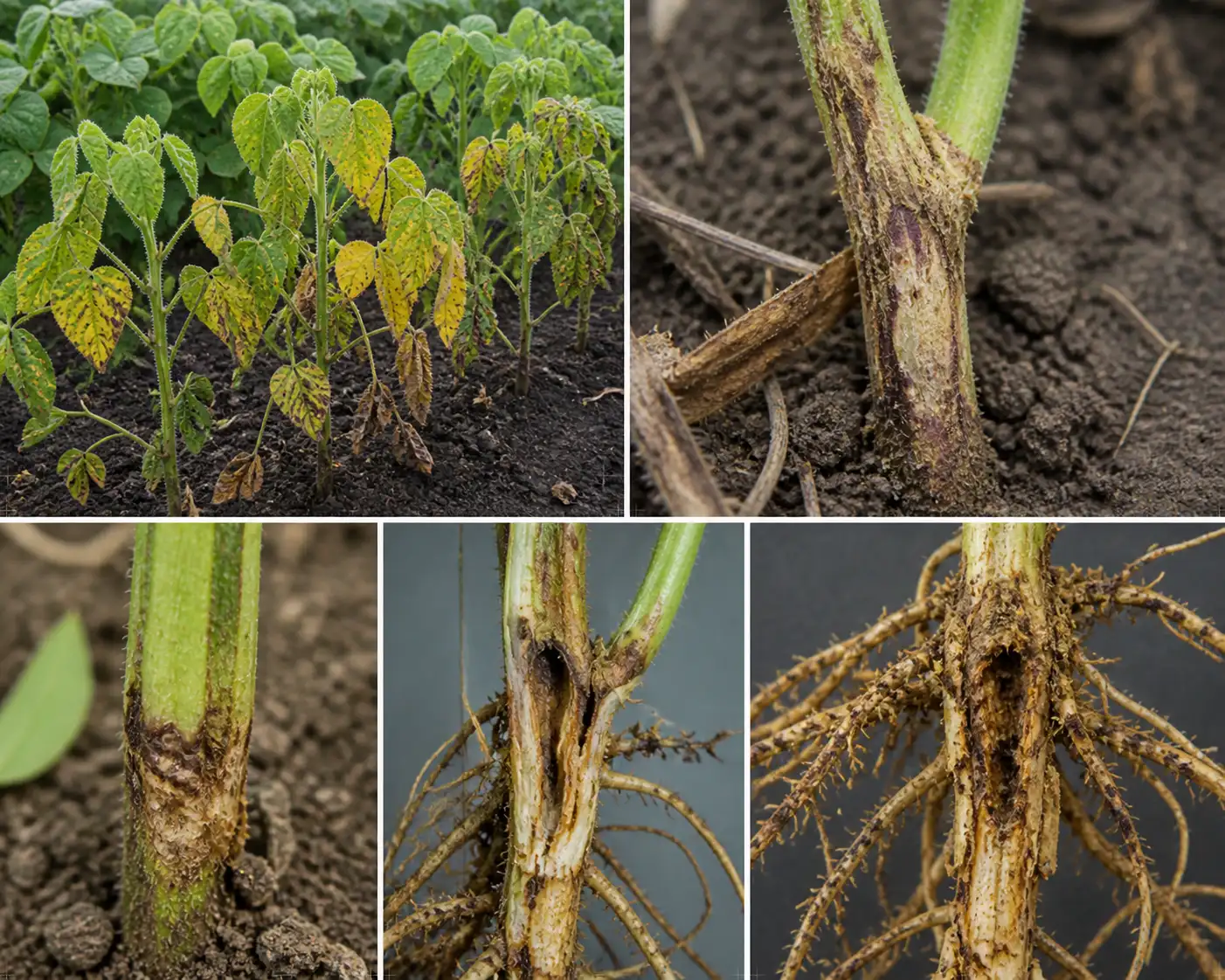
Collar rot
Collar Rot (Soybean) (caused by the fungus Sclerotium rolfsii infection) is a destructive soil-borne disease affecting the base of the plant.
-
Infection occurs at the collar region (soil level of stem)
-
Stem base shows brown to dark lesions and rotting
-
White cottony fungal growth may appear around the base
-
Small round mustard-like sclerotia can be seen on infected parts
-
Plants show wilting, yellowing, and sudden collapse
Conditions:
-
Common in warm, moist soil conditions
-
Severe in poorly drained soils
Management:
-
Ensure good drainage
-
Practice crop rotation
-
Remove infected plant debris
-
Apply fungicides or soil treatment if needed
Product That Matches The Disease
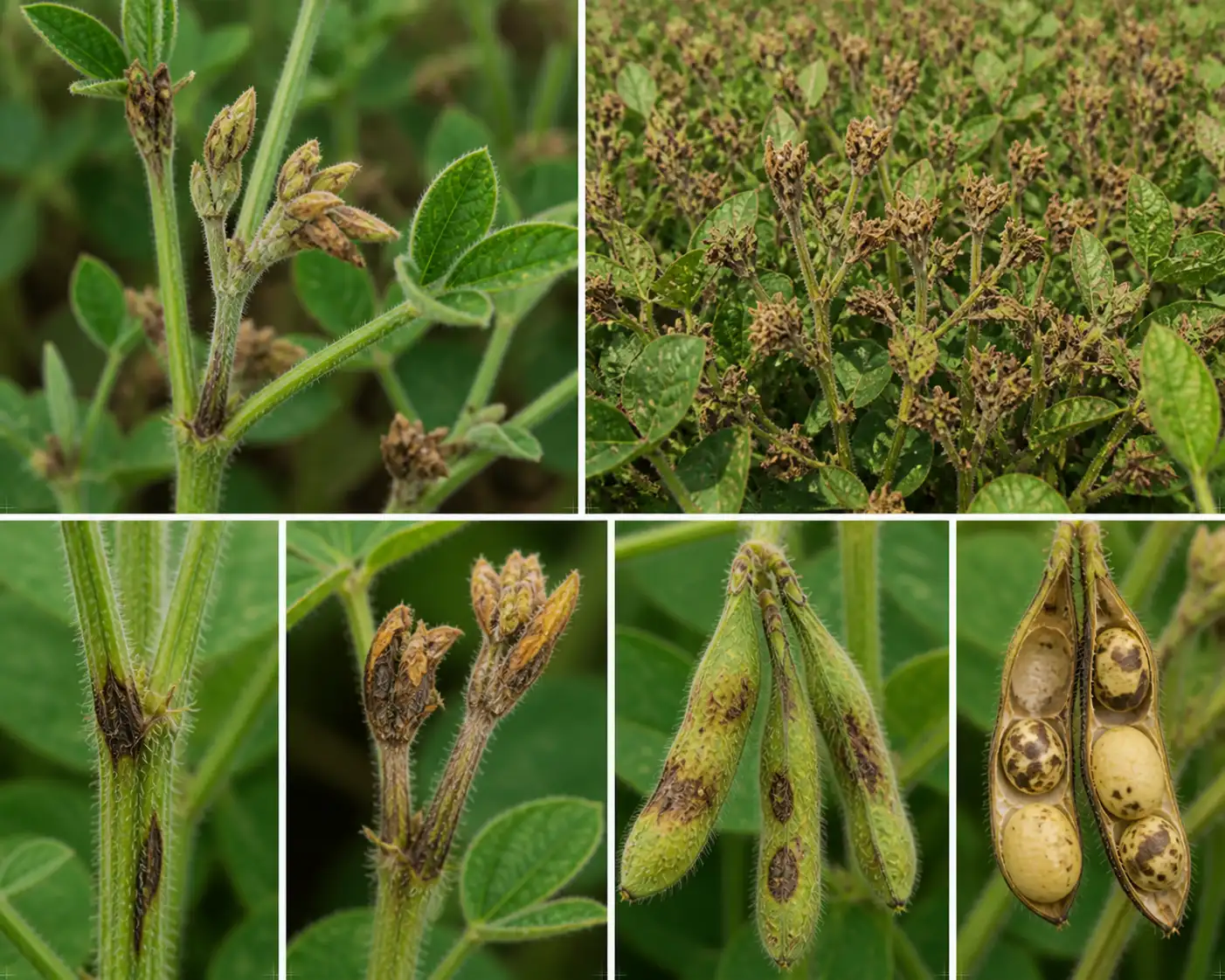
Bud blight
Bud Blight (Soybean) (caused by the virus Tobacco streak virus infection) is a serious viral disease affecting growing points.
-
Buds and young leaves show necrosis (drying and death)
-
Top shoots become brown, dry, and die (blighting of buds)
-
Leaves may show yellowing and distorted growth
-
Pods can develop brown spots and poor seed filling
-
Plants become stunted with reduced yield
Conditions:
-
Spread mainly by thrips (insect vectors)
-
Also associated with infected plant debris and weeds
Management:
-
Control thrips population
-
Remove and destroy infected plants
-
Maintain weed-free fields
-
Use healthy seeds and resistant varieties
Product That Matches The Disease
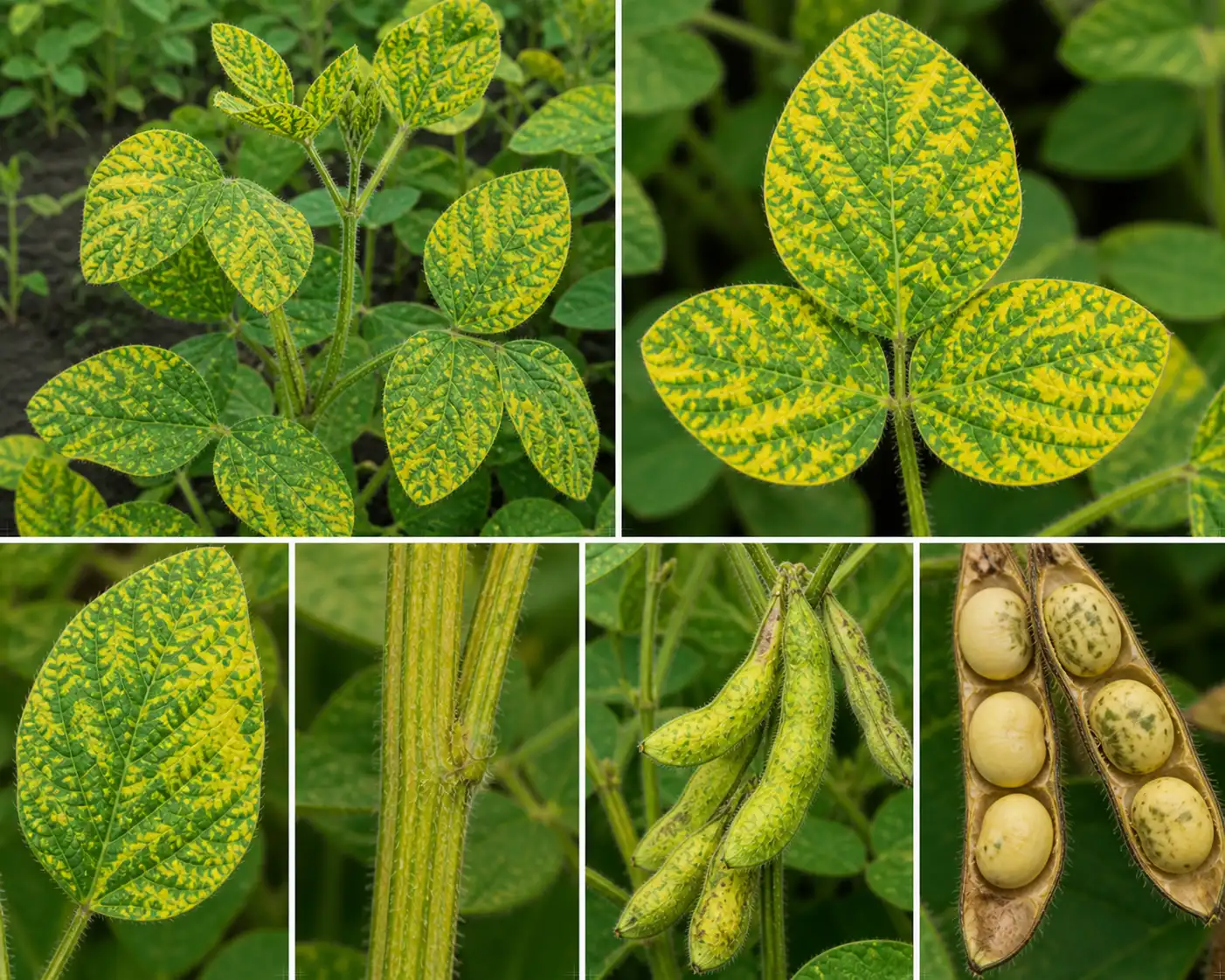
Yellow mosaic
Yellow Mosaic (Soybean) (caused by the virus Yellow mosaic virus infection) is a serious viral disease.
-
Leaves show bright yellow and green mosaic patches
-
Yellowing may spread, causing chlorosis of entire leaves
-
Leaves can become distorted and smaller in size
-
Plants show stunted growth
-
Pods are few, small, and poorly filled
Conditions:
-
Spread mainly by whiteflies (vector insects)
-
Also transmitted through infected plants
Management:
-
Use resistant/tolerant varieties
-
Control whitefly population
-
Remove infected plants early
-
Maintain field hygiene and weed control
Product That Matches The Disease
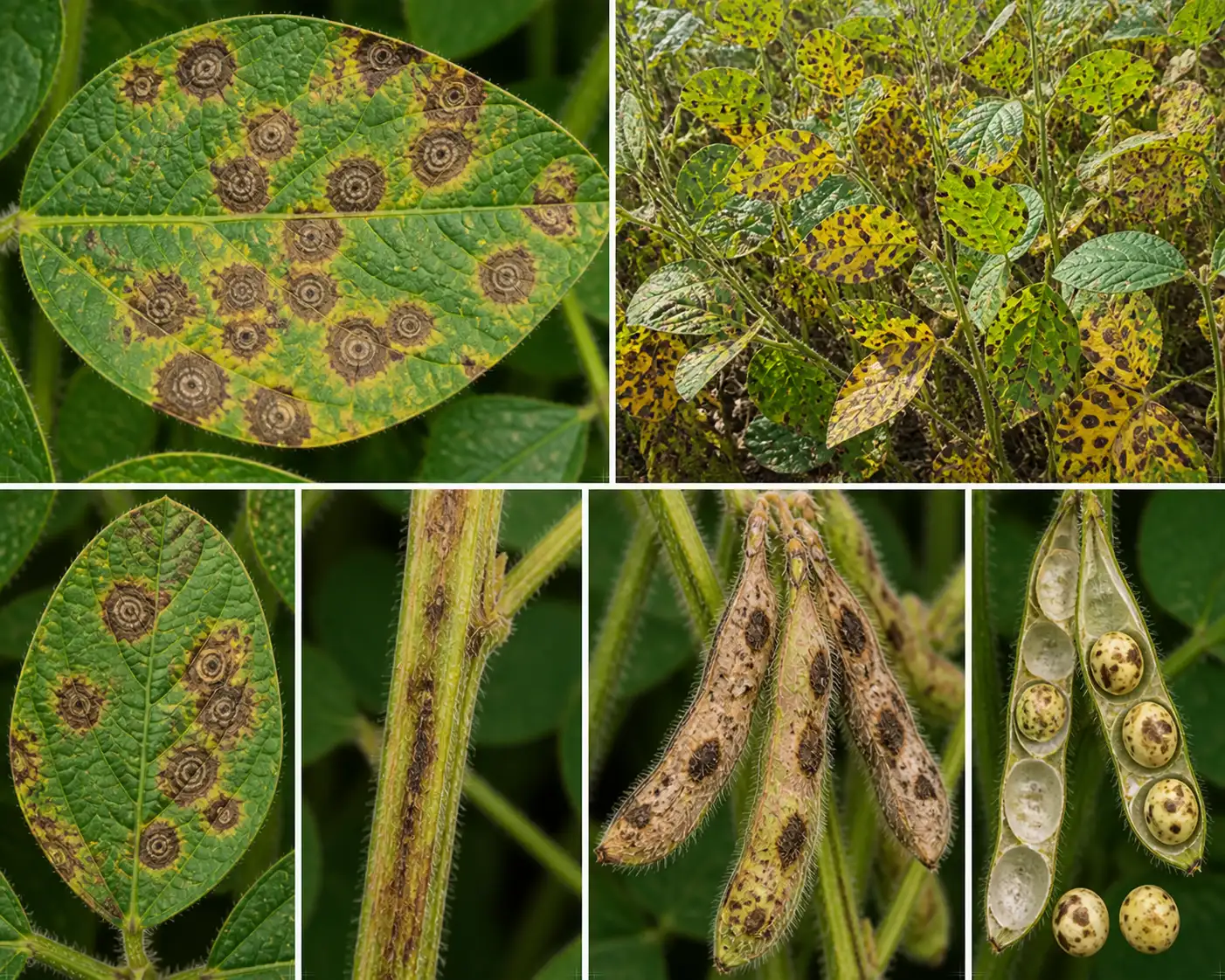
Target spot
Target Spot (Soybean) (caused by the fungus Corynespora cassiicola infection) is a common foliar disease.
-
Leaves show round brown spots with concentric rings (target-like pattern)
-
Spots may have yellow halos around lesions
-
Lesions enlarge and merge, causing leaf blight
-
Severe infection leads to yellowing and premature leaf drop
-
Can also affect stems and pods
Conditions:
-
Common in warm, humid weather
-
Spreads through rain splash and infected crop residue
Management:
-
Use resistant varieties
-
Practice crop rotation
-
Maintain proper field sanitation
-
Apply fungicides if necessary
Product That Matches The Disease
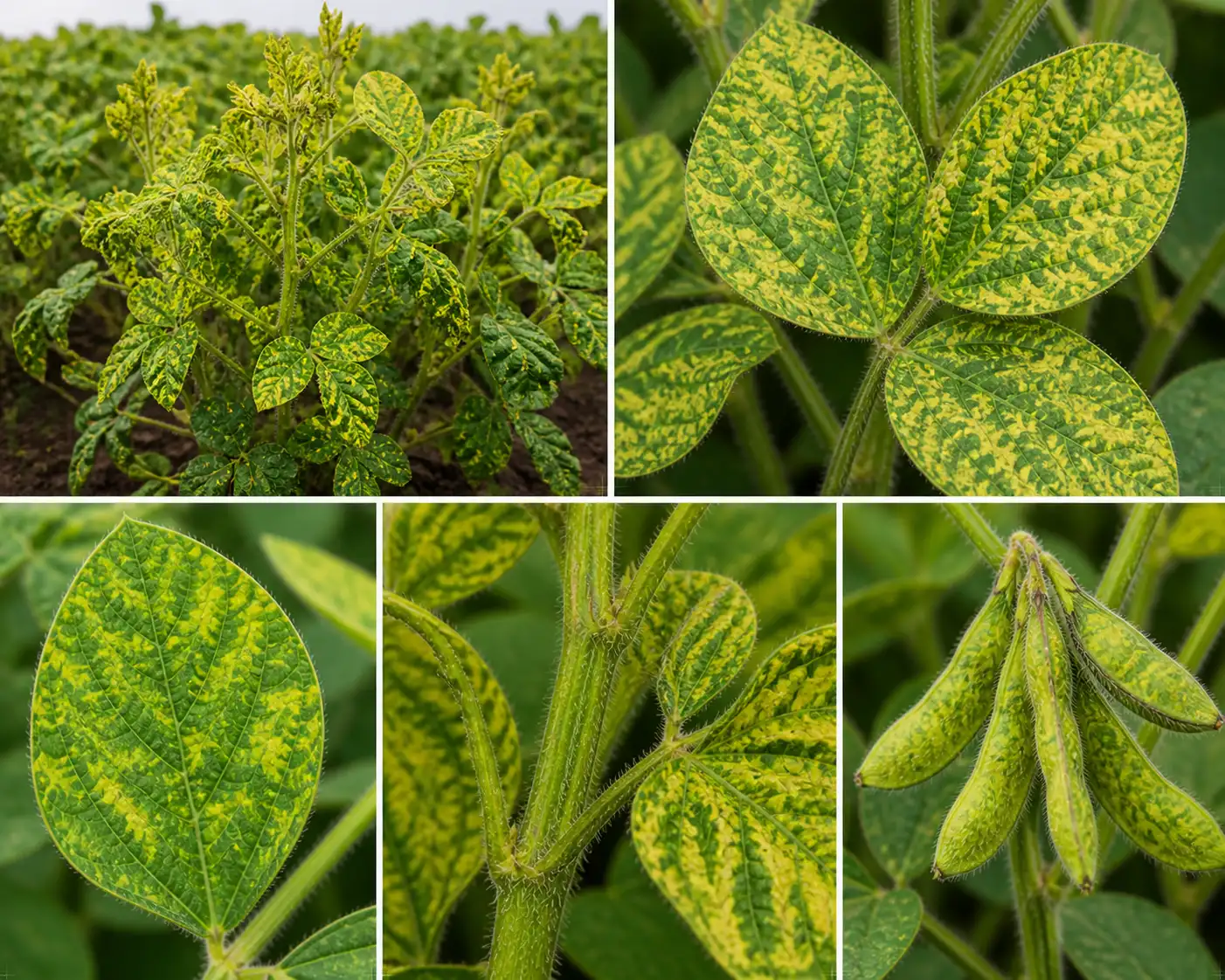
Soybean mosaic disease
Soybean Mosaic Disease (caused by the virus Soybean mosaic virus infection) is a common viral disease affecting soybean.
-
Leaves show mosaic pattern (light and dark green patches)
-
Leaves may become wrinkled, curled, or distorted
-
Plants show stunted growth
-
Pods may be deformed with fewer seeds
-
Seeds can show discoloration or mottling
Conditions:
-
Spread mainly by aphids (insect vectors)
-
Also transmitted through infected seeds
Management:
-
Use virus-free certified seeds
-
Control aphid population
-
Grow resistant varieties
-
Remove infected plants early
Product That Matches The Disease
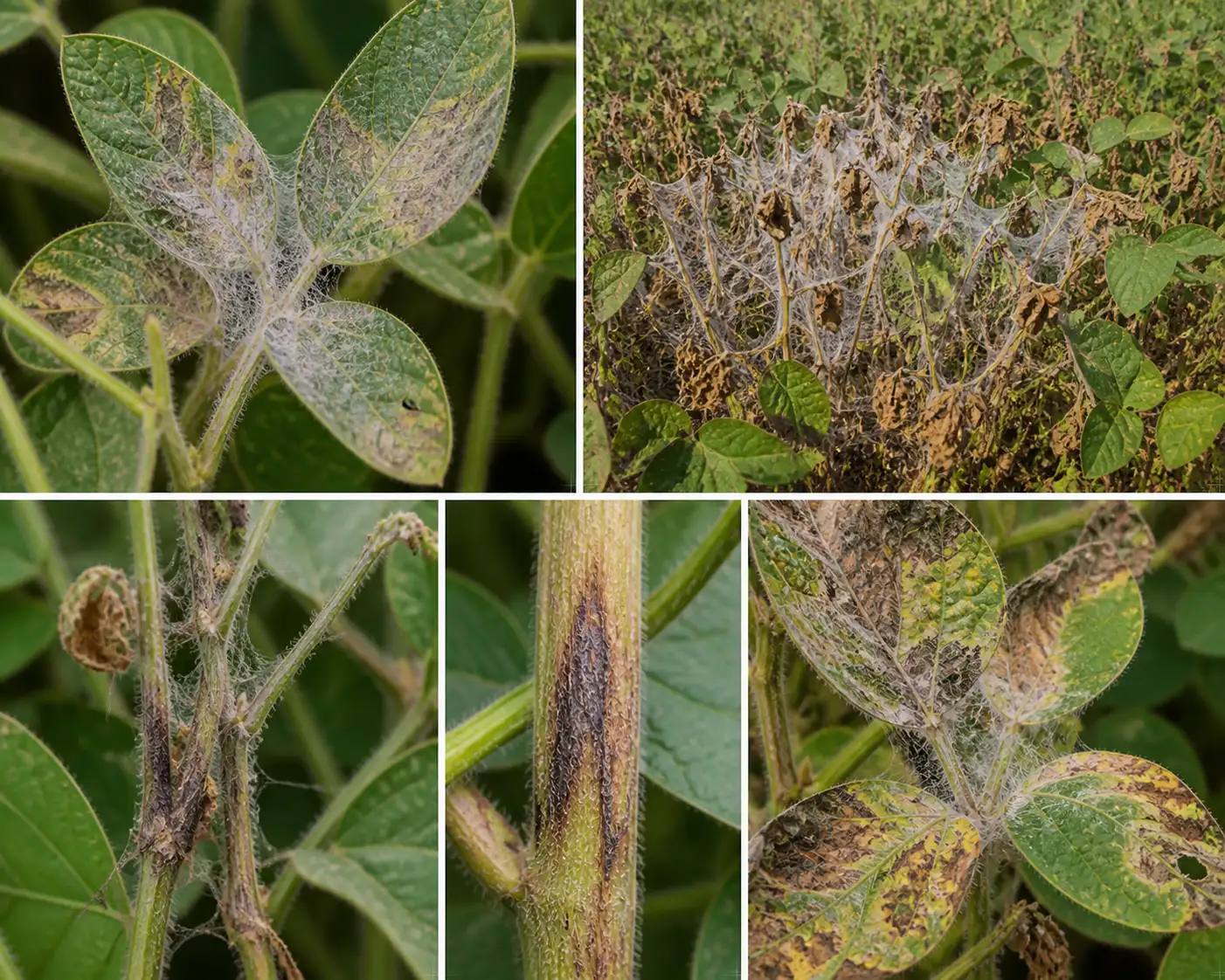
Rhizoctonia aerial blight / web blight
Rhizoctonia Aerial Blight / Web Blight (Soybean) (caused by the fungus Rhizoctonia solani infection) affects leaves, stems, and canopy.
-
Leaves develop irregular brown lesions that quickly enlarge
-
Infected areas show web-like fungal growth (mycelium)
-
Leaves stick together, forming blighted patches in canopy
-
Severe infection causes leaf blight, drying, and defoliation
-
Can also affect stems and pods
Conditions:
-
Common in warm, humid weather with dense crop canopy
-
Spreads rapidly through contact between plants and moisture
Management:
-
Maintain proper plant spacing for airflow
-
Avoid excess irrigation and water stagnation
-
Practice crop rotation
-
Apply fungicides when needed
Product That Matches The Disease
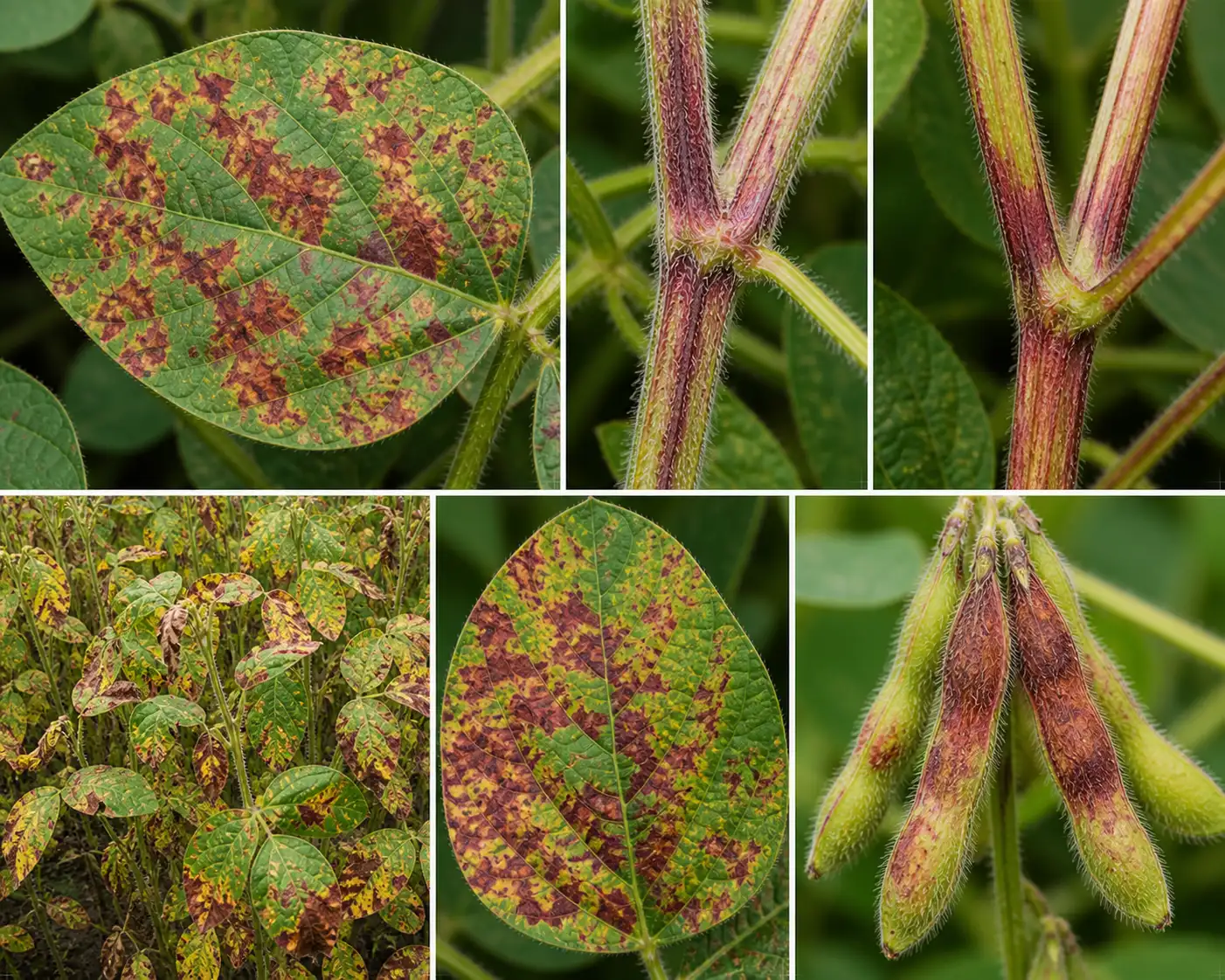
Red leaf blotch / red node
Red Leaf Blotch / Red Node (Soybean) (commonly associated with fungal infection like Cercospora canescens infection) affects leaves and stems.
-
Leaves show reddish-brown irregular blotches
-
Spots may enlarge and cause leaf drying and burning appearance
-
Stems and nodes develop reddish discoloration (red node)
-
Severe infection leads to early leaf drop
-
Reduces plant vigor and yield
Conditions:
-
Common in warm, humid weather
-
Spreads through infected crop residues and rain splash
Management:
-
Use clean and certified seeds
-
Practice crop rotation
-
Remove infected plant debris
-
Apply fungicides if required
Product That Matches The Disease
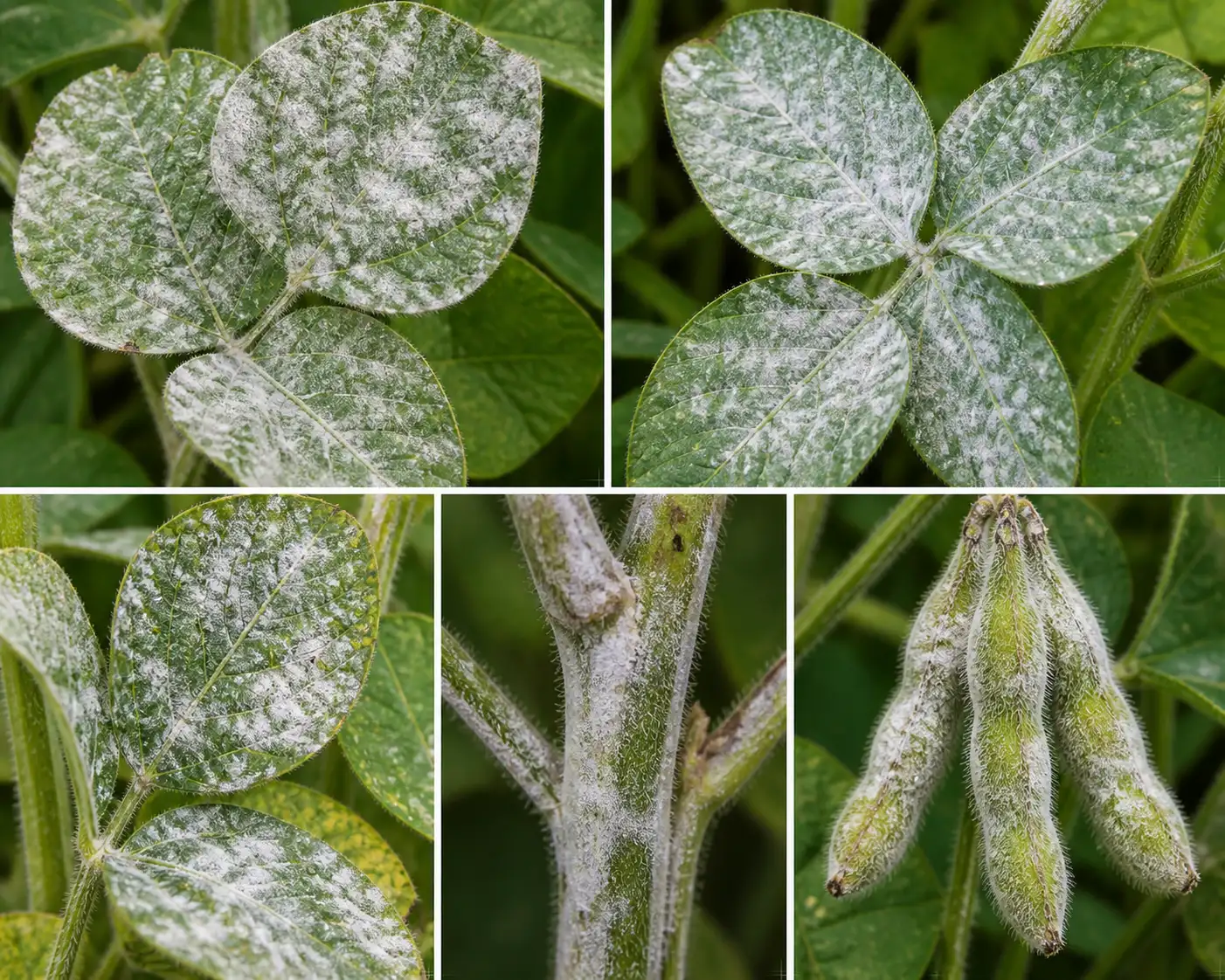
Powdery mildew
Powdery Mildew (Soybean) (caused by the fungus Erysiphe diffusa infection) is a common foliar disease.
- Appears as white powdery growth on leaves, stems, and pods
- Infected leaves may turn yellow and dry
- Severe infection leads to premature leaf drop
- Pods may be affected, causing poor seed development
- Reduces photosynthesis and yield
Conditions:
- Common in cool to moderate temperatures with high humidity
- Does not require free water to spread (unlike many other fungi)
Management:
- Use resistant varieties
- Maintain proper plant spacing for airflow
- Avoid excess nitrogen fertilizer
- Apply fungicides if disease is severe
Product That Matches The Disease
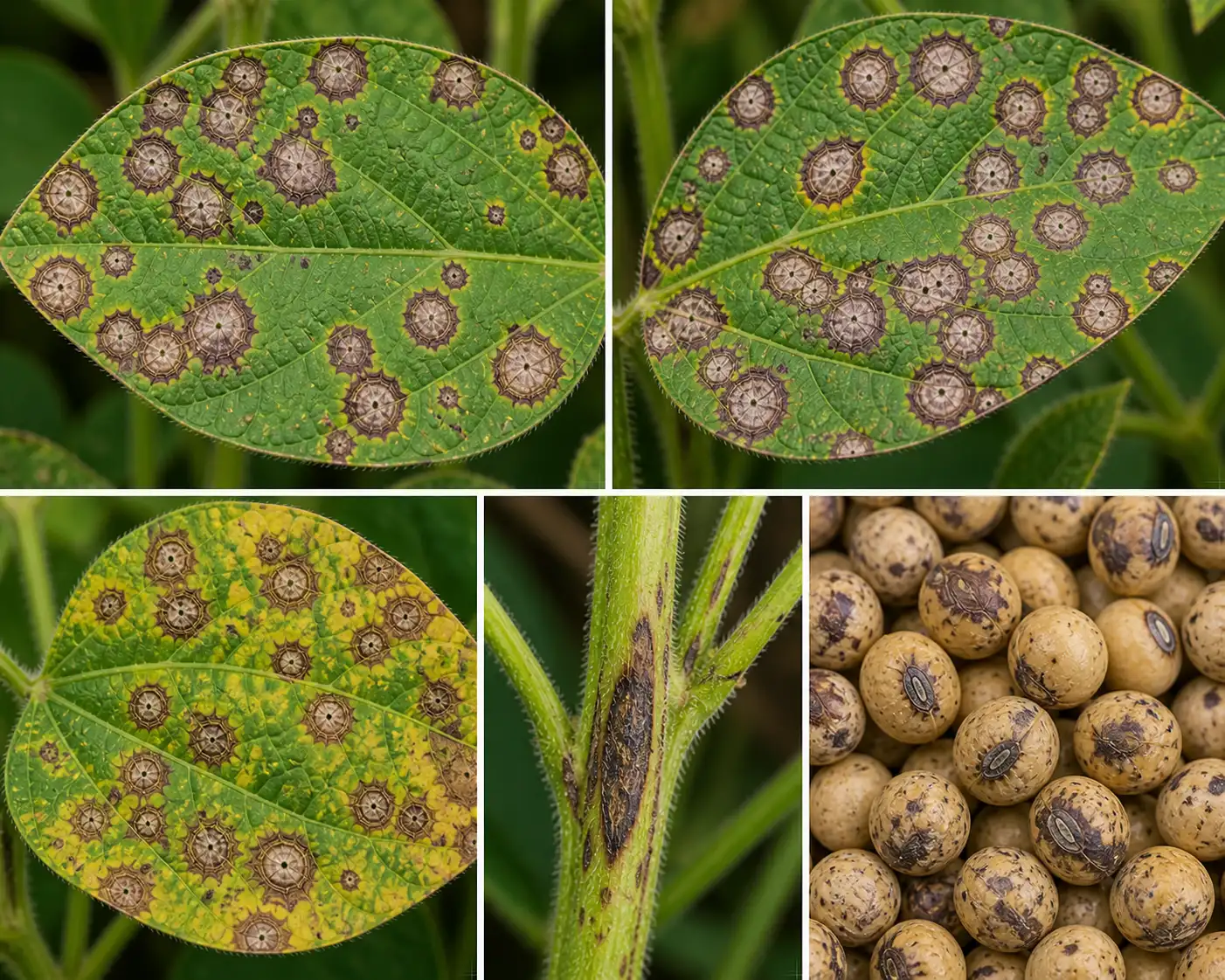
Myrothecium leaf spot
Myrothecium Leaf Spot (Soybean) (caused by the fungus Myrothecium roridum infection) mainly affects leaves and sometimes stems.
-
Shows small circular to irregular brown spots on leaves
-
Spots may have dark borders with lighter centers
-
Severe infection leads to leaf yellowing and drying
-
Tiny black fruiting bodies may be seen in the center of spots
-
Can cause premature leaf drop
Conditions:
-
Common in warm and humid weather
-
Spreads through infected plant debris and splashing water
Management:
-
Remove infected crop residues
-
Maintain proper plant spacing for air circulation
-
Avoid excess moisture on leaves
-
Apply fungicides if necessary
Product That Matches The Disease
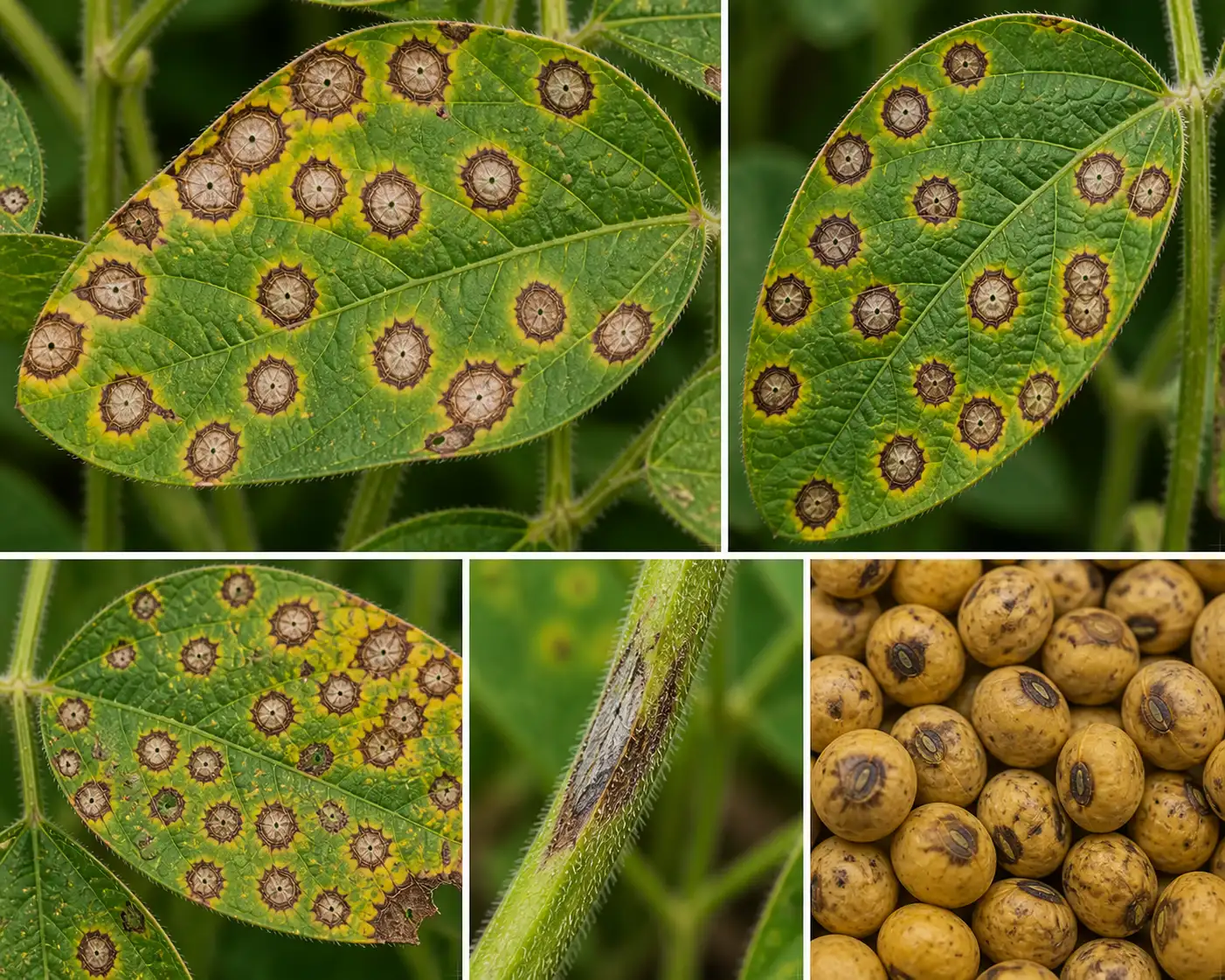
Frog eye leaf spot
Frog Eye Leaf Spot (Soybean) (caused by the fungus Cercospora sojina infection) is a common foliar disease.
-
Shows circular spots with light grey centers and dark reddish-brown borders
-
Spots resemble a frog’s eye pattern
-
Severe infection causes leaf yellowing and early leaf drop
-
Can also infect stems and pods
-
Leads to reduced photosynthesis and yield loss
Conditions:
-
Common in warm, humid weather
-
Spreads through infected crop residue and seeds
Management:
-
Use resistant varieties
-
Practice crop rotation
-
Remove infected plant debris
-
Apply fungicides if needed
Product That Matches The Disease
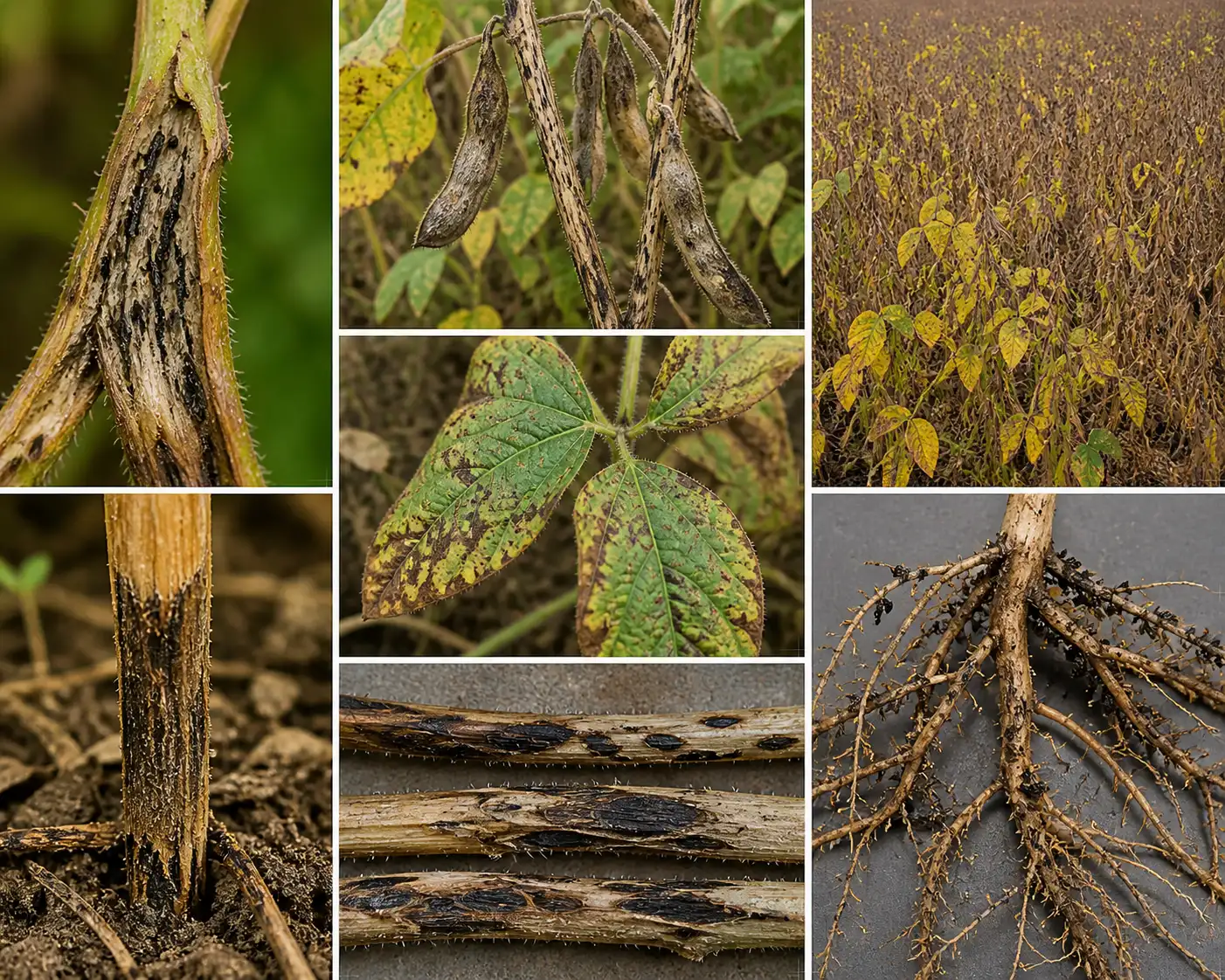
Charcoal rot, ashy or stem blight or dry root rot
Charcoal Rot / Ashy Stem Blight / Dry Root Rot (Soybean) (caused by the fungus Macrophomina phaseolina infection) is a serious soil-borne disease.
-
Plants show yellowing, wilting, and drying, especially during hot weather
-
Stem base develops grey to black discoloration
-
Inner stem tissues become dry, shredded, and charcoal-like
-
Roots rot and show black microsclerotia (ashy appearance)
-
Leads to premature plant death and poor yield
Conditions:
-
Common in high temperature and dry soil conditions
-
Severe under moisture stress
Management:
-
Use drought-tolerant and resistant varieties
-
Maintain proper irrigation
-
Follow crop rotation
-
Improve soil health and organic matter
Product That Matches The Disease
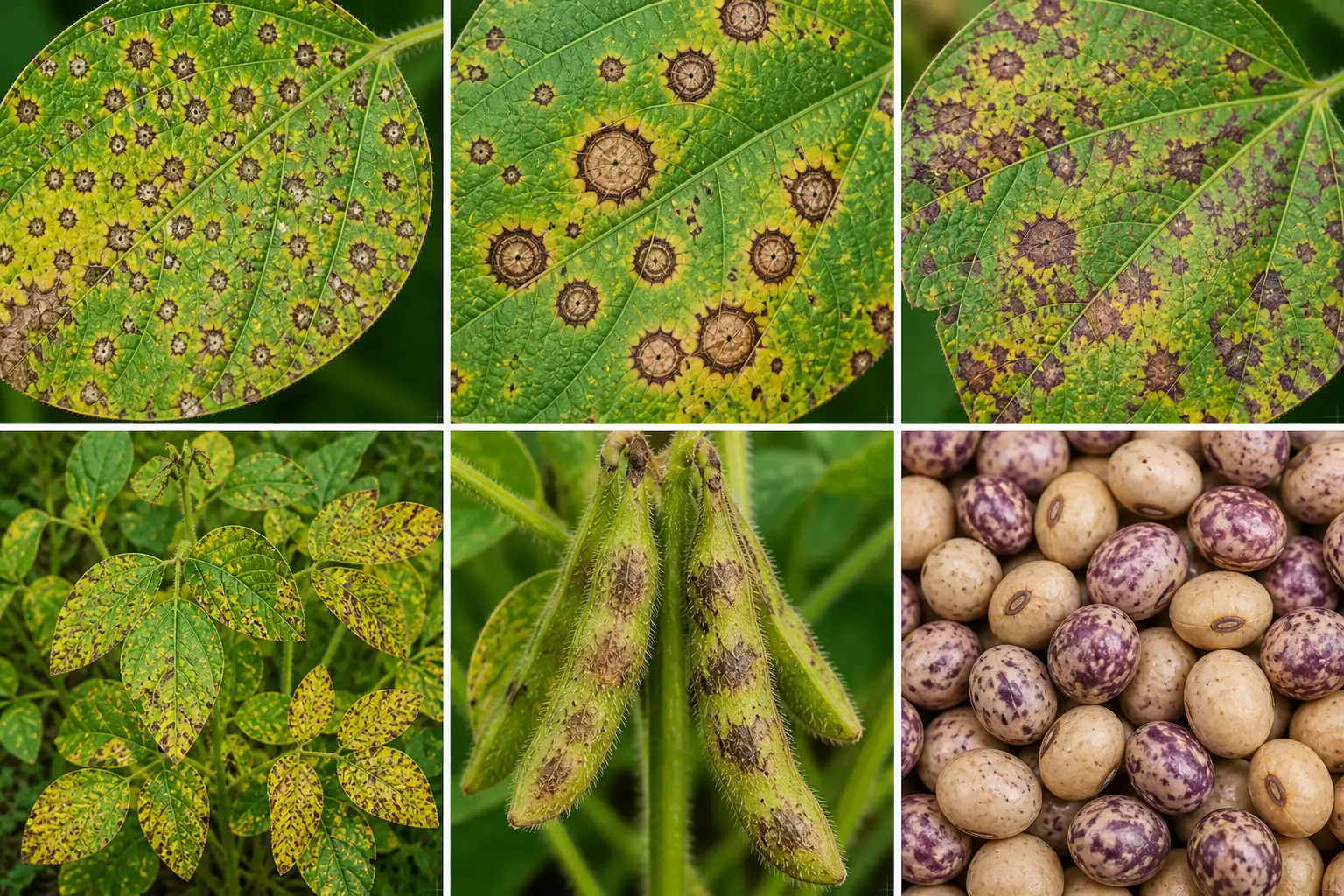
Cercospora leaf blight, leaf spot and Purple seed stain
Cercospora Leaf Blight, Leaf Spot & Purple Seed Stain (Soybean) are related diseases caused by the fungus Cercospora kikuchii infection.
Symptoms:
- Leaf Blight:
- Upper leaves show bronze to purple discoloration
- Leaves may become leathery and dry
- Leaf Spot:
- Small reddish-brown to dark spots on leaves
- Spots may merge, causing leaf damage and drying
- Purple Seed Stain:
- Seeds develop purple discoloration
- Reduces seed quality and market value
Other Effects:
- Can cause early leaf drop
- Reduces photosynthesis and yield
- Infection often starts late in the growing season
Conditions:
- Common in warm, humid weather
- Spreads through infected seeds and crop residues
Management:
- Use disease-free seeds
- Follow crop rotation
- Apply fungicides when necessary
- Maintain field sanitation
Product That Matches The Disease
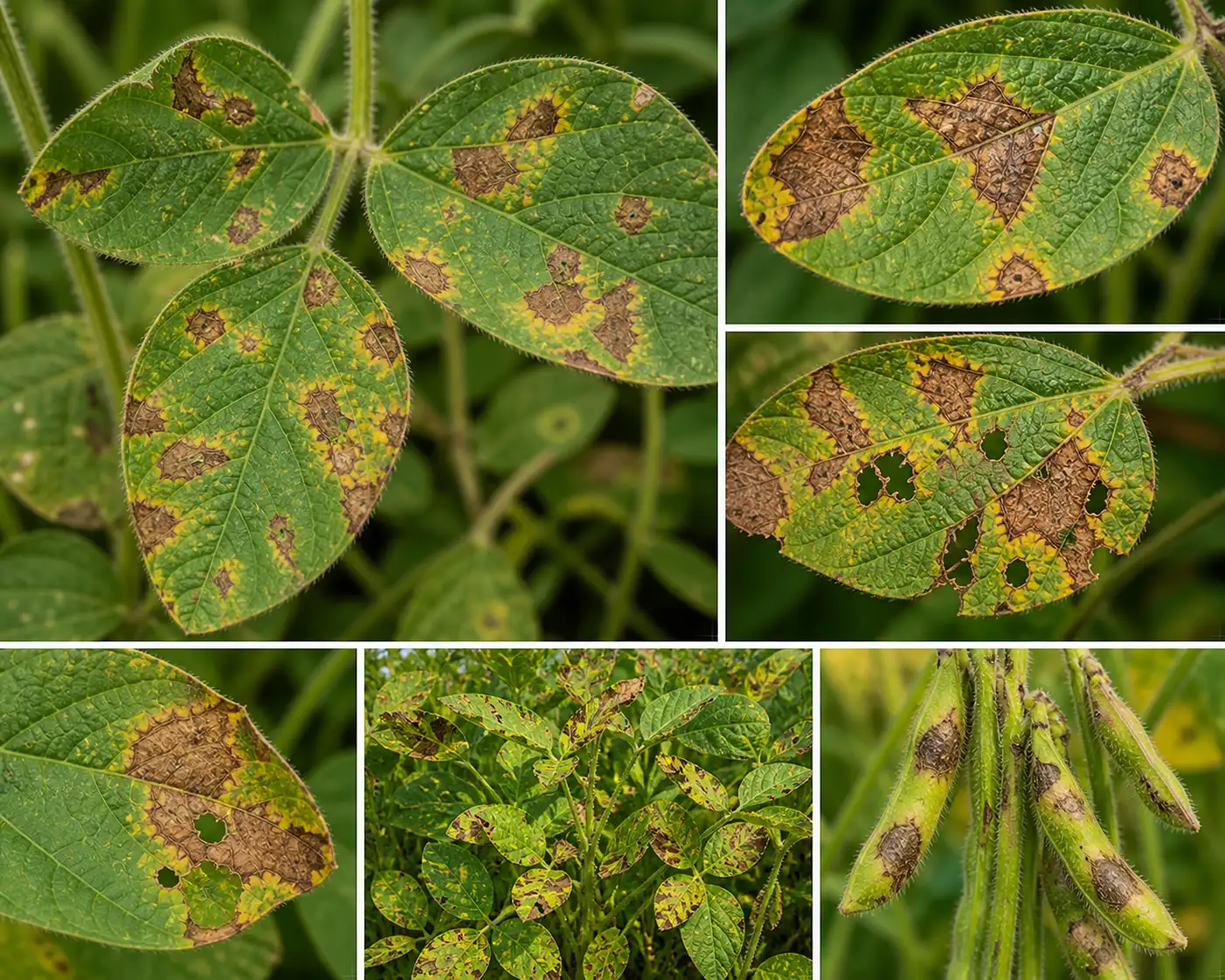
Bacterial blight
Bacterial Blight (Soybean) (caused by the bacterium Pseudomonas syringae pv. glycinea infection) affects leaves and stems.
- Starts as small, water-soaked spots on leaves
- Spots enlarge into angular brown lesions with yellow halos
- Infected areas may dry and tear, giving a ragged leaf appearance
- Leaves can yellow and drop early
- Disease spreads through rain splash, wind, and infected seeds
Common in cool, wet weather conditions.
Using disease-free seeds, crop rotation, and avoiding overhead irrigation helps manage the disease.
Product That Matches The Disease
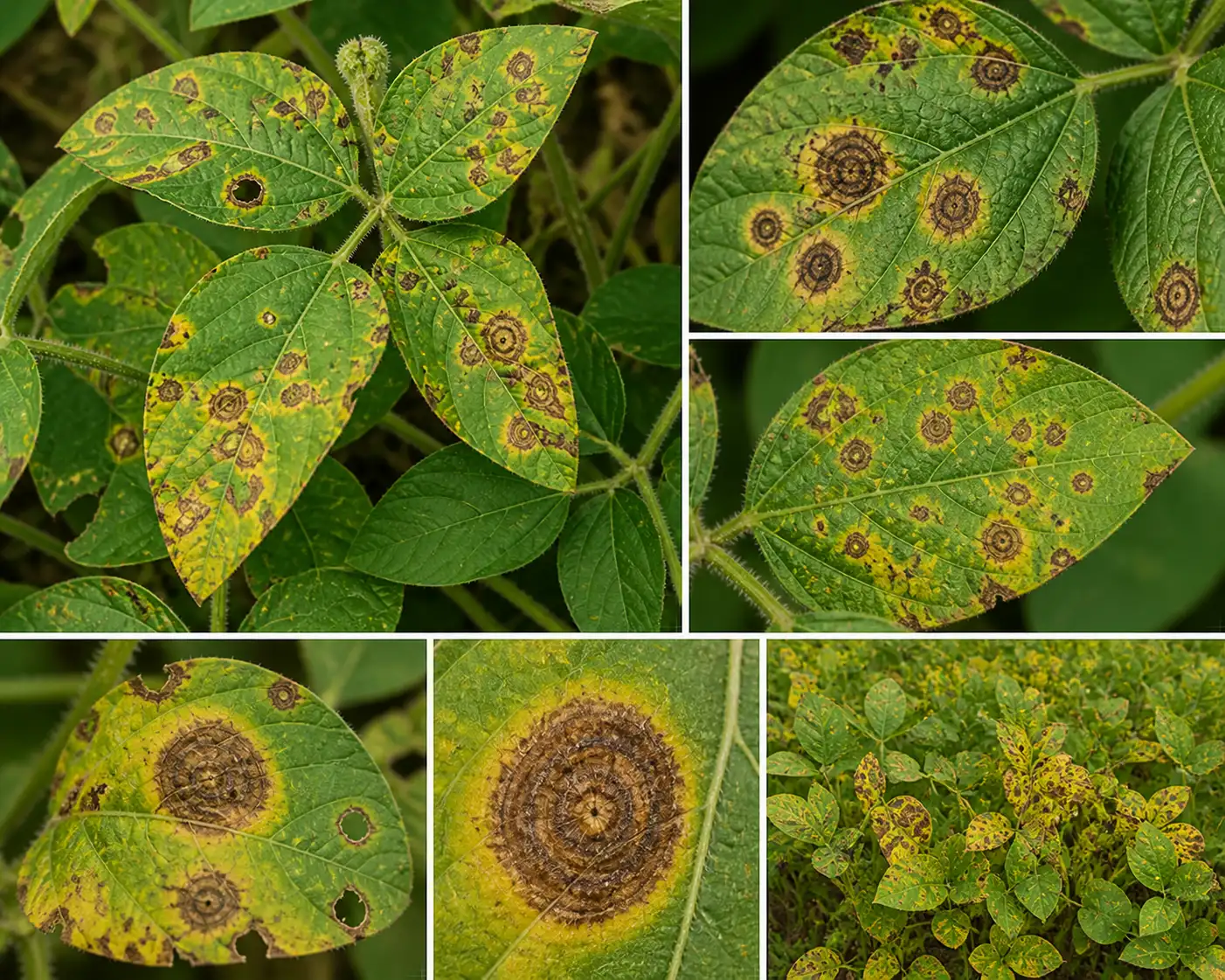
Alternaria leaf spot
Alternaria Leaf Spot (Soybean) (caused by the fungus Alternaria alternata infection) mainly affects leaves.
- Shows small to large brown spots with concentric rings (target-like pattern)
- Spots may have yellow halos around lesions
- Leaves turn yellow and may drop early
- Severe infection reduces photosynthesis and yield
- Can also affect pods in advanced stages
Common in warm, humid conditions with high moisture.
Crop rotation, field sanitation, and fungicide application help manage the disease.
Product That Matches The Disease
FAQ
Frequently Ask Questions
What products does Ekhande Agro Fertilizers offer?
We provide high-quality fertilizers and crop protection solutions designed to enhance crop nutrition and productivity while promoting sustainable farming practices.
How can Ekhande Agro help improve crop yields?
Our products are formulated to ensure optimal crop nutrition, helping farmers achieve higher yields with lower input costs, while maintaining soil health.
Are your fertilizers eco-friendly?
Yes, our fertilizers are developed with a focus on sustainability, ensuring they are safe for the environment and promote long-term agricultural health.
Do you provide guidance or support to farmers?
Absolutely! We assist farmers with expert advice, innovative solutions, and product recommendations tailored to their specific agricultural needs.