
Sunflower is an oilseed crop renowned for its large, vibrant flowers and seeds, which yield high-quality edible oil and are popular as snacks. Native to North America, it is grown commercially for its drought tolerance and pollinator-friendly nature, contributing to biodiversity and agricultural economies through oil, bird feed, and ornamental uses.
.jpg)
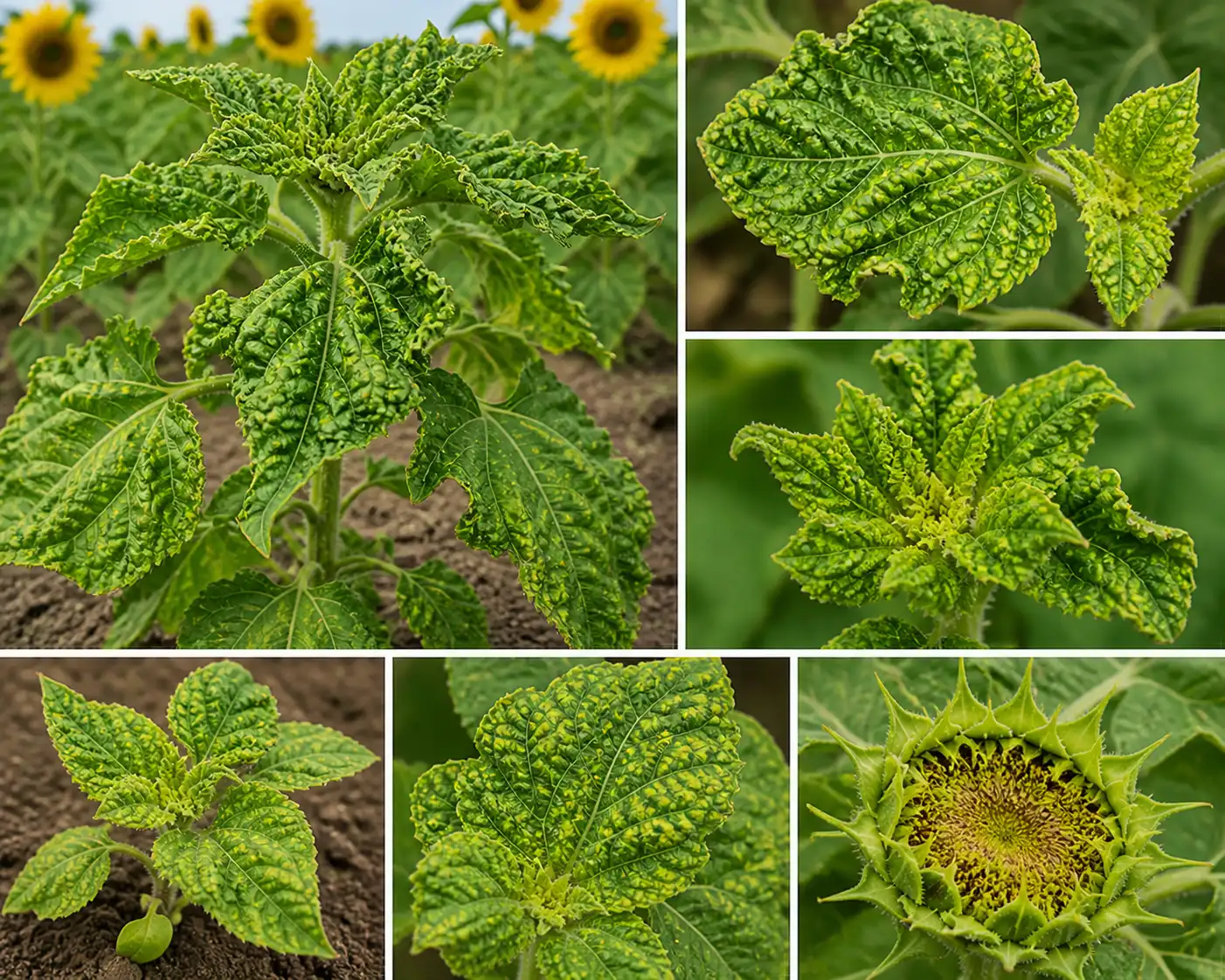
Leaf crinkle disease
Leaf Crinkle Disease (Sunflower) (often associated with viral infection like Sunflower leaf crinkle virus infection) affects young growing parts.
- Leaves become crinkled, puckered, and distorted
- Shows uneven growth and wrinkled surface
- Plants become stunted and bushy
- Flower heads may be small or malformed
- Leads to reduced seed yield
Spread mainly through insect vectors (like aphids) and infected plants.
Using healthy seeds and controlling insect vectors helps manage the disease.
Product That Matches The Disease
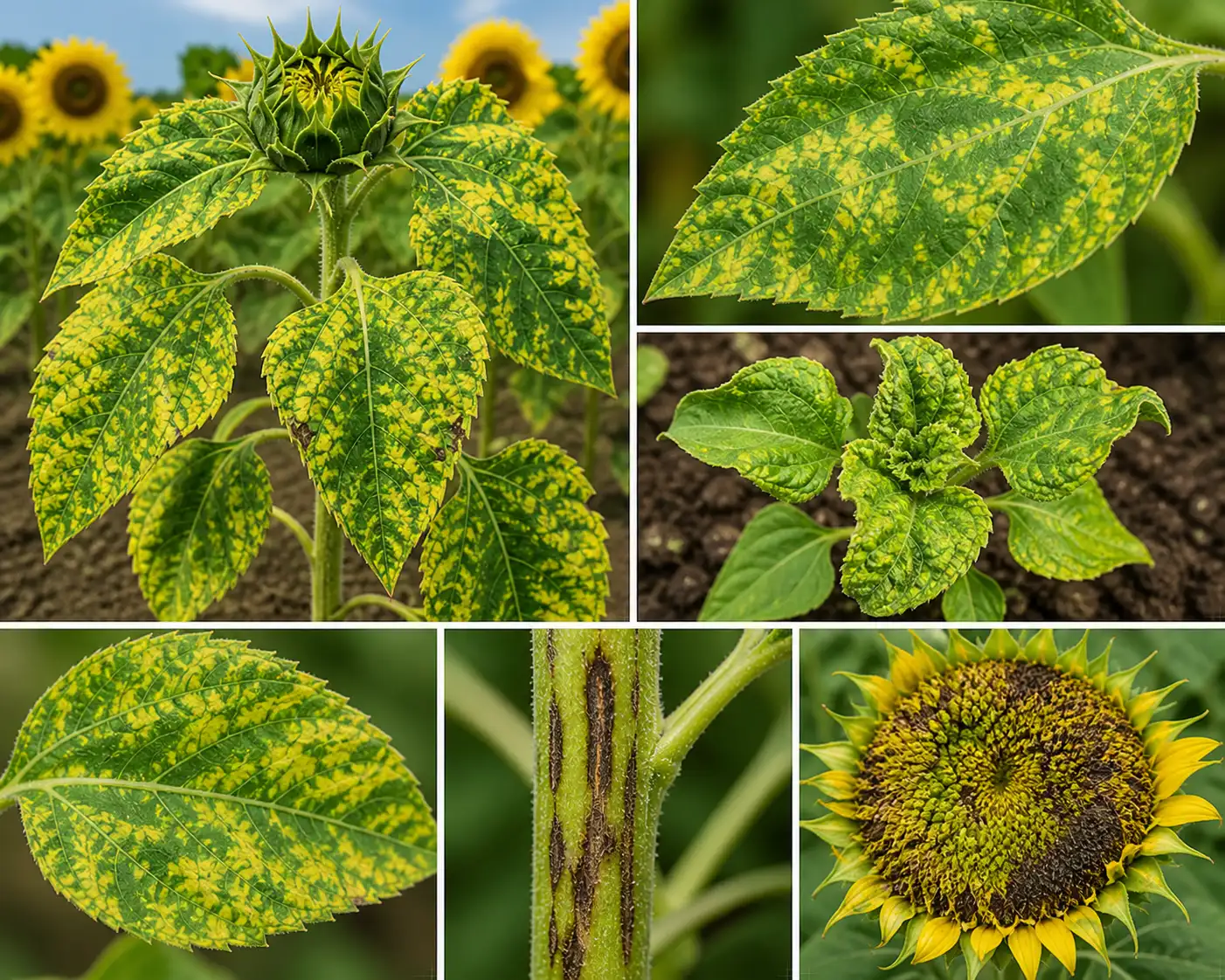
Sunflower mosaic virus (SMV)
Sunflower Mosaic Virus (SMV) is a viral disease that affects sunflower growth and yield.
-
Leaves show mosaic pattern (light and dark green patches)
-
Leaves may become distorted, wrinkled, or narrow
-
Plants show stunted growth
-
Flower heads may be small and poorly developed
-
Can cause reduced seed formation and yield loss
The virus spreads through aphids (insect vectors) and infected plant material.
Using resistant varieties and controlling aphids helps manage the disease.
Product That Matches The Disease
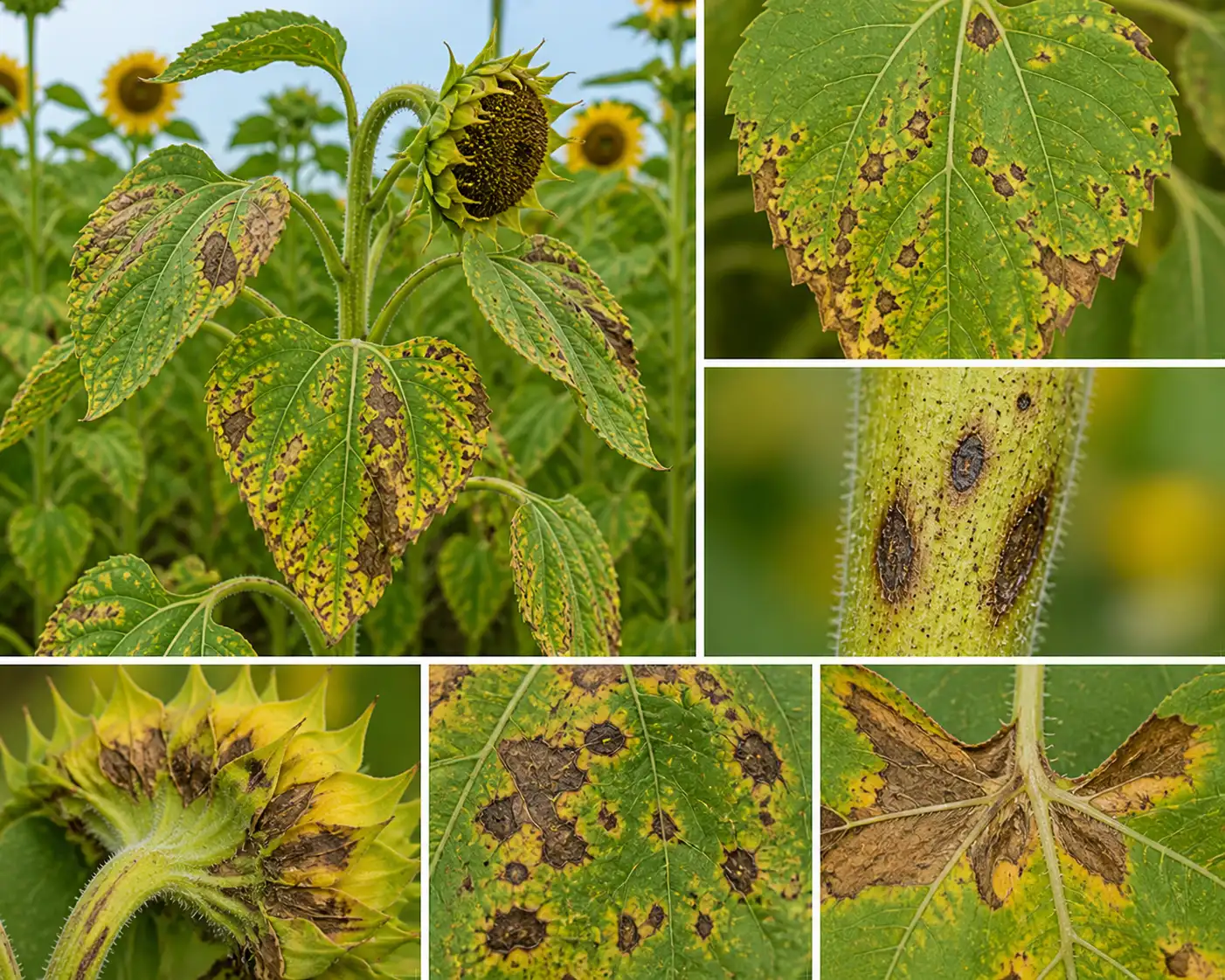
Sunflower necrosis
Sunflower Necrosis (often associated with viruses like Tobacco streak virus infection) affects leaves, stems, and flower parts.
-
Leaves develop brown to black dead (necrotic) spots and patches
-
Spots may enlarge and cause leaf drying and tearing
-
Stems can show dark lesions and streaks
-
Flower heads may become damaged and poorly developed
-
Plants show stunted growth and reduced yield
Usually spreads through insect vectors (like thrips) and infected plant material.
Proper field sanitation and vector control help manage the disease.
Product That Matches The Disease
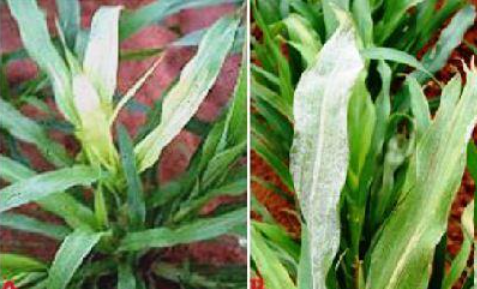
Downy Mildew
- Downy mildew: At the advancement of disease, the leaf streaks turn brown and the leaves become shredded longitudinally. In severe infection, the downy fungal growth can be seen on the upper as well as lower surface of the leaves.
Product That Matches The Disease
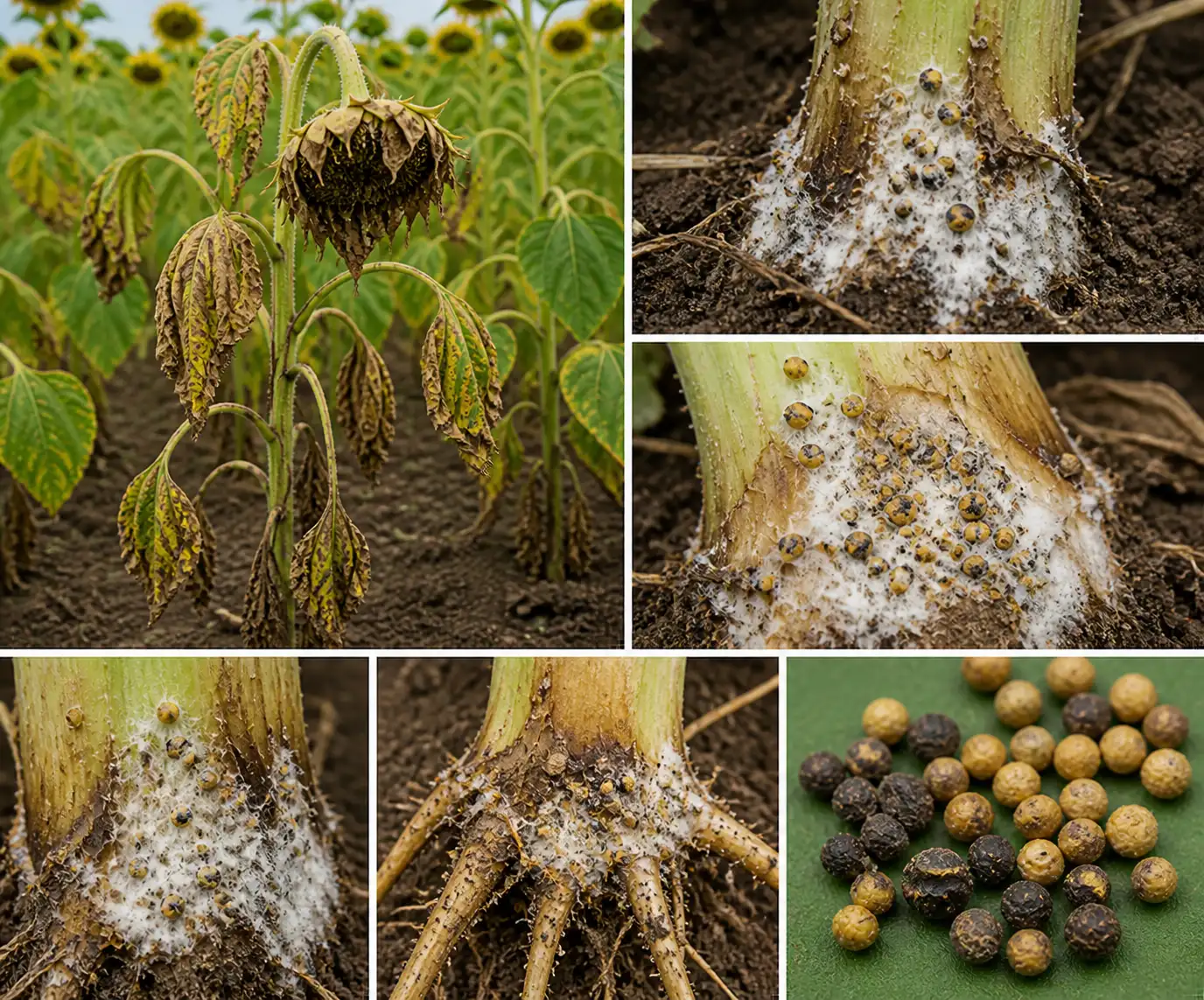
Sclerotium wilt or rot
Sclerotium Wilt / Rot (Sunflower) (caused by the fungus Sclerotium rolfsii infection) is a destructive soil-borne disease.
-
Plants show sudden wilting and collapse
-
Stem base develops soft rot with white cottony growth
-
Presence of small mustard-like round bodies (sclerotia)
-
Roots and collar region become rotted and weak
-
Leads to complete plant death in severe cases
Common in warm, moist soil conditions.
Good drainage, crop rotation, and field sanitation help control the disease.
Product That Matches The Disease
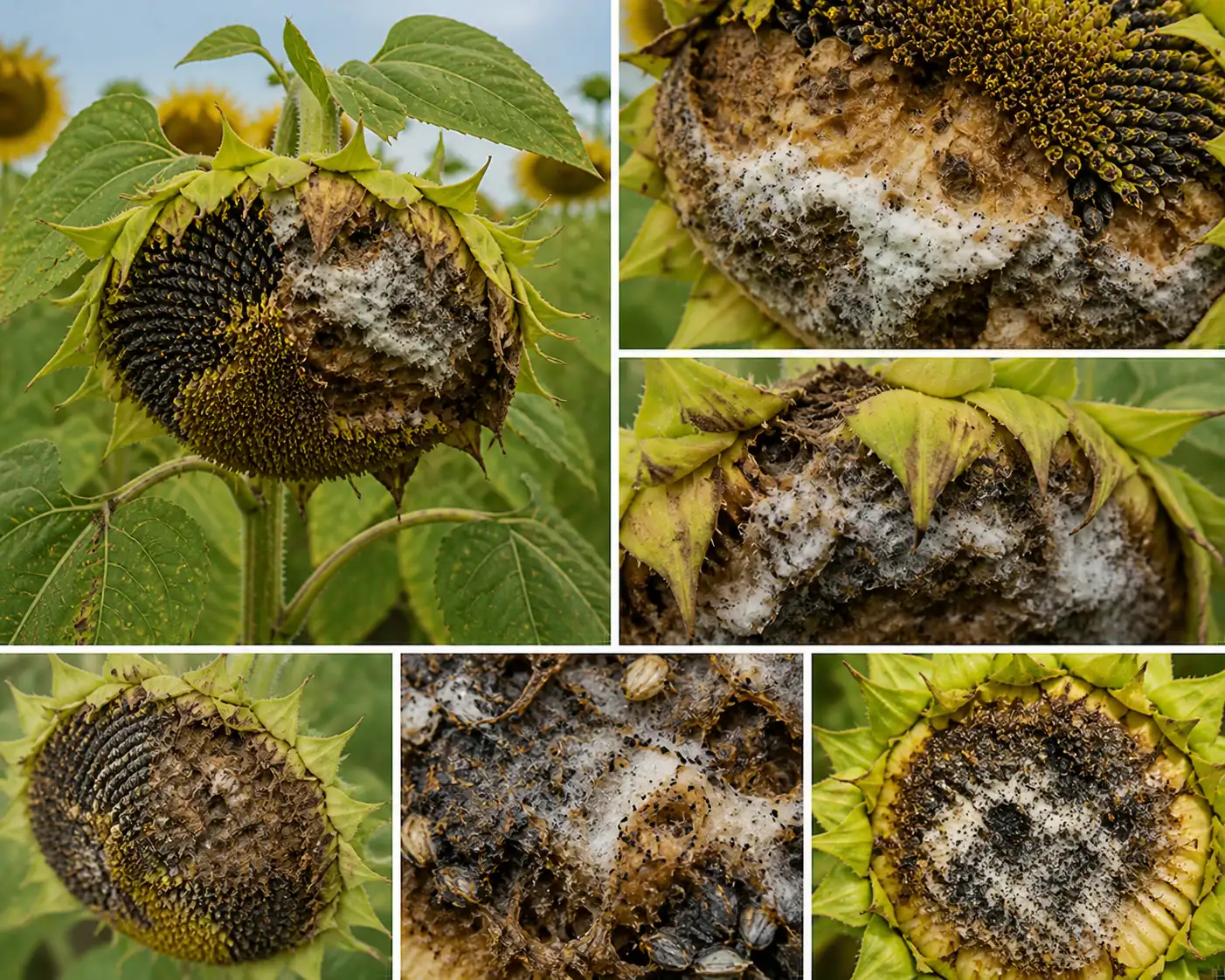
Rhizopus Head Rot
Rhizopus Head Rot (Sunflower)


Rhizopus Head Rot (caused by the fungus Rhizopus spp. infection) affects the flower head of sunflower.
-
Head shows soft, watery rot starting from injured areas
-
Infected parts become brown and mushy
-
Later develops white cottony fungal growth
-
Black spores may appear, giving a dark, moldy look
-
Seeds become rotten and unfit for harvest
Common in warm, humid conditions and spreads through wounds or insect damage.
Product That Matches The Disease
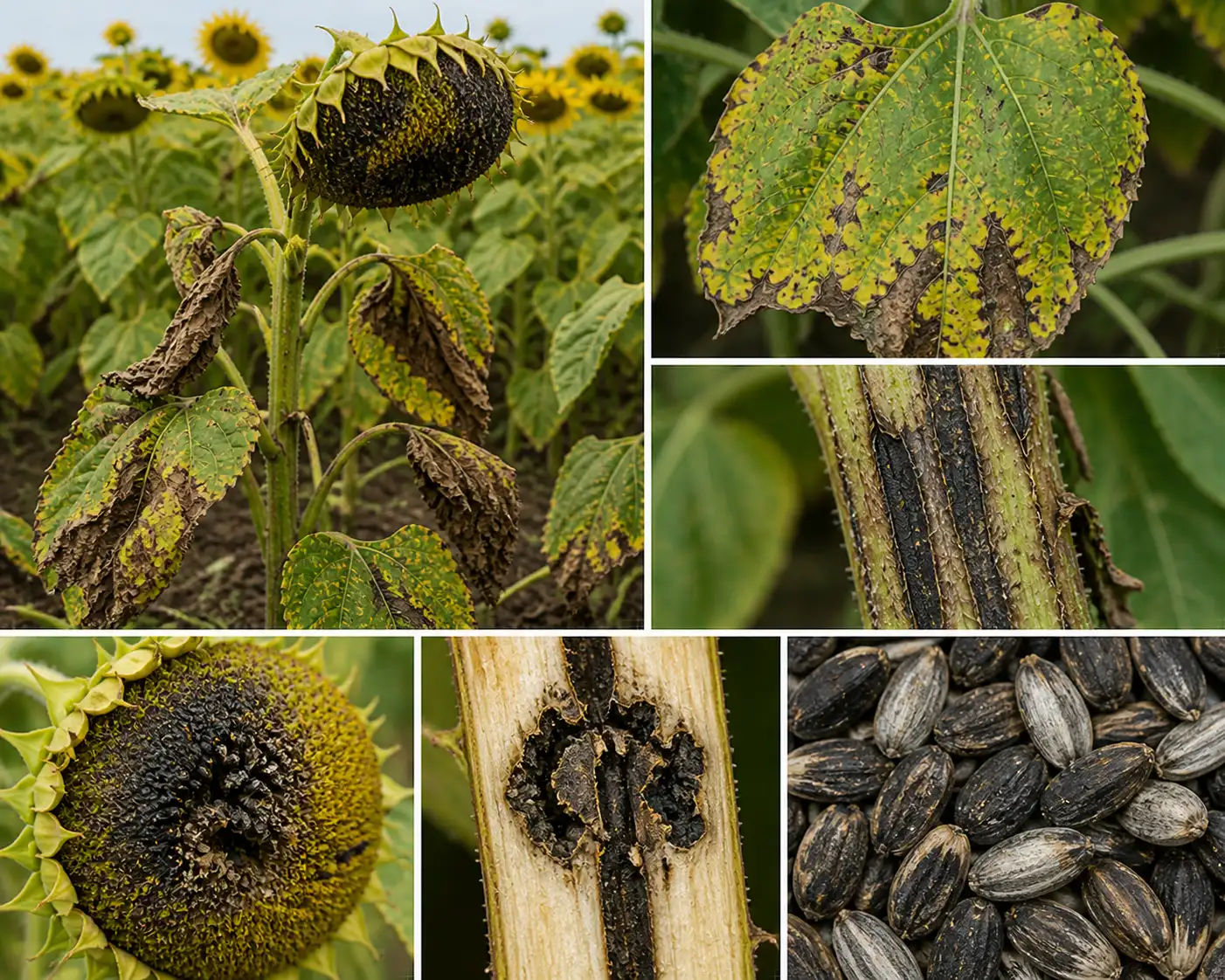
Charcoal Rot
Charcoal Rot (Sunflower) (caused by the fungus Macrophomina phaseolina infection) is a serious soil-borne disease.
-
Plants show wilting and drying, especially in hot weather
-
Stem base develops black discoloration with charcoal-like powder
-
Inner stem tissues become shredded and weak
-
Leaves turn yellow, then brown and dry
-
Severe infection leads to premature plant death
Common in hot and dry conditions with moisture stress.
Crop rotation, proper irrigation, and resistant varieties help manage the disease.
Product That Matches The Disease
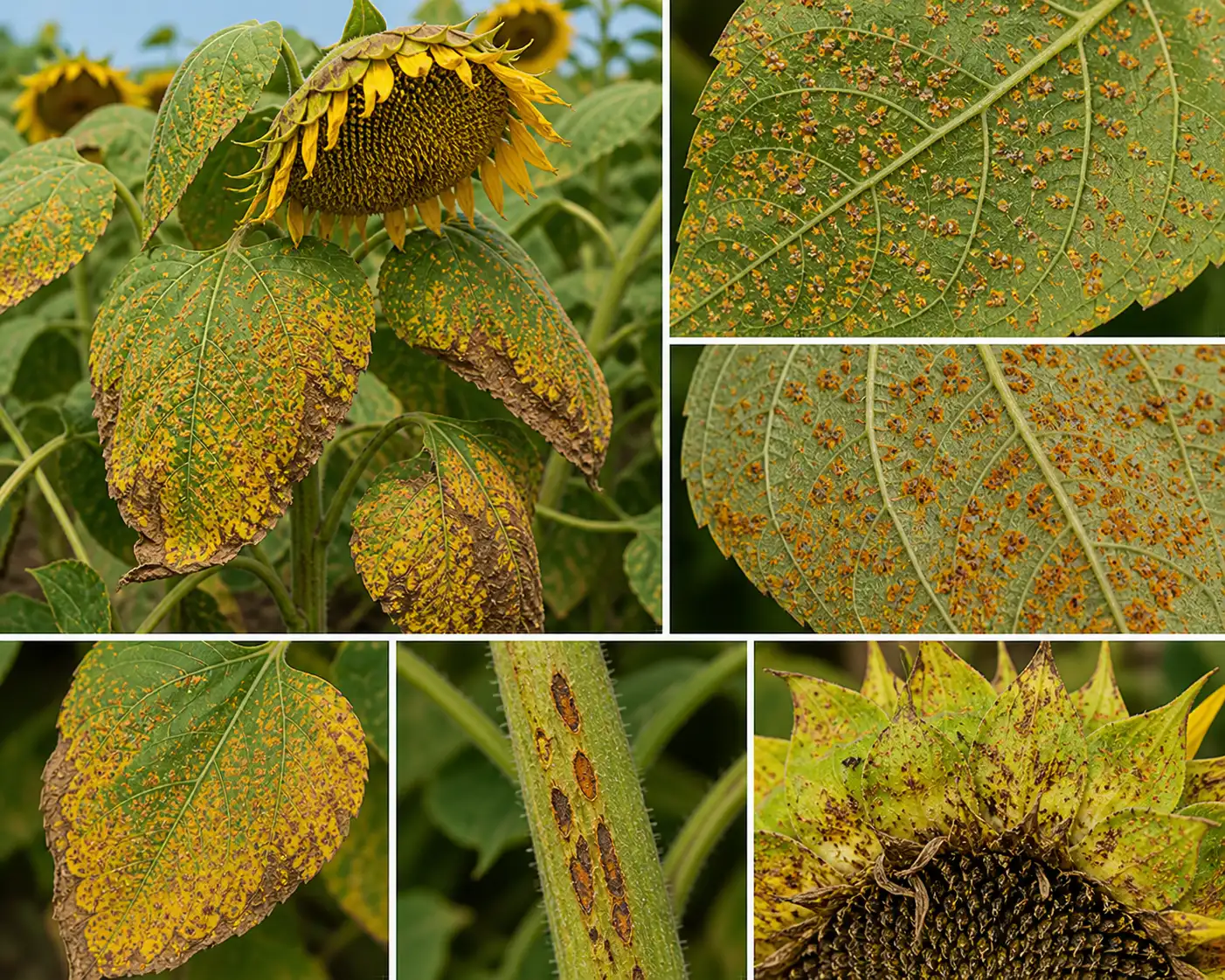
Rust
Rust (Sunflower) (caused by the fungus Puccinia helianthi infection) is a common foliar disease.
-
Shows small orange to reddish-brown pustules on leaves
-
Pustules may appear on both upper and lower leaf surfaces
-
Leaves turn yellow and dry in severe infection
-
Reduces photosynthesis and plant vigor
-
Common in warm and humid conditions
Using resistant varieties and timely fungicide application helps control the disease.
Product That Matches The Disease
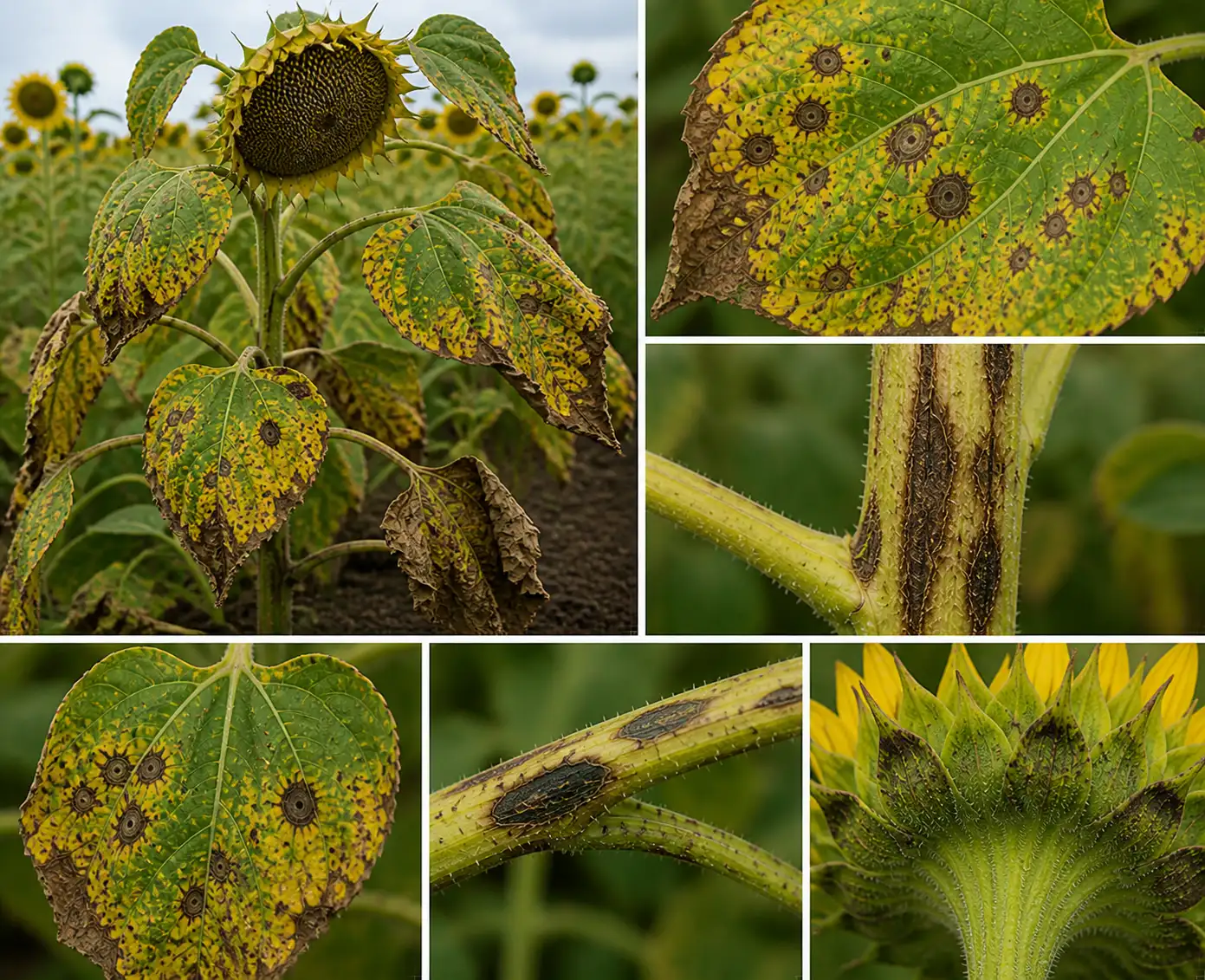
Alternaria Blight
Alternaria Blight (Sunflower) (caused by the fungus Alternaria helianthi infection) is a common disease of sunflower.
-
Shows dark brown to black spots with concentric rings on leaves
-
Spots enlarge and cause leaf yellowing and drying
-
Severe infection leads to premature leaf drop
-
Stems and petioles may develop elongated dark lesions
-
Can infect flower heads, reducing seed quality and yield
Good field sanitation, crop rotation, and timely fungicide use help manage the disease.
Product That Matches The Disease

FAQ
Frequently Ask Questions
What products does Ekhande Agro Fertilizers offer?
We provide high-quality fertilizers and crop protection solutions designed to enhance crop nutrition and productivity while promoting sustainable farming practices.
How can Ekhande Agro help improve crop yields?
Our products are formulated to ensure optimal crop nutrition, helping farmers achieve higher yields with lower input costs, while maintaining soil health.
Are your fertilizers eco-friendly?
Yes, our fertilizers are developed with a focus on sustainability, ensuring they are safe for the environment and promote long-term agricultural health.
Do you provide guidance or support to farmers?
Absolutely! We assist farmers with expert advice, innovative solutions, and product recommendations tailored to their specific agricultural needs.