
Tomato is a popular fruit vegetable crop cherished for its vibrant red fruits, rich in vitamins and antioxidants, used fresh in salads or processed into sauces and ketchup. Originating from South America, it is a warm-season plant integral to cuisines worldwide, with high market demand driving greenhouse and field cultivation.
Fusarium Wilt
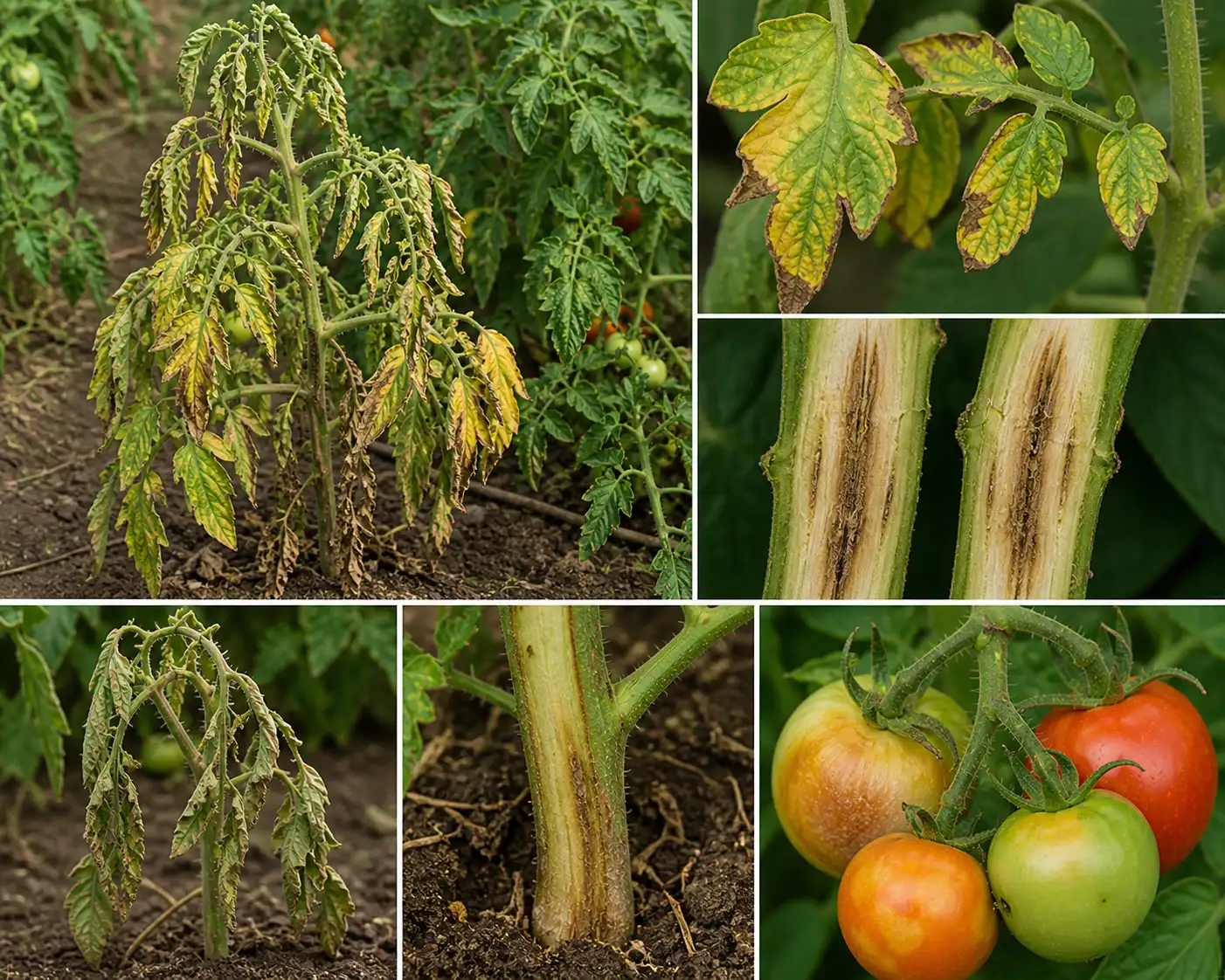
Fusarium Wilt (Tomato) (caused by the fungus Fusarium oxysporum f. sp. lycopersici infection) is a serious soil-borne disease.
-
Leaves show yellowing, usually starting from one side of the plant
-
Plants gradually wilt during the day and may recover at night (early stage)
-
Later, whole plant becomes permanently wilted and dries
-
Stem shows brown discoloration inside (vascular tissues)
-
Common in warm soil conditions
Using resistant varieties, crop rotation, and well-drained soil helps manage the disease.
Product That Matches The Disease
Tomato Spotted Wilt Disease
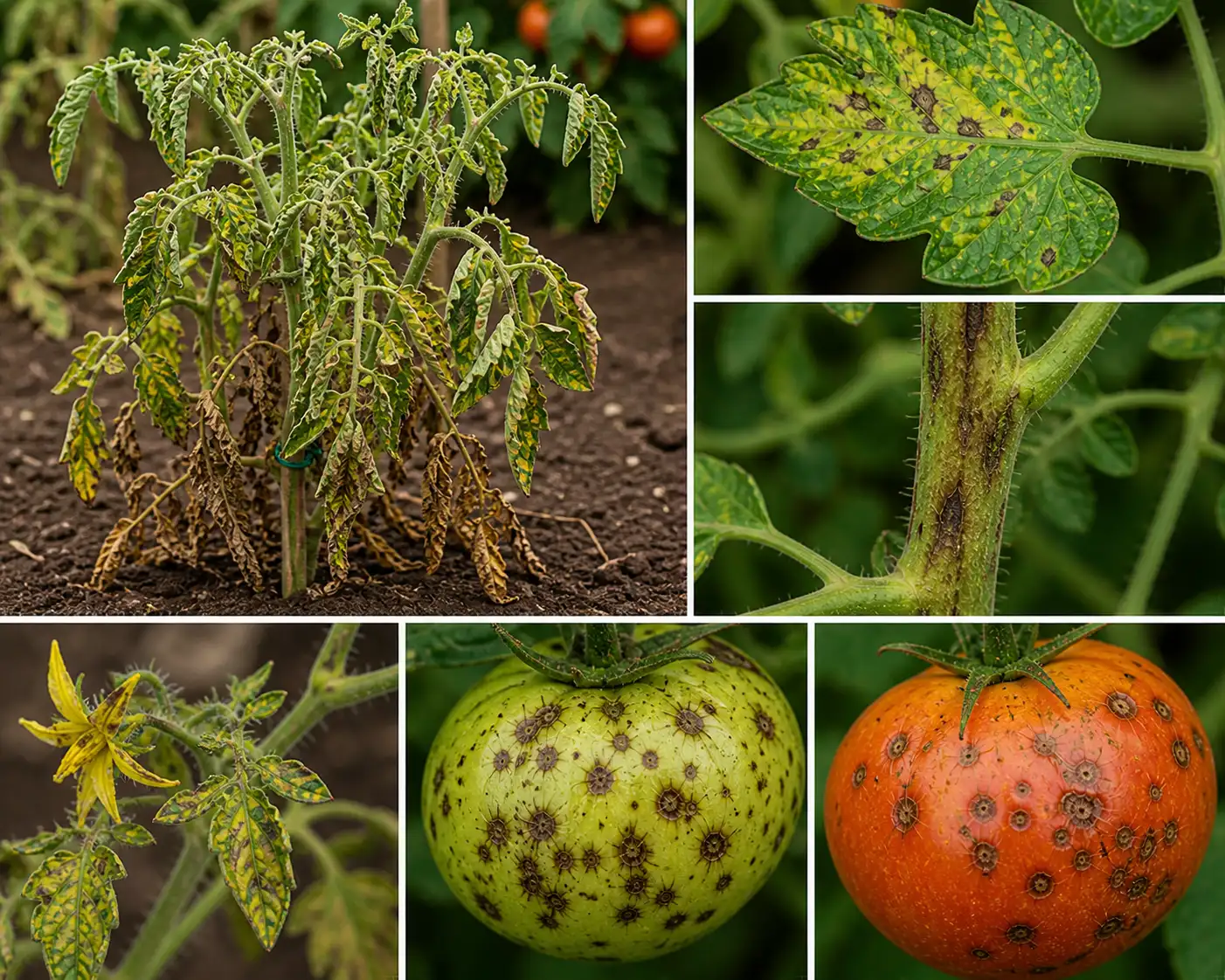
Tomato Spotted Wilt Disease is a viral disease caused by Tomato spotted wilt virus infection.
-
Leaves show bronzing, yellowing, and small dark spots
-
Young leaves may become twisted and distorted
-
Plants show stunted growth and wilting
-
Fruits develop rings, spots, or uneven ripening
-
Spread by thrips insects (vector)
Controlling thrips and using resistant varieties helps manage the disease.
Product That Matches The Disease
Mosaic
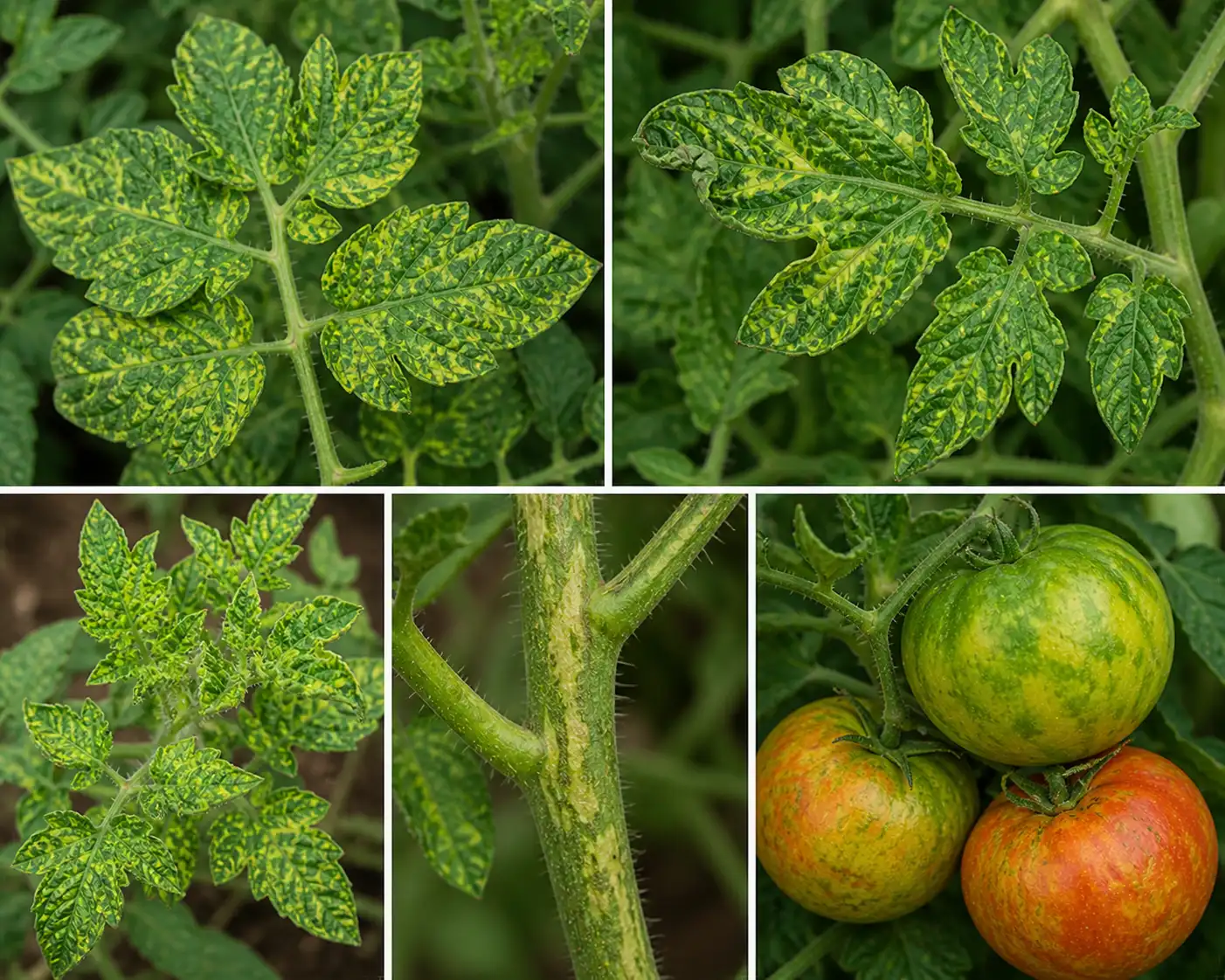
Mosaic Disease (Tomato) is a viral disease caused by viruses like Tomato mosaic virus infection and Tobacco mosaic virus infection.
-
Leaves show light and dark green mottling (mosaic pattern)
-
Leaves may become distorted, wrinkled, or narrow
-
Plants show stunted growth
-
Fruits may be uneven in color and poorly developed
-
Spread through infected tools, hands, and plant contact
Using resistant varieties and maintaining field hygiene helps control the disease.
Product That Matches The Disease
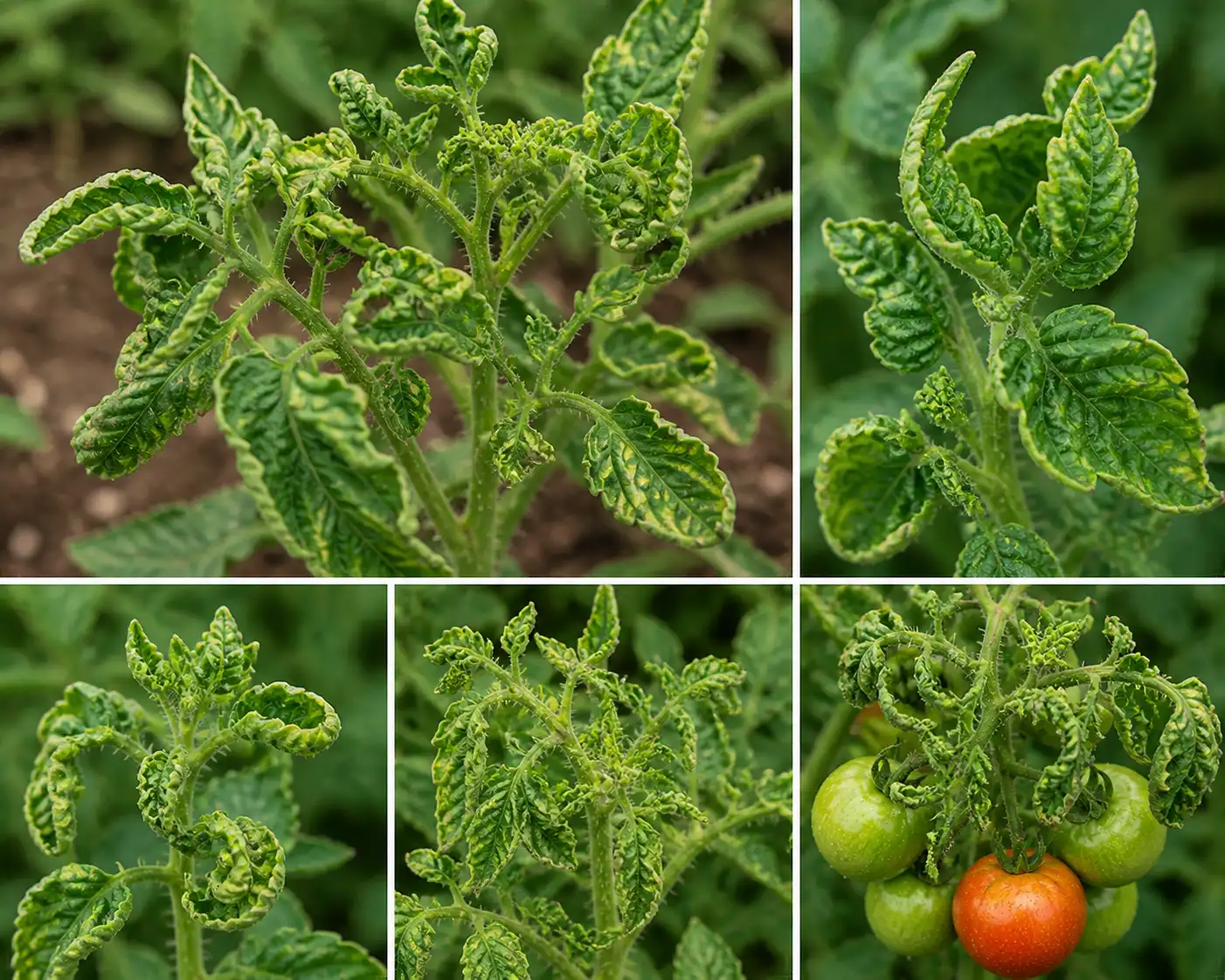
Leaf Curl
Leaf Curl (Tomato) is mainly caused by viruses like Tomato yellow leaf curl virus infection and is spread by whiteflies.
-
Leaves become curled, twisted, and smaller in size
-
Shows yellowing of leaf margins and veins
-
Plants become stunted with reduced growth
-
Fewer flowers and poor fruit development
-
Spread by whitefly insects (vector)
Using resistant varieties and controlling whiteflies helps manage the disease.
Product That Matches The Disease
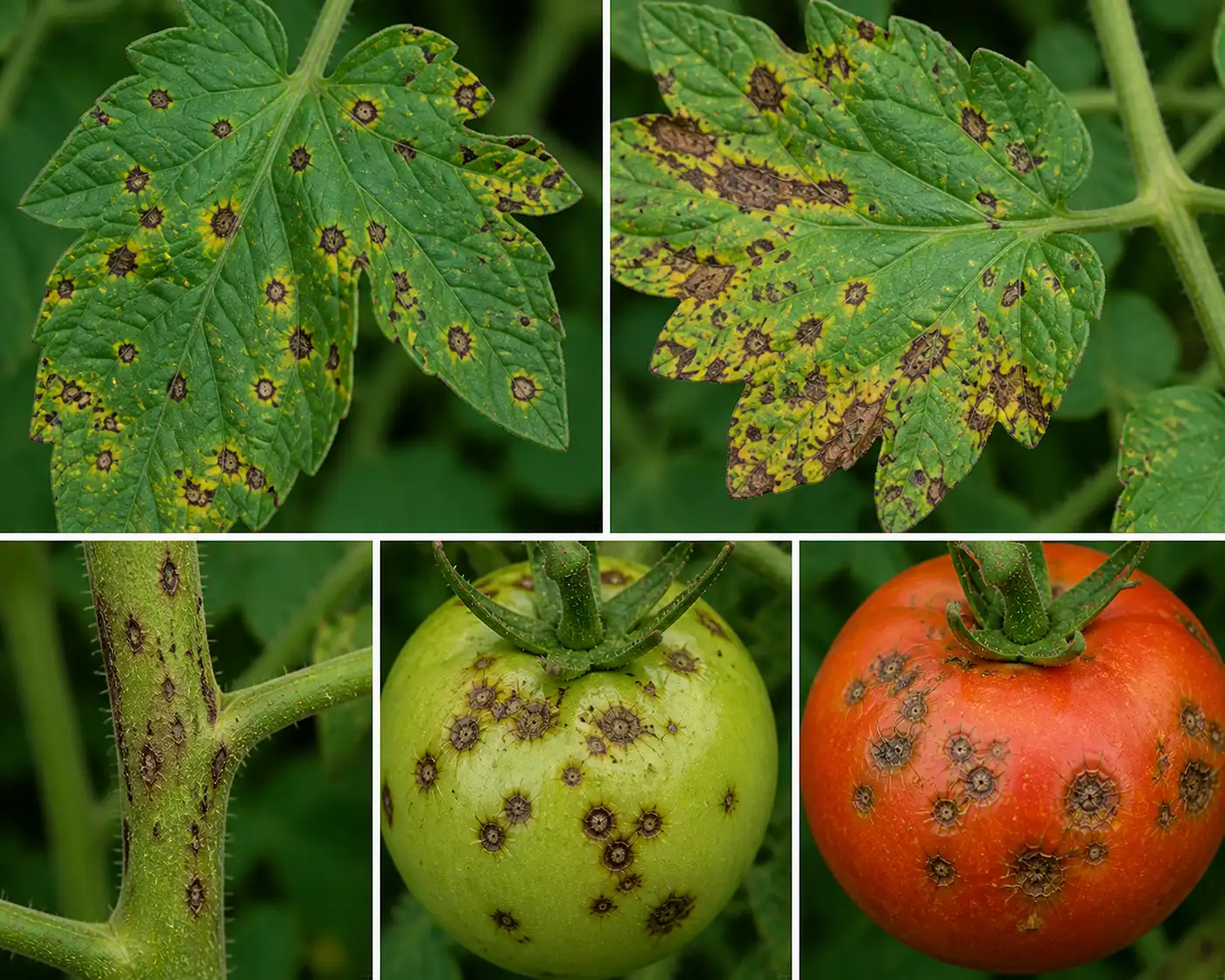
Bacterial leaf spot
Bacterial Leaf Spot (Tomato) (caused by bacteria like Xanthomonas campestris infection) affects leaves, stems, and fruits.
- Shows small, dark, water-soaked spots on leaves
- Spots may enlarge and turn brown with yellow halos
- Leaves can become dry, torn, and drop early
- Fruits develop raised, scabby lesions
- Spreads quickly in warm, wet, and humid conditions
Using disease-free seeds, avoiding overhead irrigation, and proper sanitation helps manage the disease.
Product That Matches The Disease
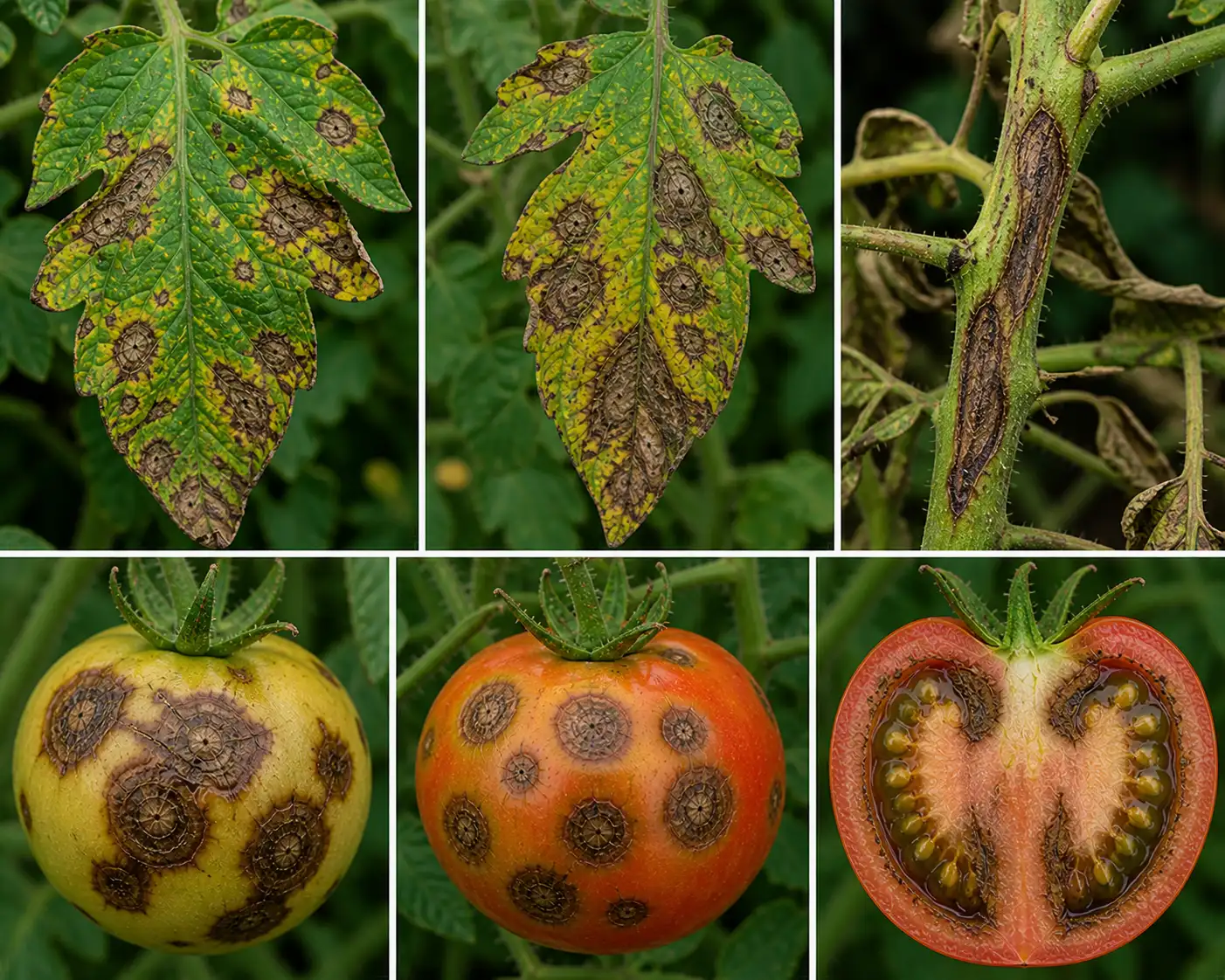
Early Blight
Early Blight (Tomato) (caused by the fungus Alternaria solani infection) is a common and damaging disease.
-
Shows dark brown spots with concentric rings (target-like pattern) on leaves
-
Older leaves turn yellow and drop early
-
Stems may develop elongated dark lesions
-
Fruits show sunken spots near the stem end
-
Common in warm, humid conditions
Proper crop rotation, removing infected leaves, and timely fungicide application help control the disease.
Product That Matches The Disease
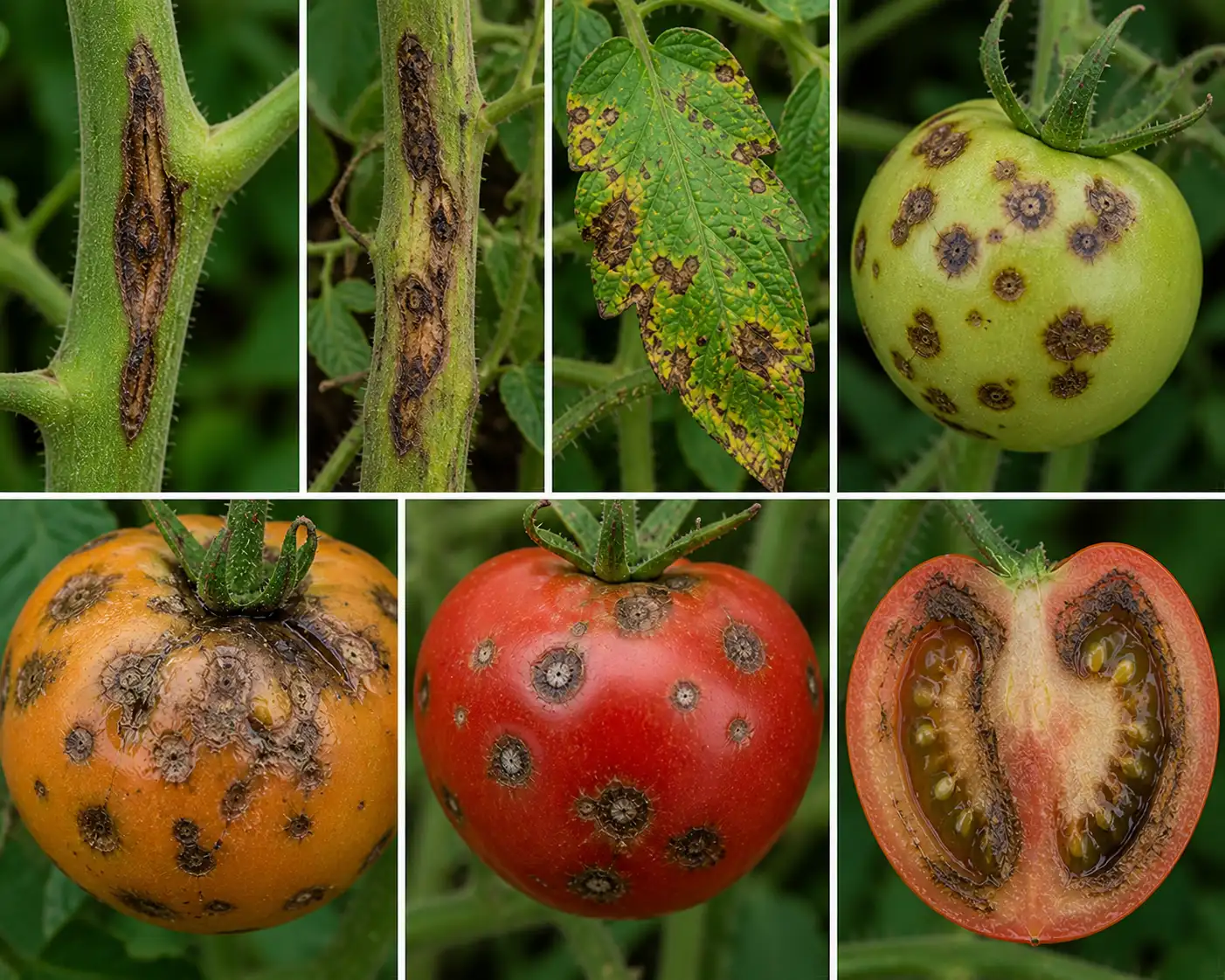
Bacterial stem and fruit canker
Bacterial Stem and Fruit Canker (Tomato) (caused by the bacterium Clavibacter michiganensis infection) is a serious disease affecting stems, leaves, and fruits.
-
Causes elongated, sunken cankers on stems
-
Leaves may show yellowing, wilting, and marginal burn
-
Fruits develop small raised spots with white halo (“bird’s eye spots”)
-
Infection can lead to plant wilting and dieback
-
Spreads through infected seeds, tools, and water splashes
Using disease-free seeds, sanitation, and crop rotation helps control the disease.
Product That Matches The Disease
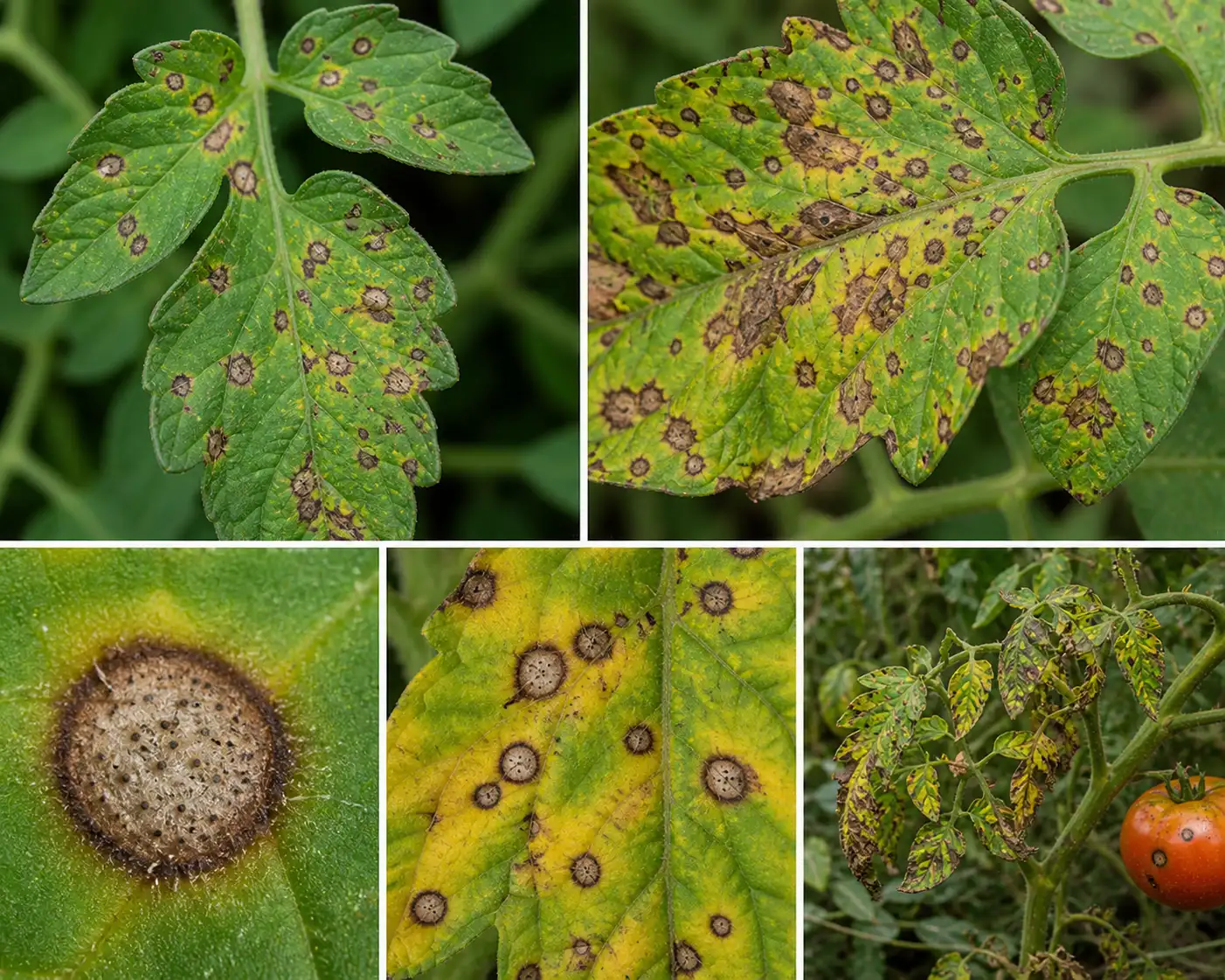
Septoria leaf spot
Septoria Leaf Spot (Tomato) (caused by the fungus Septoria lycopersici infection) mainly affects leaves.
-
Shows small, circular spots with grey centers and dark borders
-
Spots contain tiny black dots (fruiting bodies) in the center
-
Leaves turn yellow and drop early
-
Usually starts on lower leaves and spreads upward
-
Common in warm, wet, and humid conditions
Proper spacing, removing infected leaves, and timely fungicide application help control the disease.
Product That Matches The Disease
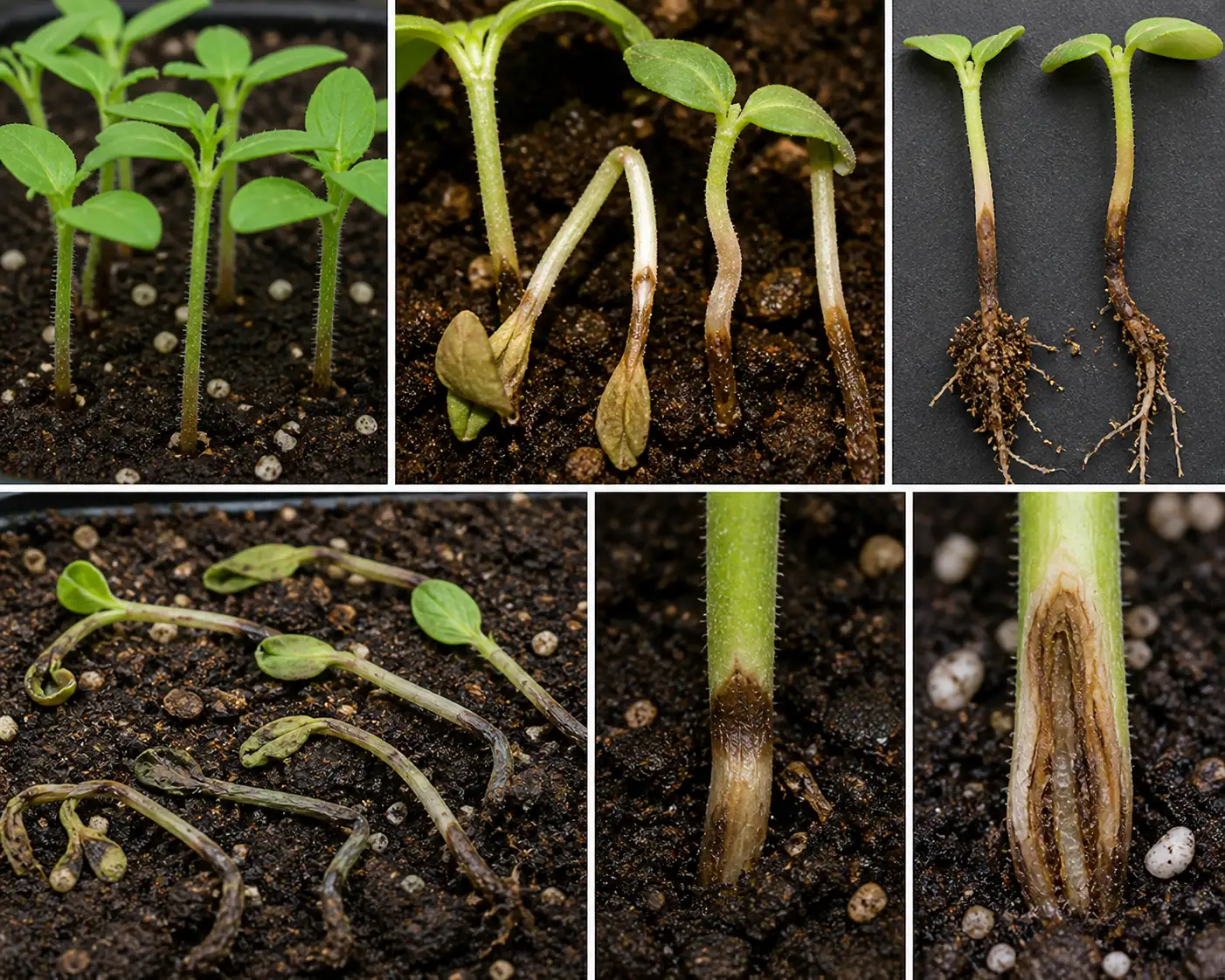
Damping Off
Damping Off (caused by soil-borne fungi like Pythium infection, Rhizoctonia solani infection, and Fusarium infection) affects young seedlings.
-
Seedlings rot at the base of the stem (soil line)
-
Plants become weak, wilt, and fall over
-
Seeds may fail to germinate (pre-emergence damping off)
-
Common in wet, poorly drained soil and high humidity
-
Spreads quickly in crowded nursery conditions
Using clean soil, proper drainage, and seed treatment helps prevent the disease.
Product That Matches The Disease
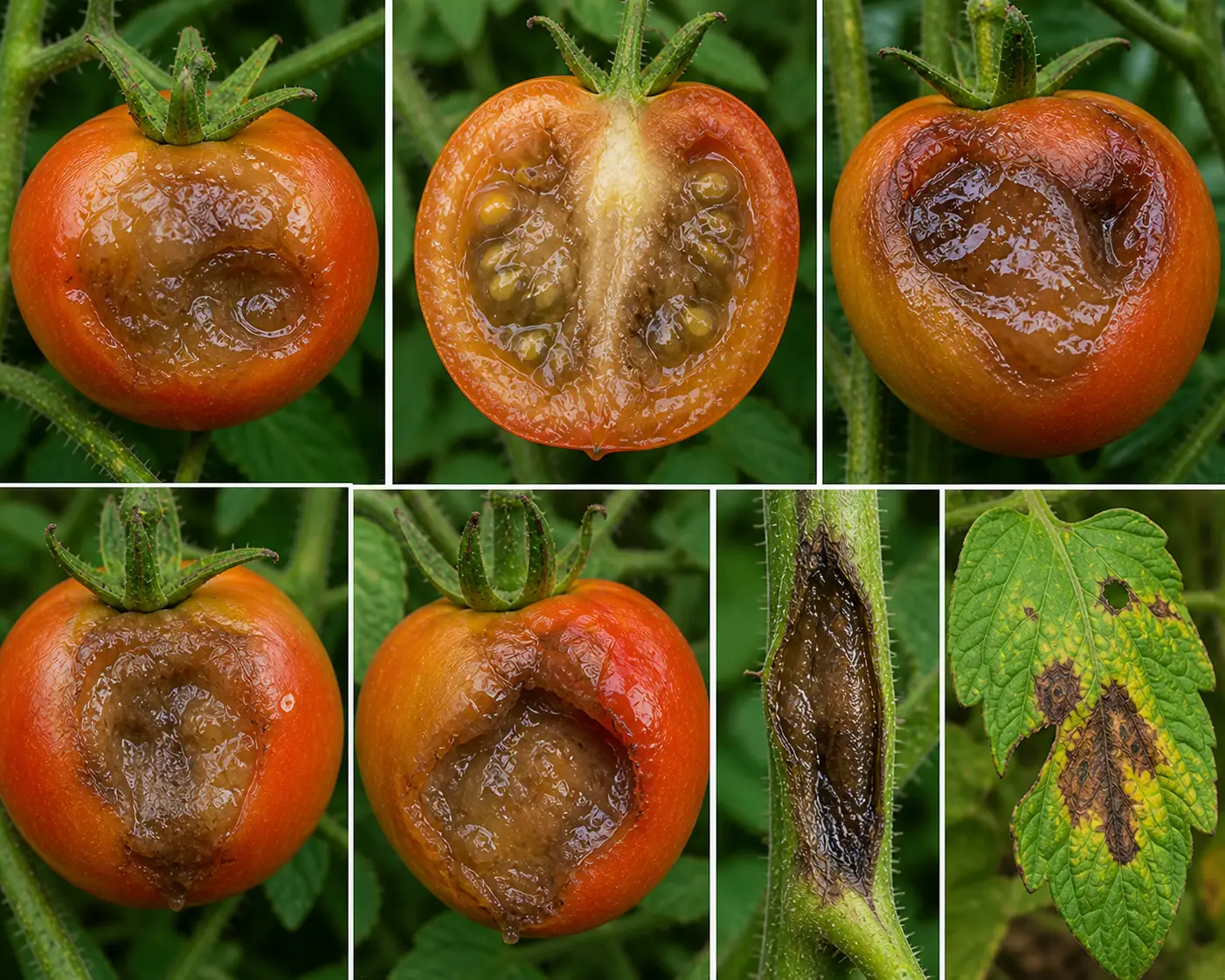
Bacterial Soft Rot
Bacterial Soft Rot (Tomato) (caused by bacteria like Erwinia carotovora infection) is a destructive disease of fruits and plant tissues.
-
Causes soft, watery decay that spreads rapidly
-
Infected tissue becomes mushy, slimy, and foul-smelling
-
Fruits may collapse and leak fluid
-
Bacteria enter through wounds, cracks, or damaged areas
-
Common in warm, humid, and poorly ventilated conditions
Careful handling, avoiding injuries, and proper sanitation help prevent the disease.
Product That Matches The Disease
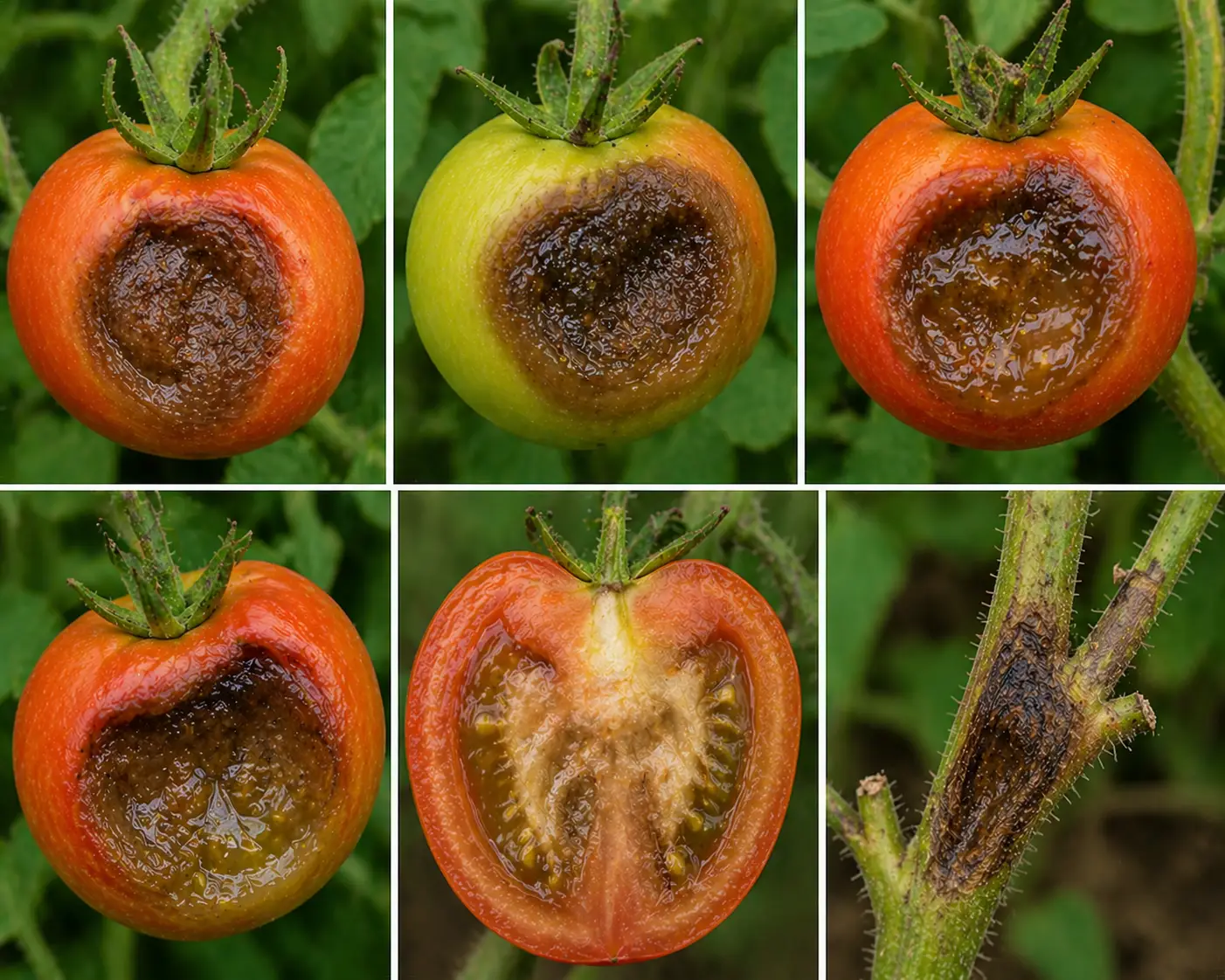
Sour Rot
Sour Rot (Tomato) (caused by fungi like Geotrichum candidum infection) is a common fruit rot disease.
-
Fruits develop soft, watery decay with a sour smell
-
Infected areas become pale, mushy, and collapse quickly
-
Surface may show white, yeast-like growth
-
Spreads rapidly in warm, humid conditions
-
Often enters through cracks or wounds in fruits
Careful handling, avoiding fruit injury, and proper sanitation help prevent the disease.
Product That Matches The Disease
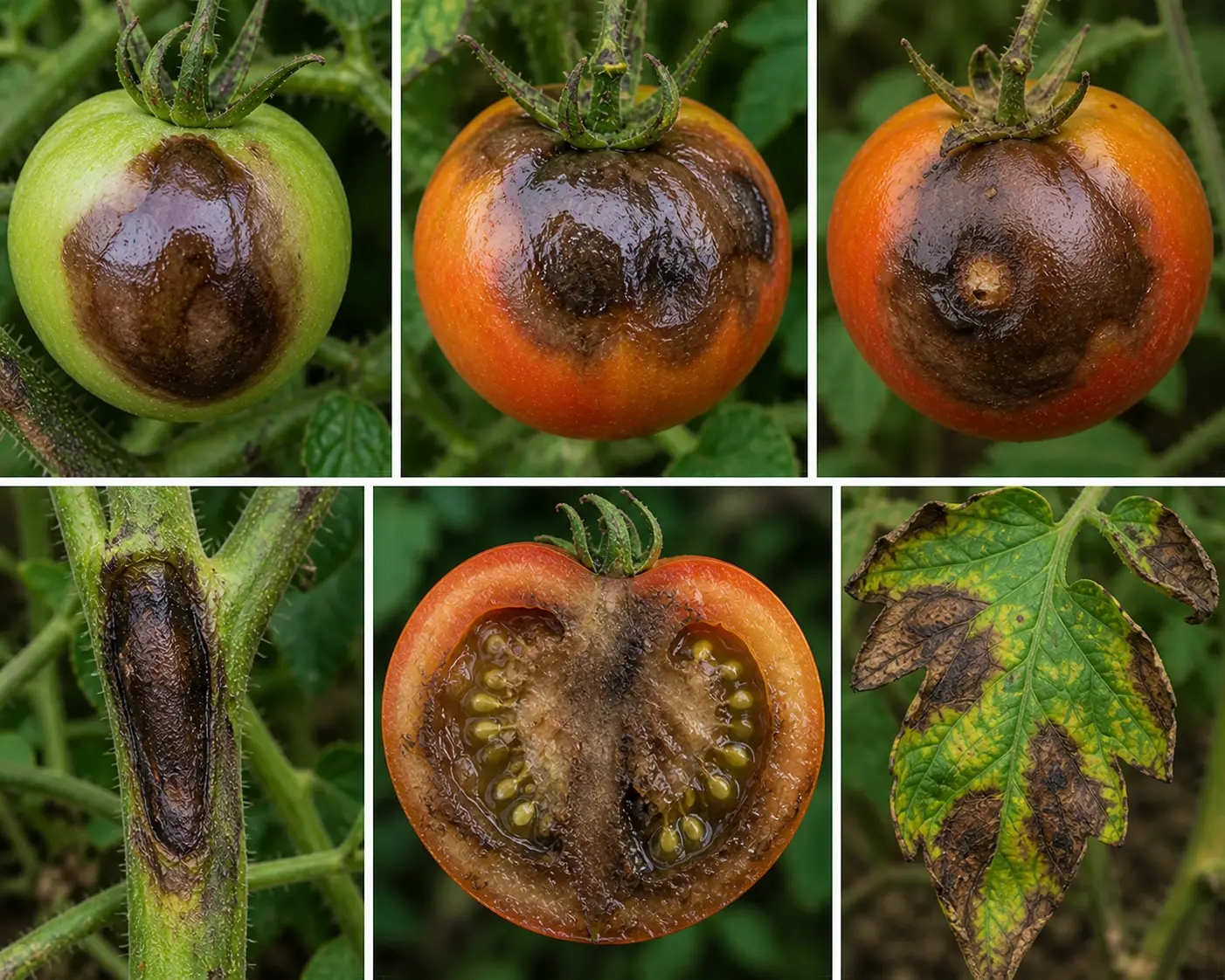
Phytophthora Rot
Phytophthora Rot (Tomato) (caused by the fungus-like organism Phytophthora infestans infection) affects fruits, leaves, and stems.
- Causes dark, water-soaked lesions on fruits and stems
- Lesions enlarge and become brown to black rot
- Fruits may show firm rot that later softens
- Leaves develop blight and rapid drying
- Common in cool, wet, and humid conditions
Good drainage, avoiding excess moisture, and timely fungicide application help manage the disease.
Product That Matches The Disease
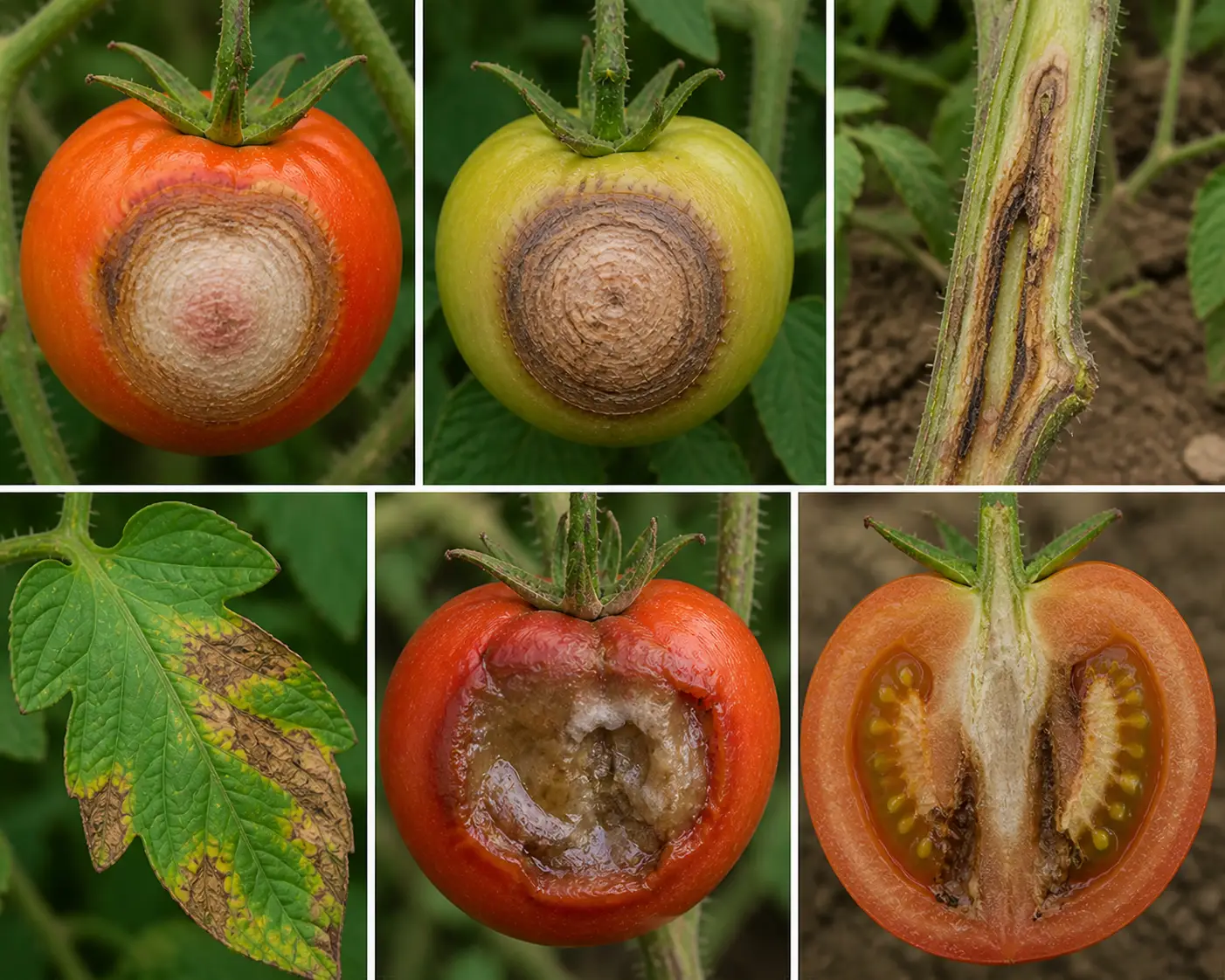
Fusarium Rot
Fusarium Rot (Tomato) (caused by the fungus Fusarium oxysporum infection) affects fruits and plant tissues.
-
Causes soft rot with water-soaked or sunken areas on fruits
-
Internal tissues may show brown discoloration
-
Fruits become soft, decayed, and may collapse
-
Often enters through wounds or damaged areas
-
Common in warm, moist conditions
Proper sanitation, avoiding injury, and good field management help reduce the disease.
Product That Matches The Disease
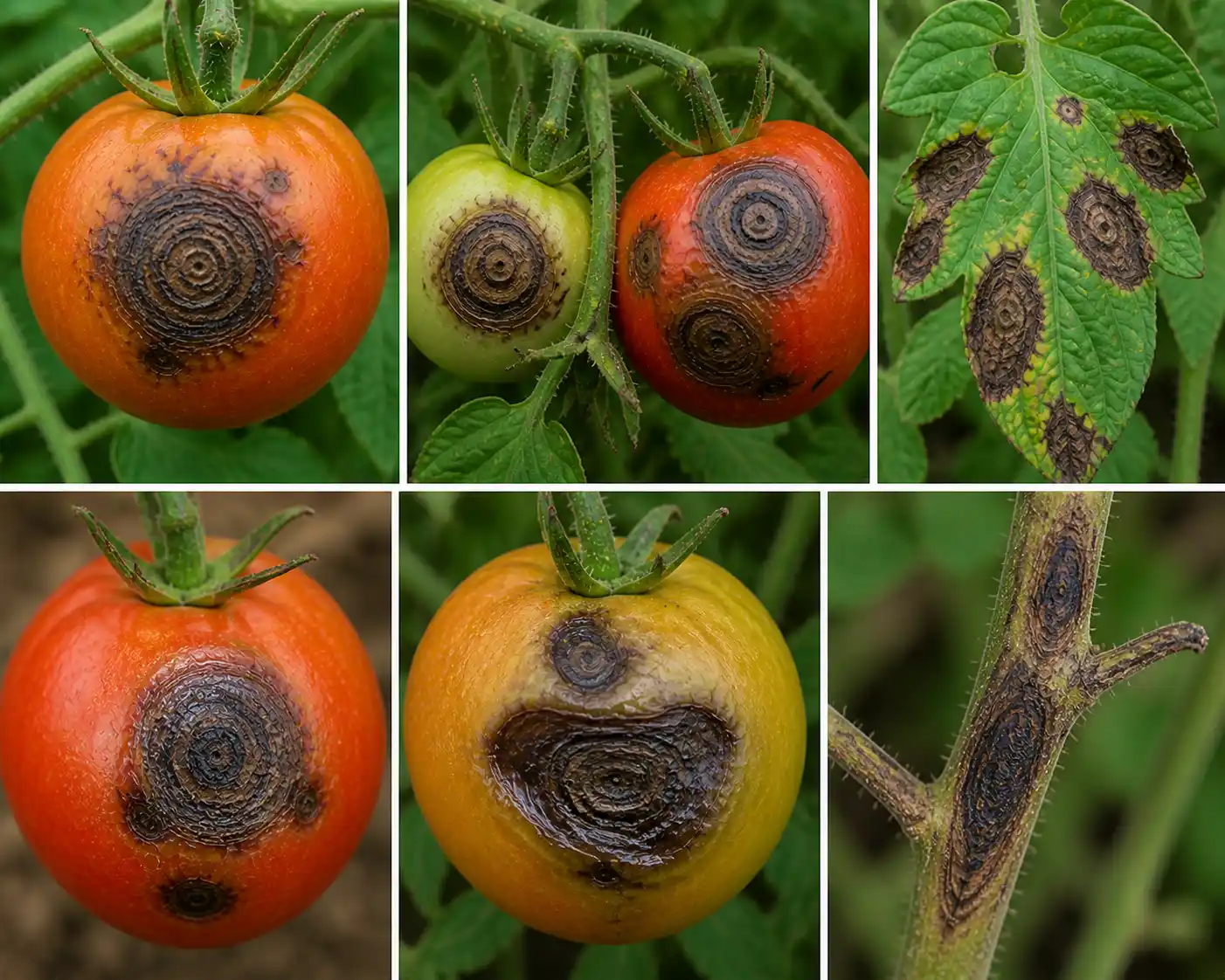
Alternaria Rot/Fruit rot
Alternaria Rot / Fruit Rot (Tomato) (caused by the fungus Alternaria alternata infection) mainly affects fruits.
- Shows dark, sunken spots with concentric rings (target-like pattern)
- Lesions enlarge and cause fruit decay and rotting
- Affected fruits may drop early or become unmarketable
- Common in warm, humid weather and wounded fruits
- Can also infect leaves and stems in severe cases
Proper sanitation, avoiding fruit injury, and timely fungicide application help control the disease.
Product That Matches The Disease
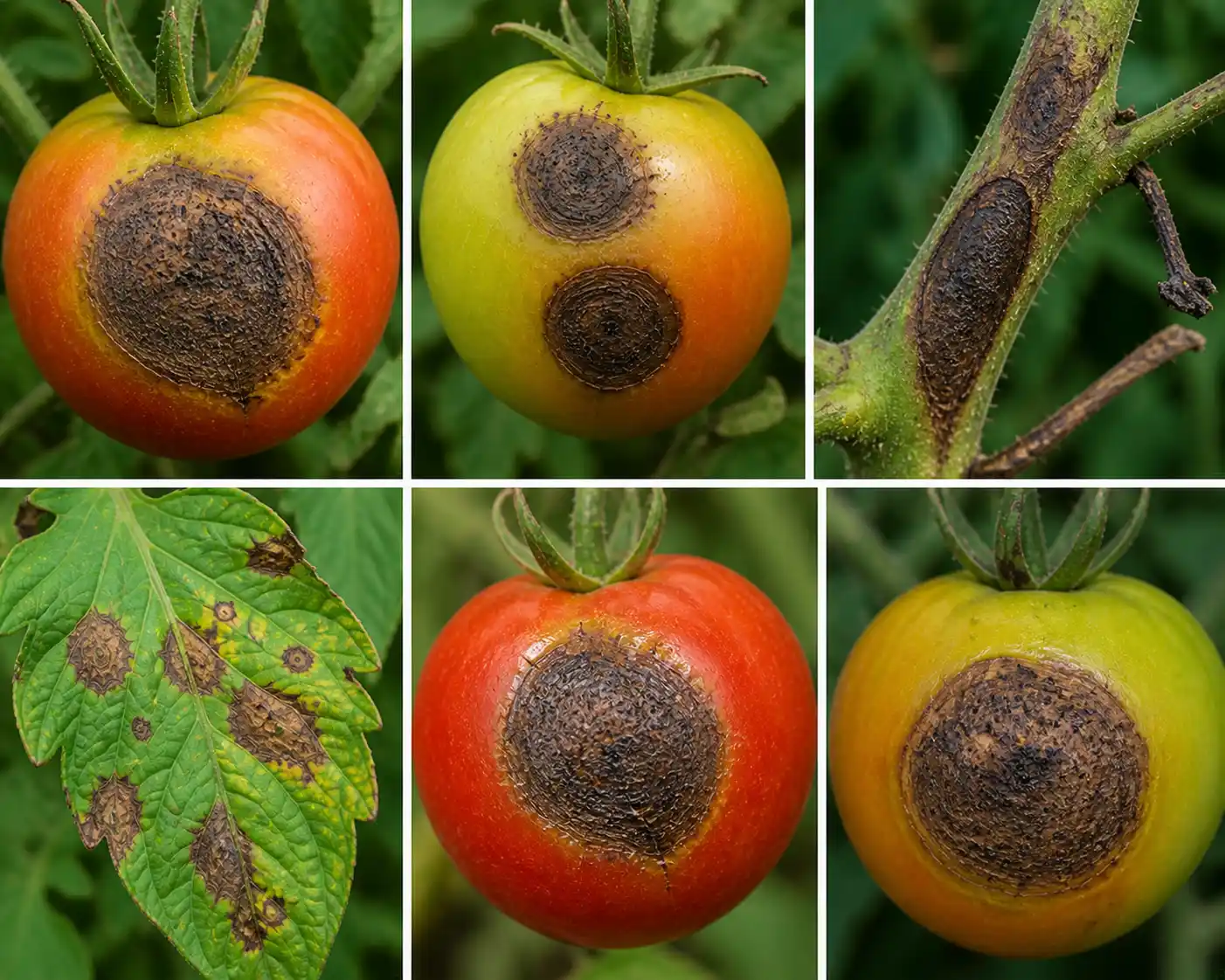
Phoma Rot
Phoma Rot (Tomato) (caused by the fungus Phoma destructive infection) affects fruits and stems.
- Causes dark, sunken lesions on fruits
- Lesions may show concentric rings and tiny black dots (pycnidia)
- Infected tissues become dry and rot over time
- Common in warm, humid conditions
- Can lead to fruit drop and reduced quality
Proper field sanitation, avoiding injury, and good drainage help manage the disease.
Product That Matches The Disease
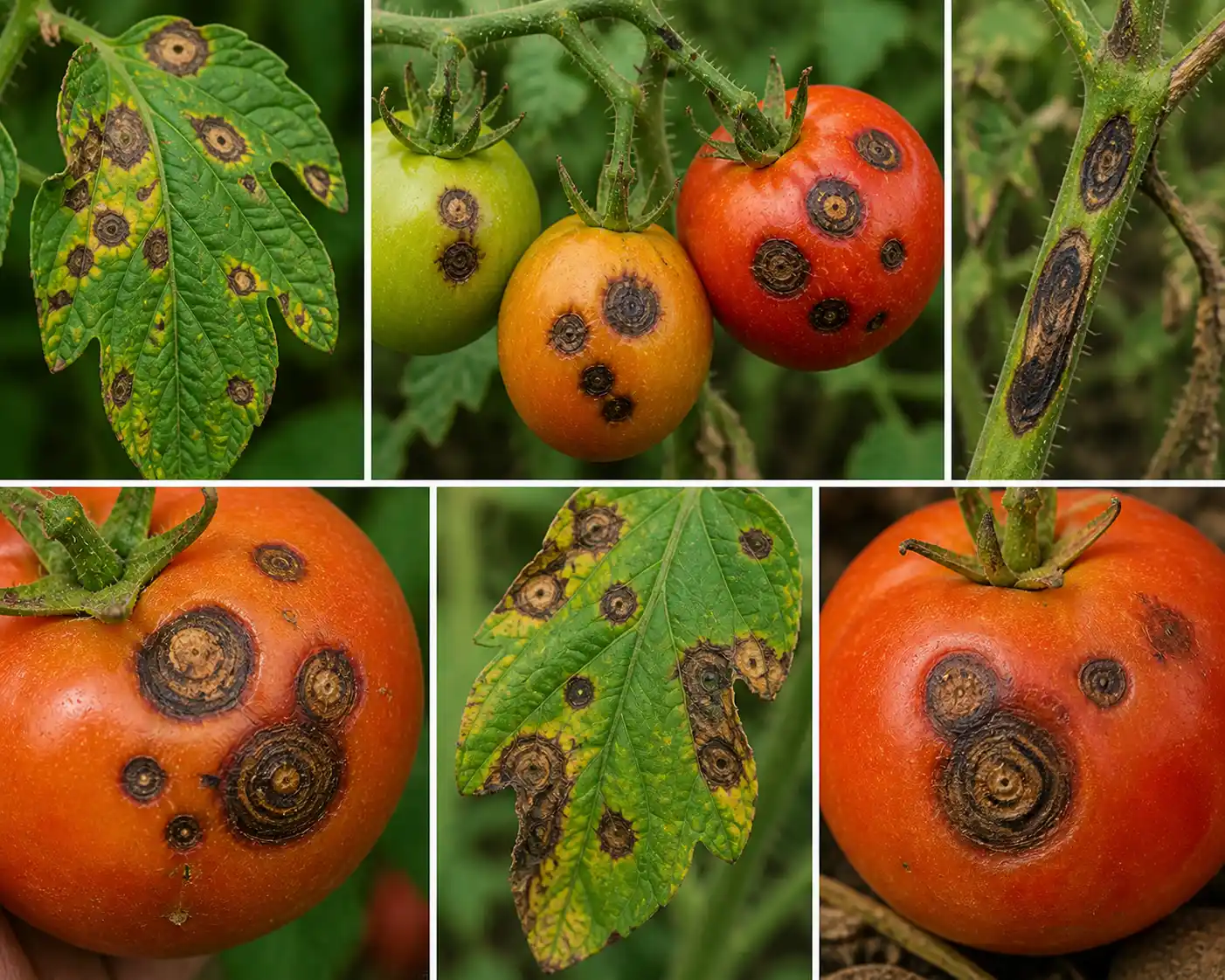
Anthracnose
Anthracnose (Tomato) (caused by the fungus Colletotrichum infection) mainly affects ripe fruits.
-
Produces small, sunken dark spots on fruits
-
Spots enlarge and form concentric rings
-
Infected areas may become soft and rot
-
Common in warm, humid conditions
-
Leads to fruit spoilage and yield loss
Proper sanitation, crop rotation, and timely fungicide use help control the disease.
Product That Matches The Disease
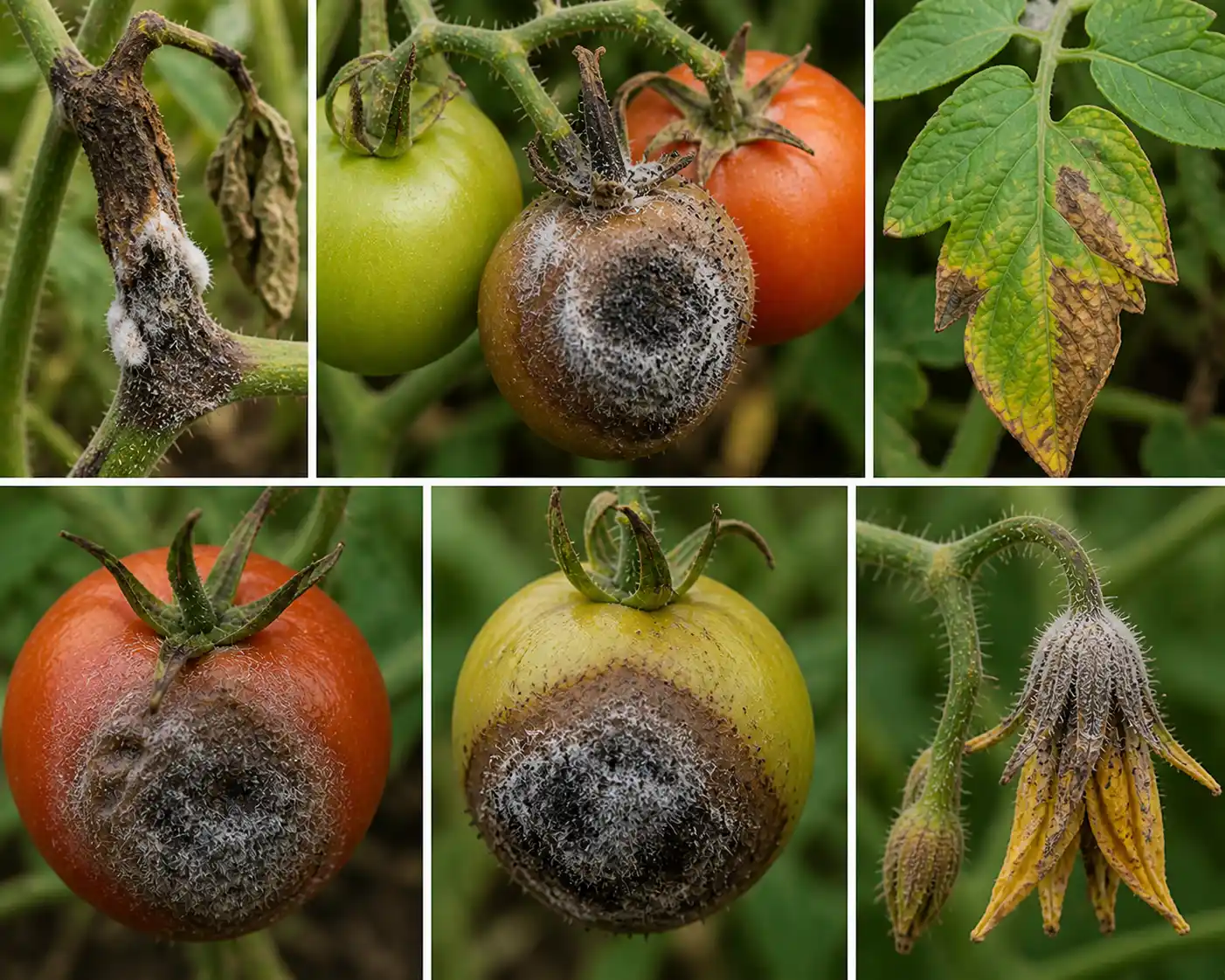
Rhizopus rot
Rhizopus Rot (Tomato) (caused by the fungus Rhizopus stolonifer infection) is a common post-harvest disease.
-
Causes soft, watery rot on fruits
-
Infected areas develop white cottony growth that later turns black
-
Fruits become mushy and collapse quickly
-
Spreads rapidly in warm and humid conditions
-
Usually enters through wounds or damaged fruit skin
Proper handling, avoiding injury to fruits, and cool storage help prevent the disease.
Product That Matches The Disease
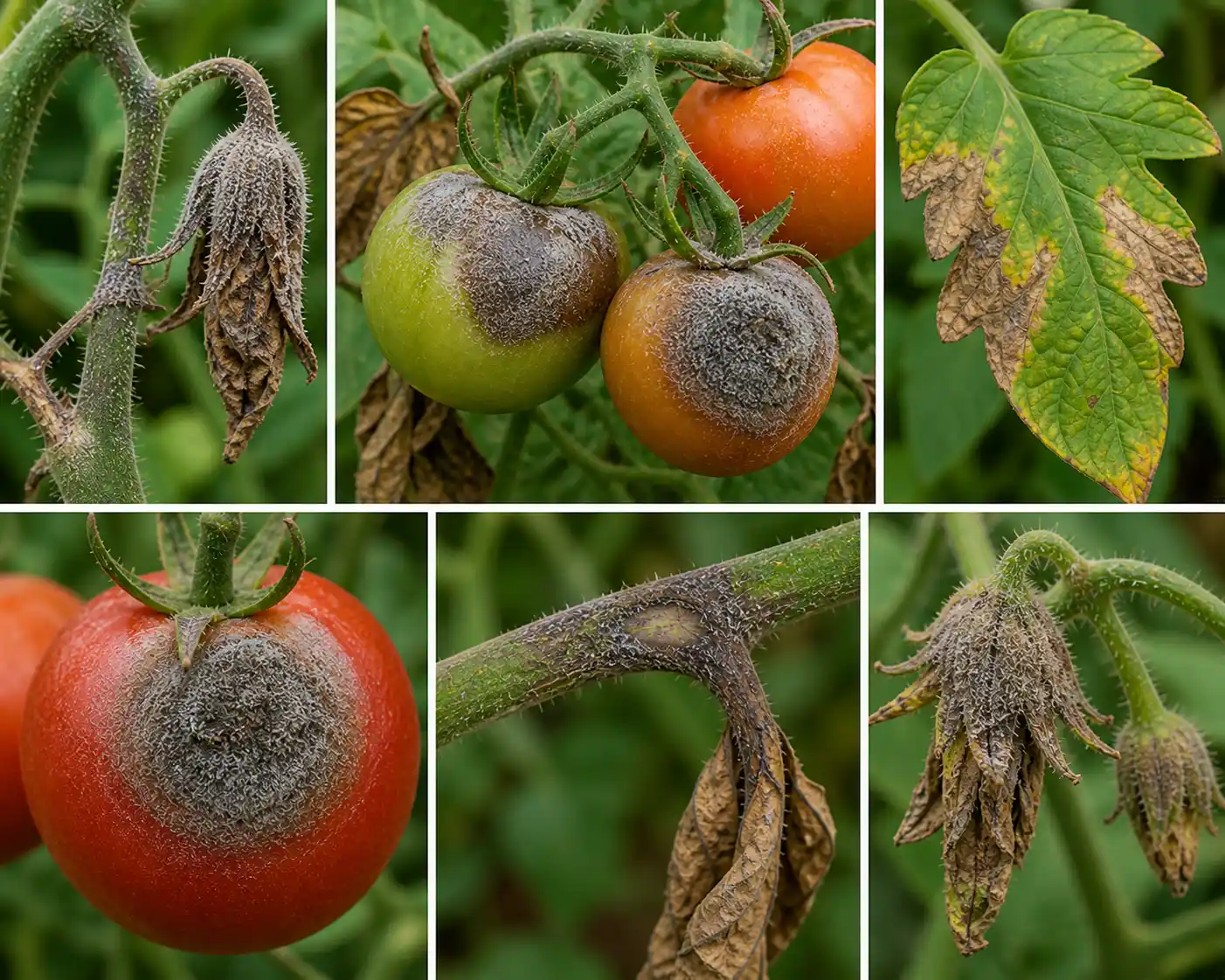
Gray Mold
Gray Mold (Tomato) (caused by the fungus Botrytis cinerea infection) is a common disease affecting leaves, stems, flowers, and fruits.
-
Produces gray, fuzzy mold growth on infected parts
-
Causes soft rot on fruits and brown lesions on leaves
-
Infected flowers and stems may wither and die
-
Common in cool, humid, and poorly ventilated conditions
-
Spreads quickly through airborne spores
Proper spacing, good air circulation, and avoiding excess moisture help control the disease.
Product That Matches The Disease
FAQ
Frequently Ask Questions
What products does Ekhande Agro Fertilizers offer?
We provide high-quality fertilizers and crop protection solutions designed to enhance crop nutrition and productivity while promoting sustainable farming practices.
How can Ekhande Agro help improve crop yields?
Our products are formulated to ensure optimal crop nutrition, helping farmers achieve higher yields with lower input costs, while maintaining soil health.
Are your fertilizers eco-friendly?
Yes, our fertilizers are developed with a focus on sustainability, ensuring they are safe for the environment and promote long-term agricultural health.
Do you provide guidance or support to farmers?
Absolutely! We assist farmers with expert advice, innovative solutions, and product recommendations tailored to their specific agricultural needs.